
Hello everyone, I am your massage therapist. Our body is a precise, holistic map, and our feet are the key to interpreting this map.When it comes to the health of the urinary system, many people think only of medications or complex medical terms, overlooking the ancient wisdom hidden in the soles of our feet—foot reflexology. This is a healing path that combines art and science, sending signals that promote balance to corresponding organs by stimulating specific reflex zones.Today, drawing upon my professional experience, I will guide you on an in-depth exploration of the mysteries of the "Bladder Reflex Zone." We will begin a wellness journey of caring for the entire body starting from the soles of your feet, allowing you to rediscover a sense of comfort and ease.
The Body's Precision Filtration Plant: Why Your Urinary System Deserves Your Attention?
Before we learn how to apply reflexology, let's first briefly understand the body's highly efficient liquid processing plant. Your urinary system—composed of the kidneys, ureters, bladder, and urethra—works in precise coordination to filter waste from the blood and maintain the body's water and electrolyte balance.However, when this system becomes imbalanced, troublesome issues can follow. The most common of these are Urinary Tract Infections (UTIs) caused by bacteria, which are particularly prevalent in women and often accompanied by symptoms like frequent urination and a burning sensation.These problems not only affect quality of life but can also be warning signs from the body, reminding us that it's time to listen to its needs and provide care and regulation from a foundational level.
It is precisely because the symptoms of various urinary system diseases are extremely similar—for instance, pelvic pain could be a common signal for an infection, stones, or interstitial cystitis—that self-diagnosis is quite difficult and could even delay treatment.Therefore, I want to emphasize here that if you have persistent discomfort in your urinary system, you must first seek a diagnosis from a professional physician. Foot reflexology and self-care are excellent complementary tools, but they cannot replace formal medical treatment. This is especially true if warning signs such as a high fever, severe back pain, or blood in the urine appear, as this could indicate that an infection is worsening, and you should seek immediate medical attention.Our goal is to use an integrative approach to care, allowing you to enhance your well-being on the foundation of professional medical treatment.
The Map on the Soles of Your Feet: Locating Your Urinary System Reflex Zones
The core concept of foot reflexology is to view the feet as a microcosm of the entire body. The soles of the feet are covered with thousands of nerve endings, and specific "reflex zones" correspond to particular parts of the body.For us therapists, the sense of touch is a crucial clue. If a reflex zone feels like it has granular "energy knots" (Qi blockages), it often suggests that the function of its corresponding organ may be experiencing stagnation or imbalance.Through precise pressure, we can stimulate neural pathways, promote circulation, and guide the body back to its natural state of equilibrium, known as "homeostasis." This is not merely a mechanical pressing action, but rather a form of communication and clearing on an energetic level.
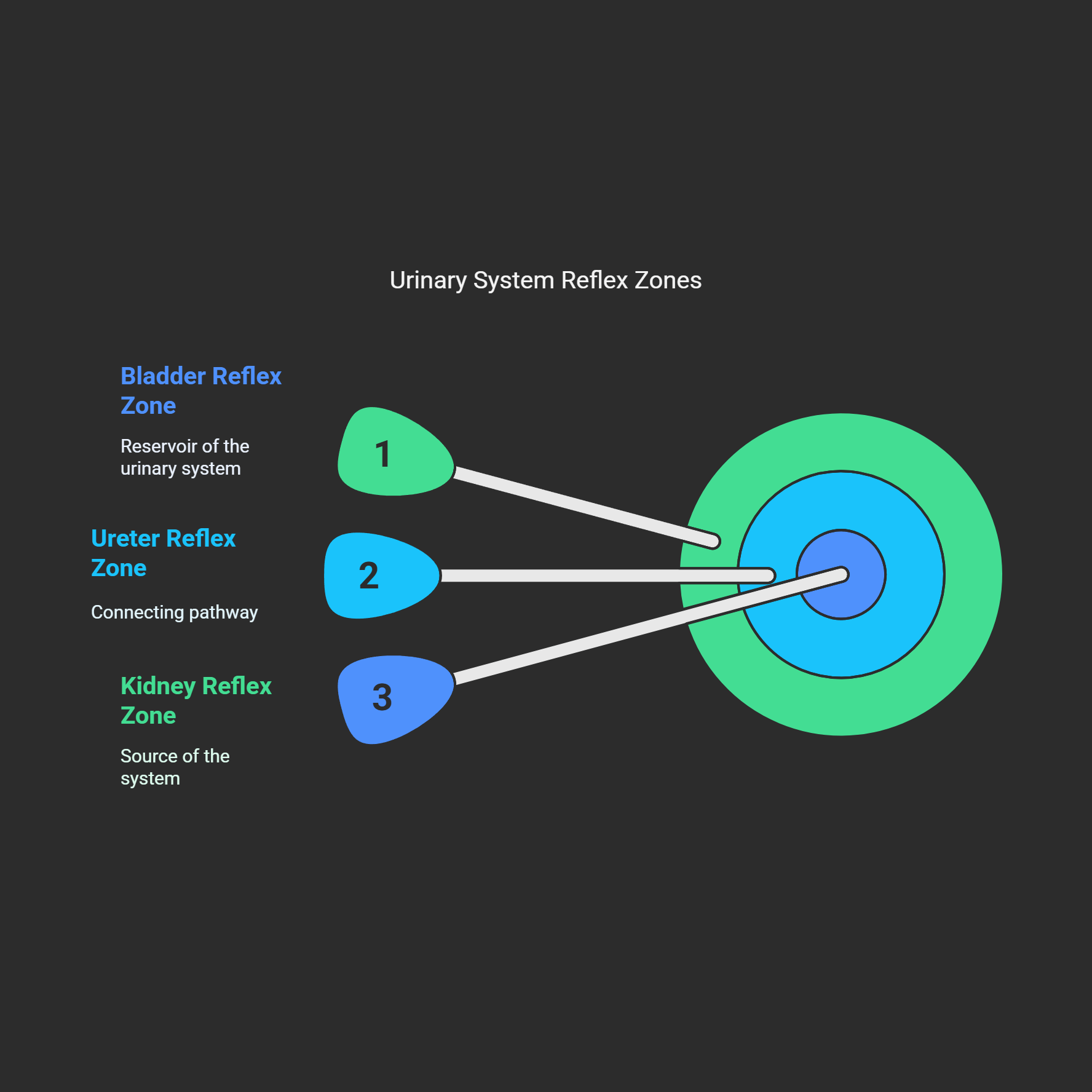
To effectively support the urinary system, precisely locating its reflex zones is crucial. You can imagine the pathway of this system as a river flowing from the center of your sole towards the inner edge of your foot.Kidney Reflex Zone (The Source): This is located in the center of the sole, approximately below the highest point of the arch, akin to the "waist" of the foot. Ureter Reflex Zone (The Connecting River): This zone acts as a connecting line, extending downwards along the curve of the arch. Bladder Reflex Zone (The Reservoir): This is where the pathway culminates. It is situated on the inner side of the foot, at the junction where the arch meets the heel. You can find it in the hollow just in front of and slightly below the inner ankle bone. These three reflex zones can be found in symmetrical positions on both the left and right feet, together forming the complete projection of the urinary system on the soles.
Practical Technique: A Step-by-Step Guide to Massaging Your Urinary System Reflex Zones
Now, let's begin the practical session. This massage sequence is designed to systematically activate the entire urinary system, and you can incorporate it into your daily self-care routine.First, find a comfortable place to sit and cross one foot over your other leg. Before you begin, gently knead and stretch the foot to allow it to relax completely.Next, locate the Solar Plexus reflex zone, which is found just below the center of the diaphragm line on the sole of your foot. Using your thumb, press deeply here three times, coordinating each press with a deep breath. This step acts like a switch, helping your entire body enter a state of relaxation, which will make the subsequent massage much more effective and perfectly prepare you for the healing journey.
The first step of the massage begins with the Kidney reflex zone. Using the pad of your thumb, apply deep and gentle pressure using the "thumb-walking technique" (pressing forward section by section, like an inchworm) across the entire Kidney reflex zone for about two to three minutes. During this process, pay close attention to the texture of the area. If you feel any particular soreness or notice granular-like energy knots, you can pause there to work on them a little longer.Once completed, start from the Kidney reflex zone and use your thumb to "scrape" or "push" along the path of the Ureter reflex zone towards the Bladder reflex zone with a steady and firm pressure. Repeat this motion several times, imagining that you are clearing out a vital life channel.
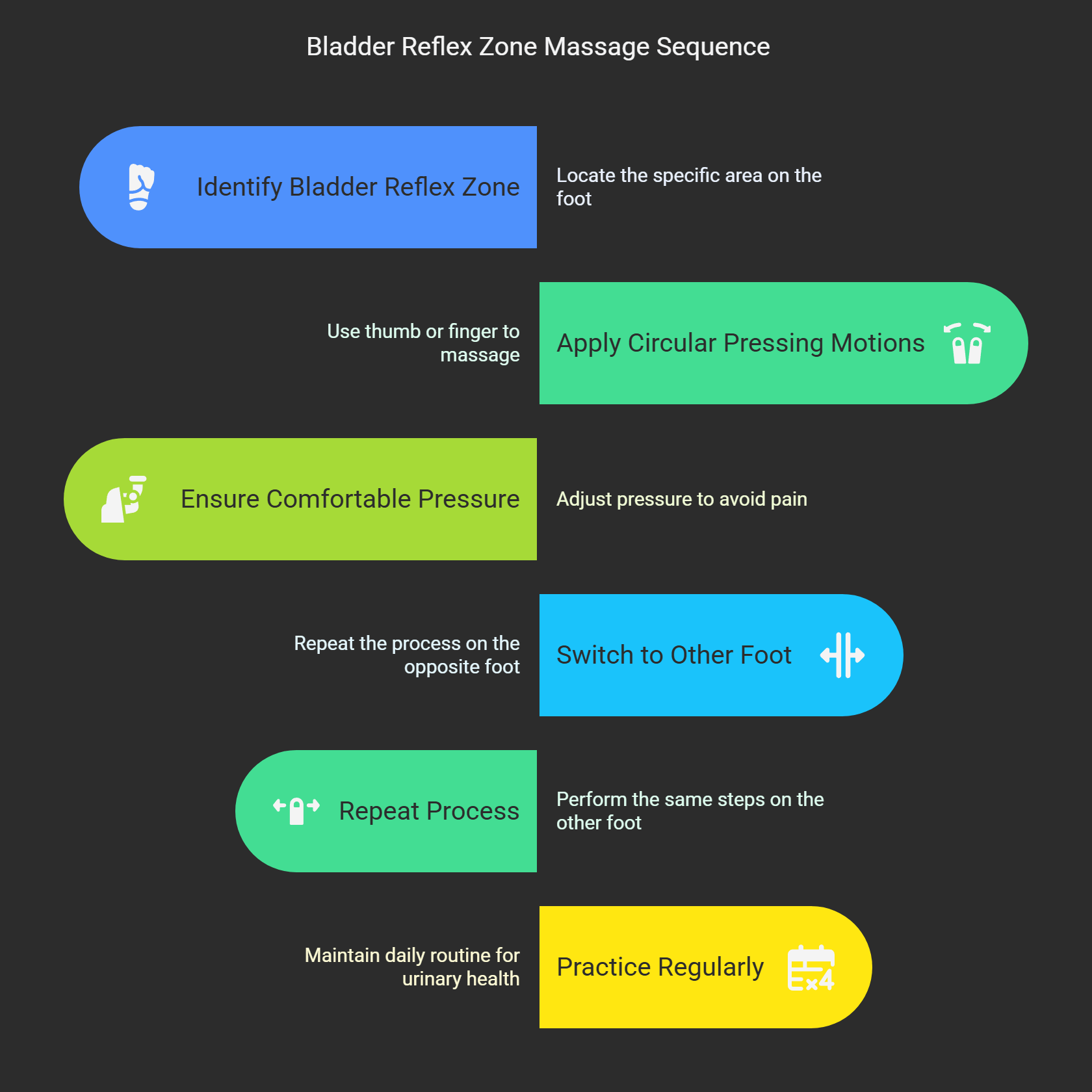
The final focus of the sequence is the Bladder reflex zone. As the key organ for storage and elimination, this area deserves our focused attention. In a professional session, a therapist might even spend up to ten minutes massaging this specific spot.You can use the knuckle of your thumb or index finger to apply small, stationary, circular pressing motions to the Bladder reflex zone. The pressure should be deep yet comfortable, ideally reaching a level of "soreness without pain."When you have completed all the steps on one foot, switch to the other foot and repeat the process in the same order and with the same techniques. Regularly performing this sequence is an excellent daily practice for promoting the balanced function of your urinary system.
Holistic Care: Building a Healthy Bladder for Life
Although scientific research into reflexology is ongoing, a significant body of evidence already points to its great potential in complementary therapy. It is not intended to "replace" mainstream medicine, but rather to act as a "synergist" within an integrative treatment plan.From a physiological standpoint, massage can increase blood perfusion to the corresponding organs. By stimulating the nerve endings on the soles of the feet, it can also induce the body to release natural pain-relieving substances and promote deep relaxation.Given that stress is a known exacerbating factor for many urinary issues (such as overactive bladder), the stress-reducing effects of reflexology indirectly provide powerful support for urinary health, creating a virtuous cycle.
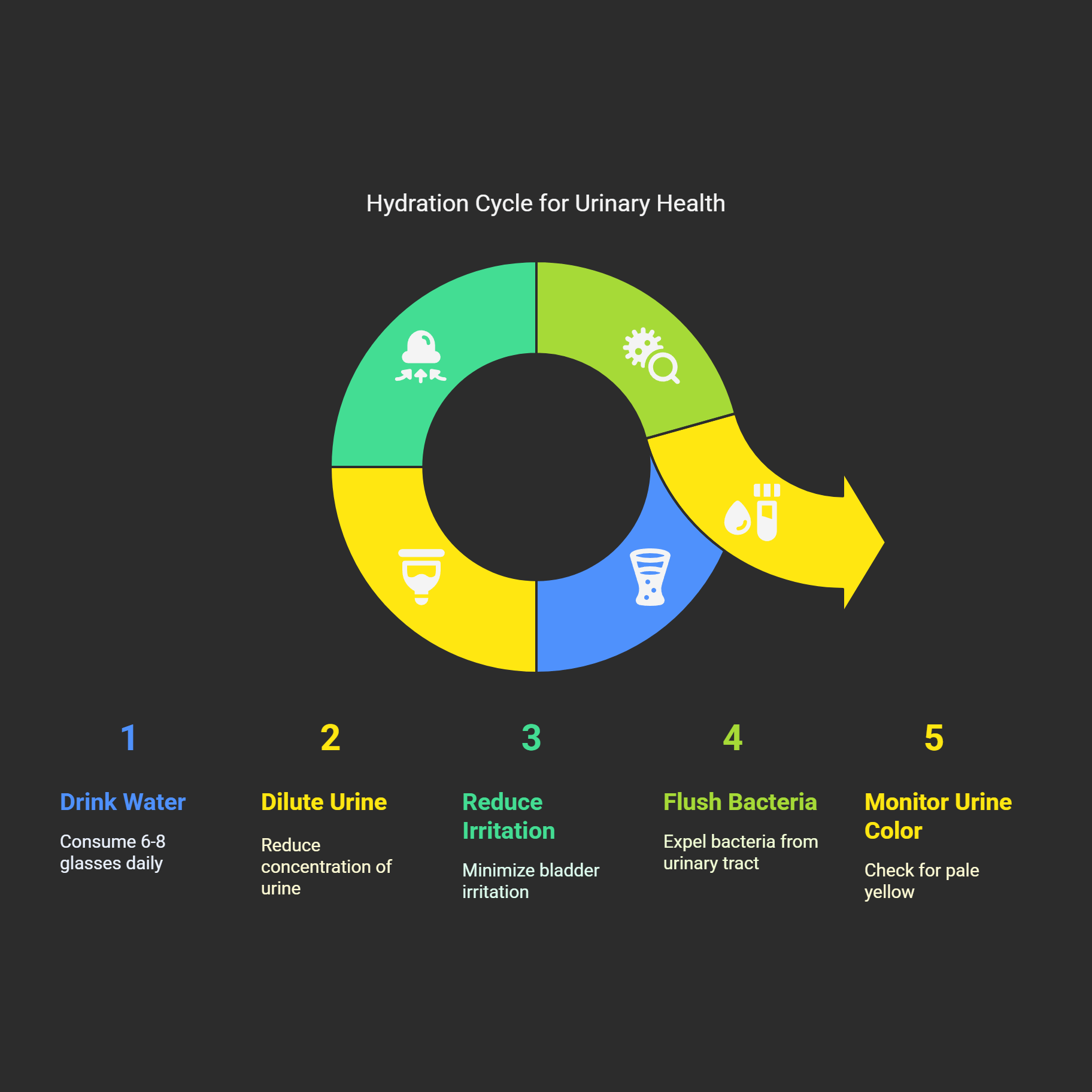
However, massage alone is not enough. Establishing healthy lifestyle habits is the cornerstone of maintaining urinary system function, and the most crucial of these is "adequate hydration."Drinking 6 to 8 glasses of water daily can effectively dilute urine, reduce irritation to the bladder, and frequently flush the urinary tract to expel potential bacteria. You can monitor this by observing your urine color—a pale, straw-like yellow is the ideal state. This is one of the simplest, yet most frequently overlooked, health secrets.Please view drinking water as a gentle, internal cleansing ritual, continuously providing pure support for your urinary system.
Your diet also has a profound impact on bladder health. Many foods and beverages, such as caffeine, alcohol, carbonated drinks, spicy foods, and highly acidic citrus fruits, can potentially irritate the bladder and worsen symptoms of discomfort.Conversely, foods like pears, bananas, whole grains, and lean proteins are considered to be gentler options. If you suspect that certain foods are triggers for you, consider trying an "elimination diet." Temporarily avoid potential irritants and then reintroduce them one by one, carefully observing your body's reaction.Learning to listen and respond to how your body feels after eating is the first step toward personalized dietary management.
Finally, a series of good lifestyle habits can build a powerful protective barrier for your urinary health. Cultivate the habit of going to the toilet as soon as you feel the urge, and be sure to relax and empty your bladder completely when you do.For women especially, wiping from front to back after using the toilet and urinating after sexual intercourse can effectively reduce the risk of infection. Furthermore, regularly performing "Kegel exercises" can strengthen the pelvic floor muscles that support the bladder.Maintaining a healthy weight to reduce abdominal pressure, avoiding constipation, exercising regularly, and quitting smoking—these seemingly unrelated habits are, in fact, interlinked and work together to safeguard the long-term health and stability of your urinary system.
Conclusion: Starting Today, Listen to the Whispers of Your Feet
As a massage therapist, I have witnessed countless times how the body's self-healing power can be awakened through the connection between hands and the soles of the feet. Foot reflexology is more than just a set of massage techniques; it is a reminder—a reminder that all parts of our body are intricately connected, and that health needs to be approached from a holistic perspective.The bladder reflex zone massage shared today is a gift you can give yourself, a form of self-care that doesn't rely on others and can be done anytime. By combining it with adequate hydration, mindful eating, and healthy lifestyle habits, you are paving a long and stable road for your "Happy Healthy Life."Embark on this journey of exploration starting today. Your body will thank you for every touch and every moment you take to listen.


