
Hello, I am your dedicated massage therapist.Spring should be a season brimming with life and vitality, yet do you often find yourself feeling an inexplicable fatigue, as if your body is shrouded in a heavy fog? This state of daytime drowsiness and scattered attention is what we commonly know as "spring fatigue" or "spring lethargy."In my line of work, at every change of season, many clients report that their bodies feel heavy and their minds are sluggish. Rest assured, this isn't laziness on your part; it's a signal from your body as it adapts to the rhythm of nature. The key to reawakening your vitality is hidden in our most crucial, yet most often neglected, areas—the head and neck.Next, let's explore the root cause of this fatigue together and learn a set of simple head and neck self-help techniques that you can use anytime to help you rediscover a sense of clarity and focus.
Why the Constant Drowsiness? Unveiling the Twofold Secret Behind Spring Fatigue
Many people attribute spring fatigue to a simple lack of sleep, but its causes are far more complex. From the perspective of Traditional Chinese Medicine (TCM), as all things in nature rise and flourish in spring, the "Yang Qi" within the human body should ascend in harmony with it.However, spring is often rainy, increasing the "dampness" in the air. This heavy, turbid, and sticky pathogenic dampness can easily invade the body, encumbering the Spleen—the organ responsible for transportation and transformation—and obstructing the circulation of Qi and blood.When the "clear Yang Qi" cannot ascend smoothly to nourish the head and mind, it results in a feeling of heaviness in the head, as if it were wrapped in cloth, and a general listlessness. It is much like a high-performance engine getting bogged down in wet mud, unable to perform efficiently. This profoundly explains why the fatigue is always accompanied by a lingering sense of heaviness, fundamentally affecting our mental state.
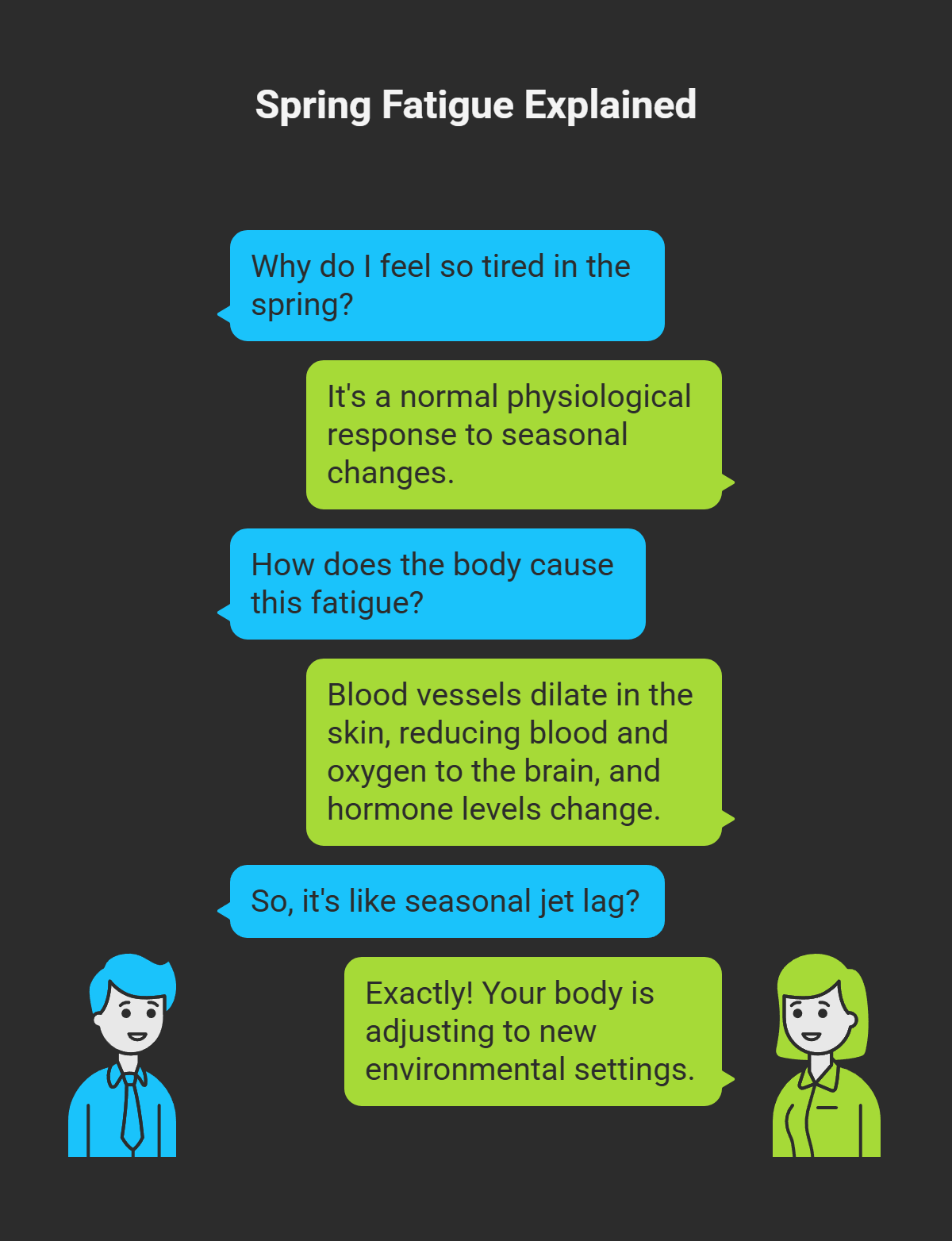
From a modern physiological perspective, spring fatigue is a normal response as the body undergoes seasonal regulation. To conserve heat during winter, the body's blood vessels constrict, directing more blood flow toward the core organs. As the weather warms in spring, the blood vessels in the skin and extremities dilate. This causes a relative decrease in the supply of blood and oxygen to the brain, which in turn triggers drowsiness and fatigue.Furthermore, the change in daylight hours affects the secretion of hormones like melatonin, and our biological clock needs time to recalibrate. During this transitional period, it's natural for the body to feel tired.This is akin to experiencing a "seasonal jet lag" without ever crossing time zones. Our bodies are working hard to adapt to new environmental settings, and fatigue is a normal phenomenon during this adjustment process.
A Catalyst of Modern Life: The Dual Impact of "Tech Neck"
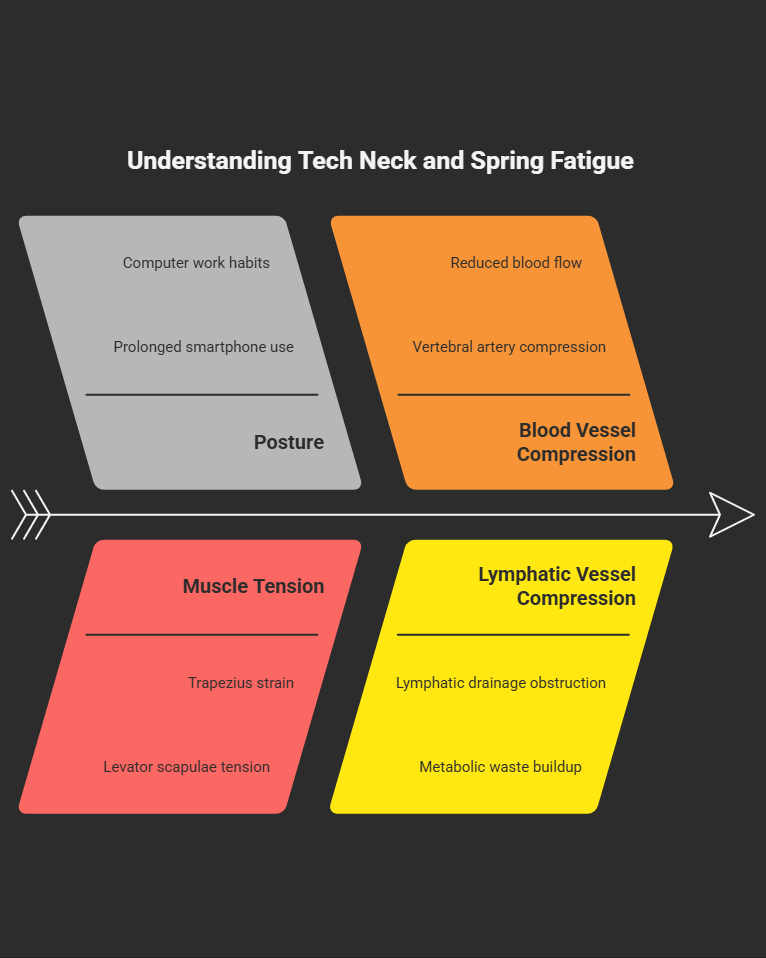
Having understood the traditional and modern perspectives, we must now confront a modern culprit that exacerbates spring fatigue—"tech neck."Prolonged periods spent looking down at smartphones and computers force our head and neck into an unnatural forward-leaning posture. This position compels the muscle groups at the back of the neck, such as the trapezius and levator scapulae, to remain constantly tensed in order to counteract the weight of the head.This chronic tension not only consumes a significant amount of the body's energy but, more critically, it also directly compresses the blood vessels (like the vertebral arteries) and lymphatic vessels that run through the cervical spine. This is equivalent to placing multiple physical roadblocks on the "cerebral highway"—where blood flow has already been slowed by seasonal adjustments. It further impedes the supply of blood and oxygen while also hindering the removal of metabolic waste, which only serves to make the feeling of brain fog even worse.
Unlocking the Body's Master Switch: Why Start with the Head and Neck?
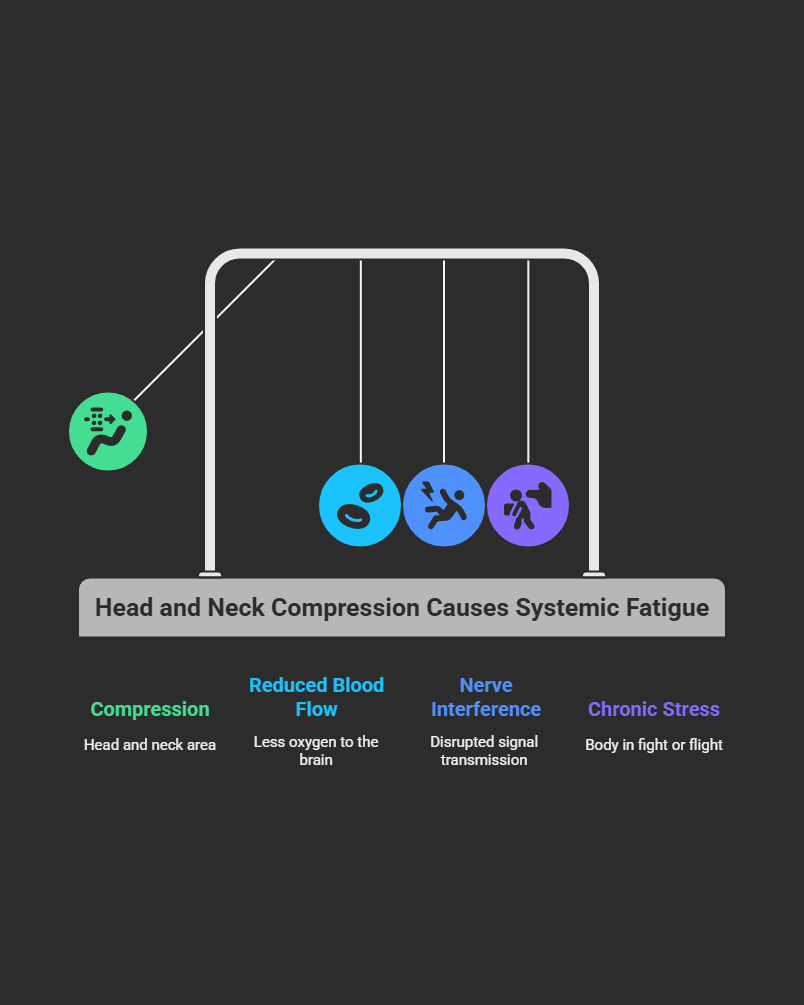
You might be wondering: why should systemic fatigue be addressed by focusing on a specific area like the head and neck? The answer lies in the fact that the head and neck region is the body's literal "command center."It is the sole pathway connecting the brain to the torso, responsible for transporting over 20% of the heart's blood and oxygen to the brain. Simultaneously, it is the hub where the central and peripheral nervous systems intersect.When the head—what Traditional Chinese Medicine calls the "zhū yáng zhī huì" (the meeting point of all Yang meridians)—and the pathway beneath it are compressed, it not only impacts blood flow but also interferes with nerve signal transmission, keeping the body in a chronic, low-efficiency "fight or flight" mode.Therefore, clearing this area through massage and movement is equivalent to directly charging the master switch for our body's entire Yang Qi. Naturally, the effects are immediate and apparent.
The Art of Self-Healing: Your Complete Guide to Head and Neck Massage for an Awakened Spirit
Now, let's move on to the practical application. These techniques will not only provide an immediate boost to your spirits, but with consistent long-term practice, they can also fundamentally improve the circulation and health of your head and neck, helping you to effortlessly bid farewell to fatigue.
Basic Awakening Technique: "Finger-Combing" to Invigorate the Scalp
Technique 1: Finger-Combing the Scalp This is the first step in daily self-care that I most often recommend to my clients, and it originates from ancient wellness wisdom.Benefits: Combing the scalp with your fingertips gently stimulates the dense network of micro-capillaries, nerve endings, and meridians covering your head. This simple action instantly promotes local blood circulation, bringing more oxygen and nutrients to the brain. From a Traditional Chinese Medicine (TCM) perspective, it effectively clears all the Yang meridians that converge on the head, achieving the effect of refreshing and clarifying the mind.Method:Sit up straight in a comfortable position and spread your hands open.Using the pads of your fingers (not your nails), begin at your front hairline.Slowly and deliberately "comb" your hair from front to back, applying gentle pressure until you reach the hairline at the nape of your neck.Ensure you cover the entire surface of your scalp.Repeat this at least 50 times each morning and evening, or until you feel a gentle warmth spreading across your scalp.
Stretching and Activation: A Safe Neck Exercise Routine
Now that the massage has relaxed your tense muscles and meridians, the next step is to restore the mobility of your cervical spine with gentle stretches and movements.Please be sure to remember the golden rule:Slow, Gentle, Steady. All movements should be performed slowly and coordinated with deep, long breaths. Deepen the stretch as you exhale. If you feel any sharp pain, stop immediately.
Static Stretching: To Release Deep-Seated Tension
Upper Trapezius StretchSit up straight. Gently hold the side of your chair with your right hand to stabilize your shoulder.Slowly and gently tilt your head to the left side, until you feel a comfortable stretch along the right side of your neck.To deepen the stretch (optional): Gently rest your left hand on the top of your head. Use only the natural weight of your hand to deepen the stretch—do not actively pull.Hold the position for 20-30 seconds while maintaining deep, steady breaths.Slowly return to the starting position and repeat on the other side.
Posterior Neck Muscle Stretch:Sit up straight.Interlace the fingers of both hands and cradle the back of your head.Gently tuck your chin towards your chest, feeling the stretch along the back of your neck.Hold for 20-30 seconds.
Dynamic Activation to Correct "Tech Neck"
Chin Tucks:Sit or stand up straight, keeping your eyes level and looking directly forward.Horizontally shift your entire head straight back, as if you are trying to make a "double chin."You should feel the deep muscles at the back of your neck engaging.Hold this position for 3-5 seconds, then relax.Repeat 10 times.
Incorporating it into Your Daily Life: Creating Your Personal Anti-Fatigue Ritual
Once you have learned these techniques, the most crucial step is to integrate them into your daily life.Beyond massage and exercise, please be sure to review the three most fundamental pillars of health: correct posture, adequate hydration, and deep breathing. They are at the root of preventing all issues related to fatigue.I have specially designed a 5-Minute "Quick Charge" Routine for you that can be completed right at your desk. I recommend performing it whenever you feel fatigue setting in.
Your 5-Minute "Office Vitality Renewal Ritual"
| Time | Activities | Key Points for Execution | Core Purpose |
| Minute 1 | Breathing & Meditation | Close your eyes and sit up straight. Take 3 to 5 long, deep abdominal breaths. | Increases oxygen supply to the brain and calms the nervous system. |
| Minute 2 | Finger-Combing to Awaken the Mind | With the pads of your fingers, comb your scalp from your forehead back to the nape of your neck 15-20 times. | As a heading: Rapid Head Circulation Boost |
| Minute 3 | Pressing Fengchi (GB20) | Using both thumbs, apply deep pressure to the Feng Chi points at the back of your neck. Press and hold for 10 seconds, then release for 5 seconds. Repeat this 3 to 4 times. | Instantly Release Neck Tension & Alleviate Fuzzy-Headedness |
| Minute 4 | Correct Your Posture | Perform 5-7 slow chin tucks, holding the end position for 3-5 seconds. | Combat Tech Neck & Reset Your Neck's Position |
| Minute 5 | Stretch & Hydrate | Perform an upper trapezius stretch, holding for 20 seconds on each side.When finished, take a large sip of water. | Relax tense muscles and rehydrate your body. |
Conclusion: Listen to Your Body, Live in Harmony with the Seasons
Dear friend, "spring fatigue" is not our enemy, but rather our body's gentle reminder that it's time to slow down and give ourselves more care. It invites us, through a few simple actions, to help our bodies harmonize with the flourishing energy of the spring season.The head and neck self-healing techniques shared today are more than just methods to dispel drowsiness; they are a way to enter into a dialogue and build a deeper connection with your own body. I hope you will incorporate these exercises into your daily life, allowing them to become a cherished ritual for self-care and for maintaining your physical and mental balance.May you, this spring and in every season to come, feel clear-minded, refreshed, and full of vitality, and may you truly enjoy the beauty of a "Happy Healthy Life."


