
Hello, I am your personal massage therapist on your journey to a "Happy Healthy Life." In my work, I frequently encounter friends who share a common set of troubles: they sleep long enough but still wake up exhausted, feeling as though their body is tightly wrapped in a wet towel; or they don't eat much, yet they often feel bloated and their limbs tend to swell.In the wisdom of Traditional Chinese Medicine, these seemingly separate symptoms often point to a single common source—"dampness" (濕氣). Today, I want to invite you to explore this invisible burden within the body and teach you how to activate your body's built-in "dehumidifier switch" to reclaim the lightness and vitality you deserve.
Understanding the Heaviness Lurking Within Your Body
In Traditional Chinese Medicine (TCM) theory, "dampness" is considered a pathogenic factor, and its primary characteristics are that it is "heavy and turbid" and "sticky and stagnant."You can imagine it as a lingering humidity that you can't get rid of inside your body. When it accumulates, you will feel foggy-headed and your body will feel heavy. The sticky nature of dampness might manifest as soft, sticky stools that are difficult to flush completely, or your skin may become oily or develop eczema.More importantly, dampness, like a traffic jam, obstructs the smooth flow of Qi and Blood in the body. This, in turn, can trigger issues like joint pain, indigestion, and abdominal fullness, creating an overall, hard-to-describe feeling of systemic discomfort.
Where Does Dampness Come From? The Source of "Internal Dampness" is Spleen and Stomach Dysfunction
The sources of dampness can be divided into "external dampness" and "internal dampness." External dampness is relatively easy to understand, mostly originating from humid climates or living environments. However, what has a greater impact on modern people is "internal dampness," and its core root lies in the dysfunction of the "Spleen."The "Spleen" here does not solely refer to the anatomical organ, but to the core system in Traditional Chinese Medicine that governs digestion, absorption, and the metabolism of fluids. When the Spleen's function of transportation and transformation (known as "Spleen Qi") is strong, the refined essence from food and water is effectively converted into energy, and excess fluid is smoothly expelled. Conversely, if the Spleen is weak, fluid metabolism becomes dysfunctional, and dampness begins to accumulate within the body.
How Does Modern Life Unconsciously Harm the "Spleen"?
Unfortunately, our modern lifestyle often weakens the function of the Spleen and Stomach in invisible ways.For example, indulging in too many cold or raw drinks for a moment of satisfaction, or a fondness for refined sweets and greasy foods, will directly increase the Spleen's burden. Furthermore, a sedentary lifestyle slows down the circulation of Qi and Blood throughout the body, making it easier for dampness to stagnate internally. Even chronic work stress and overthinking will quietly consume our Spleen Qi.When the Spleen's function declines, the dampness that cannot be effectively expelled forms "internal dampness." This is the fundamental reason why so many people feel fatigued and puffy.
The Key to Eliminating Dampness: Finding and Understanding the Spleen-Fortifying Acupoint, Yinlingquan (SP9)
Now that we understand the root of dampness lies in Spleen deficiency, the key to regulating it is naturally to "fortify the Spleen." Fortunately, our bodies come with powerful, built-in regulatory hubs, and the Yinlingquan acupoint is the most important key among them for strengthening the Spleen and eliminating dampness.Its name is rich with imagery:"Yin" refers to its location on the inner side of the calf (a Yin aspect) and its affiliation with the Spleen meridian, which is a Yin meridian. "Ling" (mound) describes the prominent bone on the inside of the knee, which resembles a hill. "Quan" (spring) refers to the depression below this "hill," where the Qi of the meridian gathers like the eye of a spring. This name vividly portrays its powerful characteristic of concentrating the energy of the Spleen meridian to regulate water and dampness.
Precision Location: How to Easily Find Your "Dehumidifier Switch"
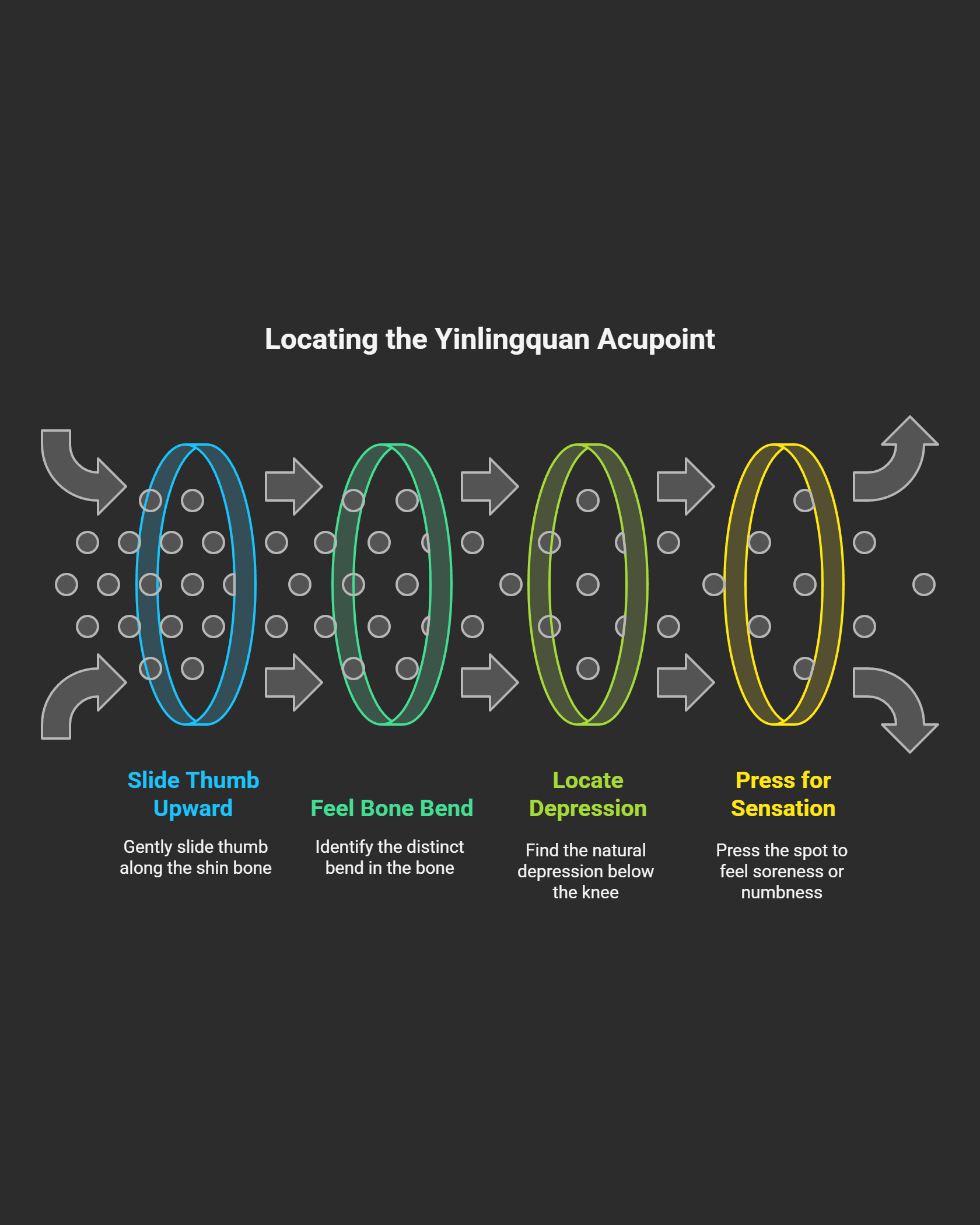
Finding the Yinlingquan acupoint is actually very simple. Please sit down and bend your knee. Using your thumb, gently slide upwards along the inner edge of your shin bone (tibia).When your thumb pad slides to just below the knee, you will feel a distinct bend in the bone, and your finger will naturally fall into a depression. This spot will typically have a relatively clear sensation of soreness, numbness, or distension when pressed—that is the Yinlingquan point.It is the "He-sea point" of the Spleen meridian, a place where the energy of the channel converges like a great river flowing into the sea. Stimulating it can have a profound and direct regulatory effect on the function of the Spleen.
A Professional Massage Therapist's Technique Guide: How to Effectively Activate the Yinlingquan Acupoint
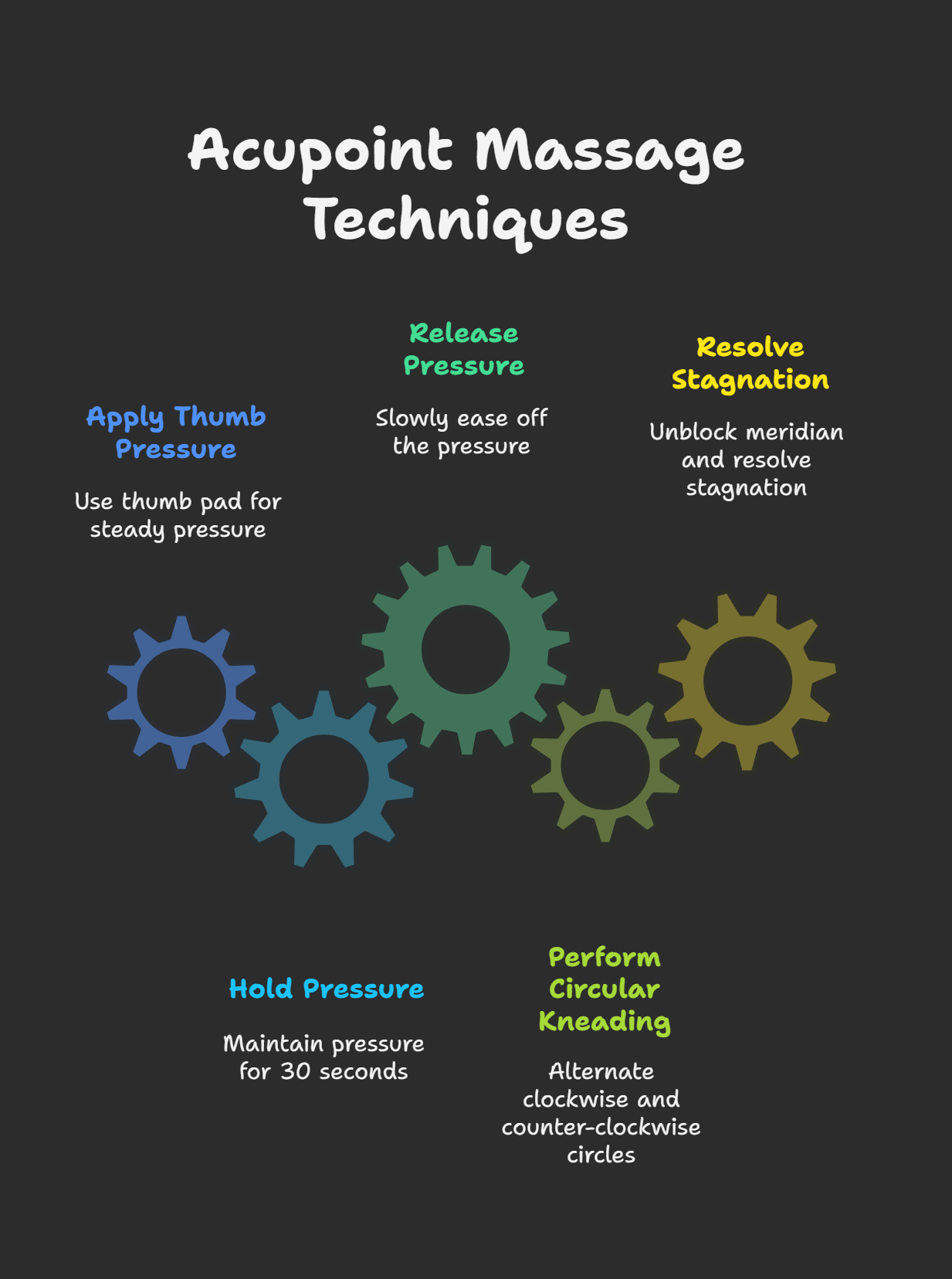
Learning the correct massage technique is what makes the effect twice as powerful with half the effort. This is not just a mechanical pressing action, but a deep dialogue with your body.First, using the pad of your thumb, apply steady, deep, perpendicular pressure directly onto the acupoint. This is the most direct "Thumb Pressing Method." The pressure should be based on a level of soreness and distension that you can tolerate. You can hold this pressure for about 30 seconds, then slowly release.For a more advanced technique, you can build upon the initial pressure by performing the "Circular Kneading Method," alternating between clockwise and counter-clockwise circles. This method more gently unblocks the meridian and resolves the stagnation of Qi and Blood.
Feeling "De Qi": The Key Signal for Activating the Therapeutic Effect
During the massage process, you need to seek a sensation called "De Qi," which is the core indicator that acupressure or acupuncture is achieving its therapeutic effect. It is not a sharp, piercing pain, but rather a unique sensation of "soreness, numbness, distension, or heaviness."When you press the Yinlingquan point, if you feel waves of soreness and distension coming from deep within the point, or even if this sensation has a tendency to spread slightly, it means your stimulation is deep enough and you have successfully activated the Qi and Blood of the meridian. The body's self-regulation mechanism has been switched on.Learning to find this sensation elevates your self-massage from simple "labor" into true "treatment."
Establishing Your Daily Maintenance Routine: Persistence is Key
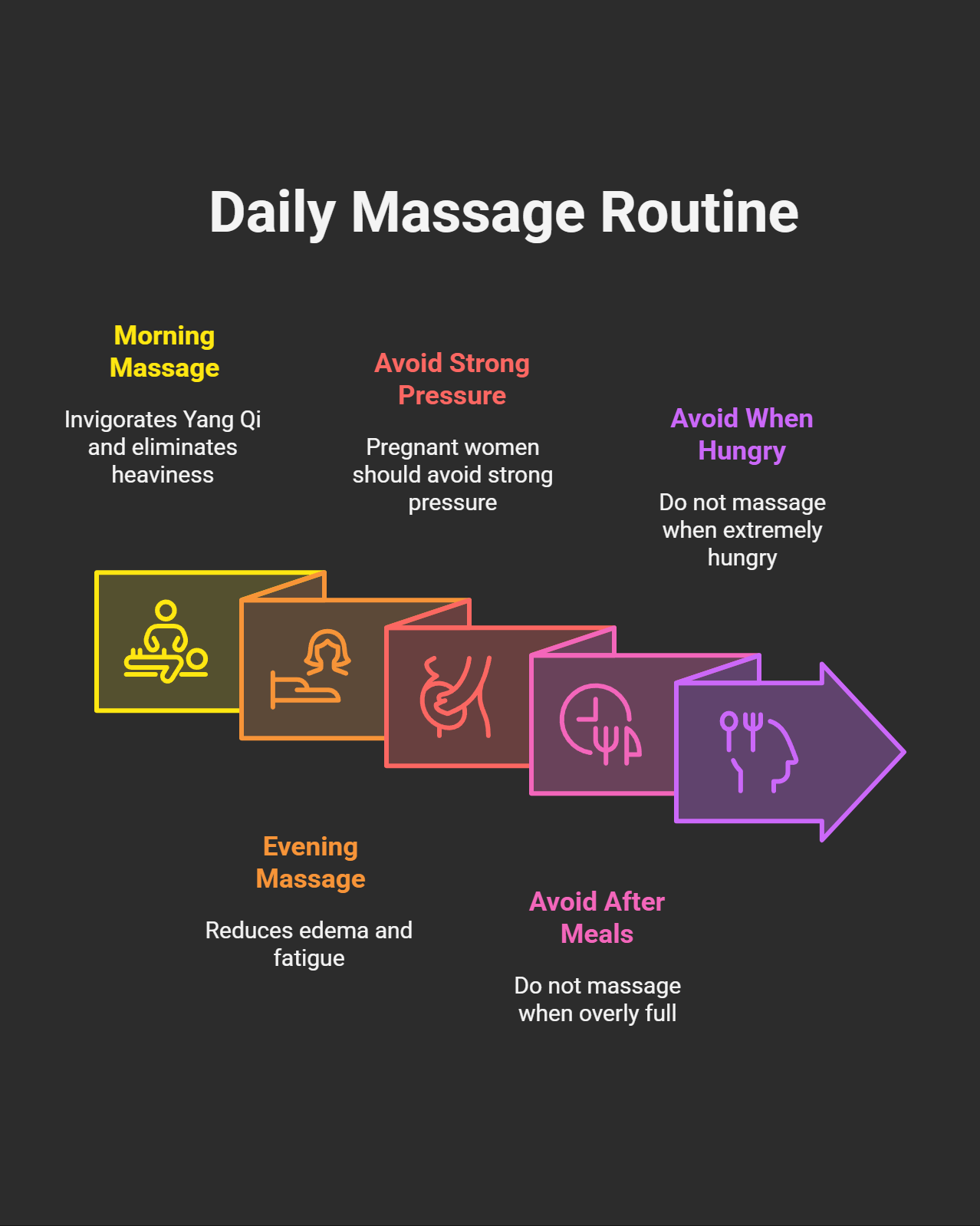
To achieve the best results, regular massage is crucial. I recommend that you can massage the point 1 to 2 times per day, focusing on one side at a time for 3 to 5 minutes per session.Massaging in the morning after waking up helps to invigorate the Yang Qi of the Spleen and Stomach and eliminate the feeling of heaviness from the night. Performing the massage in the evening before bed or after a bath helps to eliminate lower limb edema and fatigue that has accumulated from prolonged sitting or standing during the day. However, please take note of the following: pregnant women should avoid applying strong pressure to this point. It is also not advisable to perform the massage when you are overly full after a meal or when you are extremely hungry, to avoid interfering with the body's normal functions.
Synergistic Effects: The Golden Partners of the Yinlingquan Acupoint
In Traditional Chinese Medicine, acupoints are also combined into "prescriptions" (配伍). Similar to the hierarchy of emperor, minister, assistant, and messenger herbs in a formula, this approach can make the effect greater than the sum of its parts (1+1>2).For fortifying the Spleen and eliminating dampness, Yinlingquan has several golden partners. The top recommendation is the Zusanli acupoint (ST36), located four finger-widths below the outer depression of the knee. It is the He-sea point of the Stomach meridian. The Spleen and Stomach share an interior-exterior relationship, so massaging both of these points at the same time can comprehensively improve digestive and absorption functions. This combination is particularly effective for symptoms like abdominal bloating, poor appetite, and fatigue, making it the primary combination for regulating a weak Spleen and Stomach.
The Top Choice for Gynecological Health: The Synergistic Effect of Yinlingquan and Sanyinjiao
For women, I especially recommend pairing the Yinlingquan acupoint with the Sanyinjiao acupoint (SP6). Sanyinjiao is located four finger-widths directly above the tip of the inner ankle and is the meeting point of three important Yin meridians: the Liver, Spleen, and Kidney.If we say that Yinlingquan is the "dedicated control valve" of the Spleen meridian, then Sanyinjiao is a "master switch" that can simultaneously regulate these three major Zang-fu organs. When combined, they not only powerfully fortify the Spleen and eliminate dampness, but also soothe the Liver and regulate Qi, as well as nourish Kidney Yin. For women who suffer from heavy dampness accompanied by irregular menstruation, menstrual pain, or premenstrual edema, this is an excellent combination for daily self-care.
Tackling the Root Cause: Building Dietary Habits that Prevent Dampness
Acupressure is a powerful external aid, but for a fundamental improvement, you must also start at the source—just like remembering to turn off the faucet while you are pumping out water.The general principle for dietary regulation is to "avoid cold and embrace warmth," because the Spleen and Stomach function best in a warm environment. Please choose more gentle, easily digestible foods like brown rice, Job's tears (coix seed), Chinese yam, and pumpkin, and make good use of warming spices like ginger and dried tangerine peel.At the same time, you must reduce or avoid iced drinks and foods, raw foods, sweets, and fried items. These foods are sticky, heavy, and are the main culprits in producing internal dampness.
Movement Generates Yang: Make Exercise Your Best Dehumidifier
There is a common saying in Traditional Chinese Medicine, "Where the Qi flows, the water flows," meaning that regular exercise is the most natural and effective method for eliminating dampness. A sedentary lifestyle leads to the stagnation of Qi and Blood, making it naturally difficult for water and dampness to be transported.It is recommended that you choose moderate-intensity aerobic exercises that cause you to sweat slightly, such as brisk walking, jogging, or rope skipping, as this expels dampness from the body through perspiration. Additionally, practices like yoga and Tai Chi, which include a large number of stretching and twisting movements, can gently "massage" the internal organs in the abdominal cavity and activate the meridians, which is very beneficial for fortifying the Spleen.The key is to be persistent. Keep your body in motion and your Yang Qi abundant, and dampness will naturally have no place to hide.
Conclusion: Integrating Self-Care into Your Happy Healthy Life
The feeling of heaviness and fatigue in your body is not an unsolvable problem; rather, it is your body's way of reminding you that it's time to pay attention to the health of your Spleen and Stomach. The Yinlingquan acupoint, that wonderful hub on the inner side of your calf, is a precious gift the body has given us for self-regulation.I hope that through today's sharing, you have not only learned the massage technique but have also come to understand the health logic behind it. Please incorporate this simple yet powerful self-massage method into your daily maintenance routine. This is the very philosophy advocated by a "Happy Healthy Life": to actively understand your body, to manage your well-being in a wise way, and to ultimately reap the reward of a lighter, more vibrant you.


![[Happy Healthy Life] A Professional Massage Therapist's Therapeutic Secrets for the Rangu Acupoint: A Dual-Action Guide to Saying Goodbye to Plantar Fasciitis and Insomnia](https://happyhealthylife.cv/wp-content/uploads/2026/02/樂健生活:專業按摩師的然谷穴理療秘笈,告別足底筋膜炎與失眠的雙效指南-540x360.jpg)
