
Have you ever had this experience: you haven't eaten that much, but your stomach always feels bloated and stuffy, as if the food is just stuck there, not moving up or down? Or perhaps for several days in a row, your bowel movements have been irregular, your body feels heavy, and it's affecting your mood and vitality?As a clinical massage therapist, I have seen many cases in my work where the digestive system begins to "slack off" due to stress, a sedentary lifestyle, or dietary habits. The body's wisdom is far greater than we can imagine. Sometimes, what it needs is not strong medication, but a gentle and correct reminder to awaken its innate ability to function.Today, I will share with you a professional, safe, and effective method of self-care: clockwise abdominal massage.
The purpose of this article is not just to teach you a "belly-rubbing" technique, but to guide you in a deep dialogue with your body. This is not only a physical intervention but also an exercise in "Interoception"—learning to listen to and understand the signals coming from inside your body.Together, we will explore the scientific principles behind this method, learn the professional and safe steps for the massage, and understand how to integrate it into a holistic health blueprint. This is not a magical quick-fix therapy, but a tool that empowers you, allowing you to proactively and gently cooperate with your own body to restart the natural rhythm of your digestive system.
The Clockwise Mystery: Why Is Direction So Important?
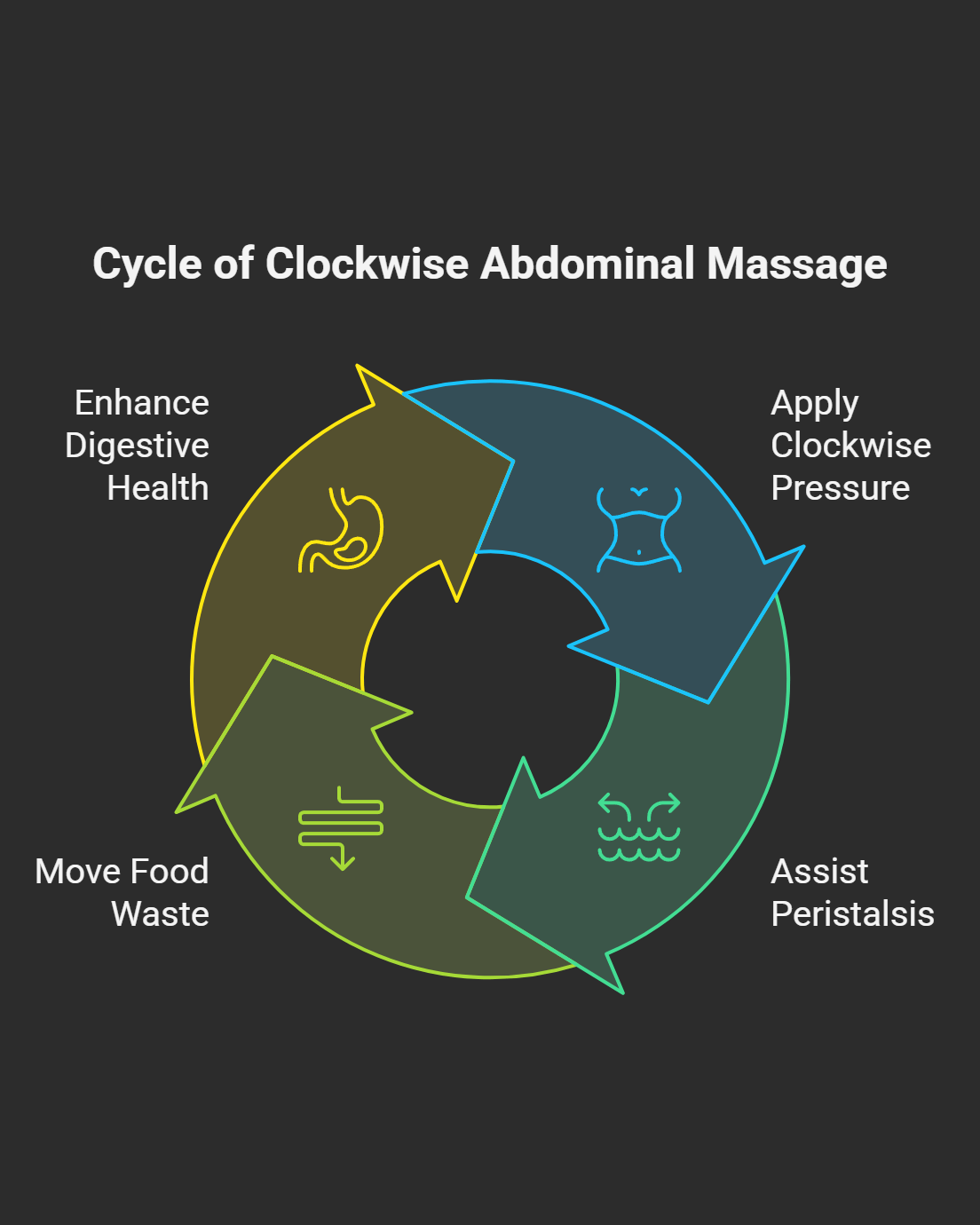
Many people intuitively think that abdominal massage is just about making random circles, but the "clockwise" direction is the very essence of the entire technique, and it is based on a solid foundation of anatomy and physiology.Simply put, this direction perfectly follows the natural path of our large intestine. After food is digested and absorbed by the stomach and small intestine, it enters the "U"-shaped pipeline of the large intestine that encircles the abdominal cavity. This journey begins in the lower right abdomen at the ascending colon, moves upwards, then travels horizontally across the upper abdomen in the transverse colon, then moves downwards on the left side along the descending colon, and finally prepares for expulsion via the sigmoid colon.A clockwise massage, therefore, follows this final mile of the digestive journey.
The effectiveness of this technique is rooted in the wise principle of "biomimicry." The movement of food waste through the intestines relies on a wave-like muscle contraction known as "peristalsis."Clockwise abdominal massage, through external physical pressure, mimics and assists this natural direction of peristalsis, which moves from right to left, and from top to bottom. When we massage in a clockwise direction, we are, in effect, gently "pushing" the contents within the intestines along their natural path. Conversely, if the direction is wrong (counter-clockwise), it could interfere with the intestine's natural rhythm and potentially even worsen blockages and discomfort.This is a sustainable method of health management that cooperates with the body, rather than forcibly intervening.
More Than a Mechanical Action: Activating the Mind-Body Connection
The effects of abdominal massage are not limited to just mechanical pushing. Our abdomen is filled with a complex neural network, often referred to as the "second brain." The stress and anxiety of modern life directly impact the function of the digestive system, causing intestinal peristalsis to slow down or become dysregulated. This is why we often feel gastrointestinal discomfort when we are stressed.Gentle, rhythmic touch is, in itself, a powerful relaxation signal. It can soothe our autonomic nervous system, switching it from the "fight or flight" stress state to the "rest and digest" relaxation mode. This helps to lower stress hormones, thereby indirectly improving digestive problems caused by emotional tension. Therefore, every abdominal massage is a dual healing for both body and mind.
A Professional Massage Therapist's Self-Massage Guide: A Step-by-Step Explanation
To ensure your abdominal massage has the maximum effect, the correct technique, timing, and mindset are all indispensable.Please avoid performing the massage when you are overly hungry or immediately after a large meal. The best times are one hour after a meal, in the morning after waking up, or at night before bed.Choose a quiet, warm space and lie flat on a bed or a yoga mat. Bend your knees and place your feet flat on the surface to allow your abdominal muscles to completely relax. Applying a small amount of massage oil (such as sweet almond oil) can reduce skin friction and allow for smoother strokes. You can also consider adding one or two drops of essential oils that aid digestion, such as peppermint or ginger, but you must ensure they are fully diluted with a carrier oil before use.
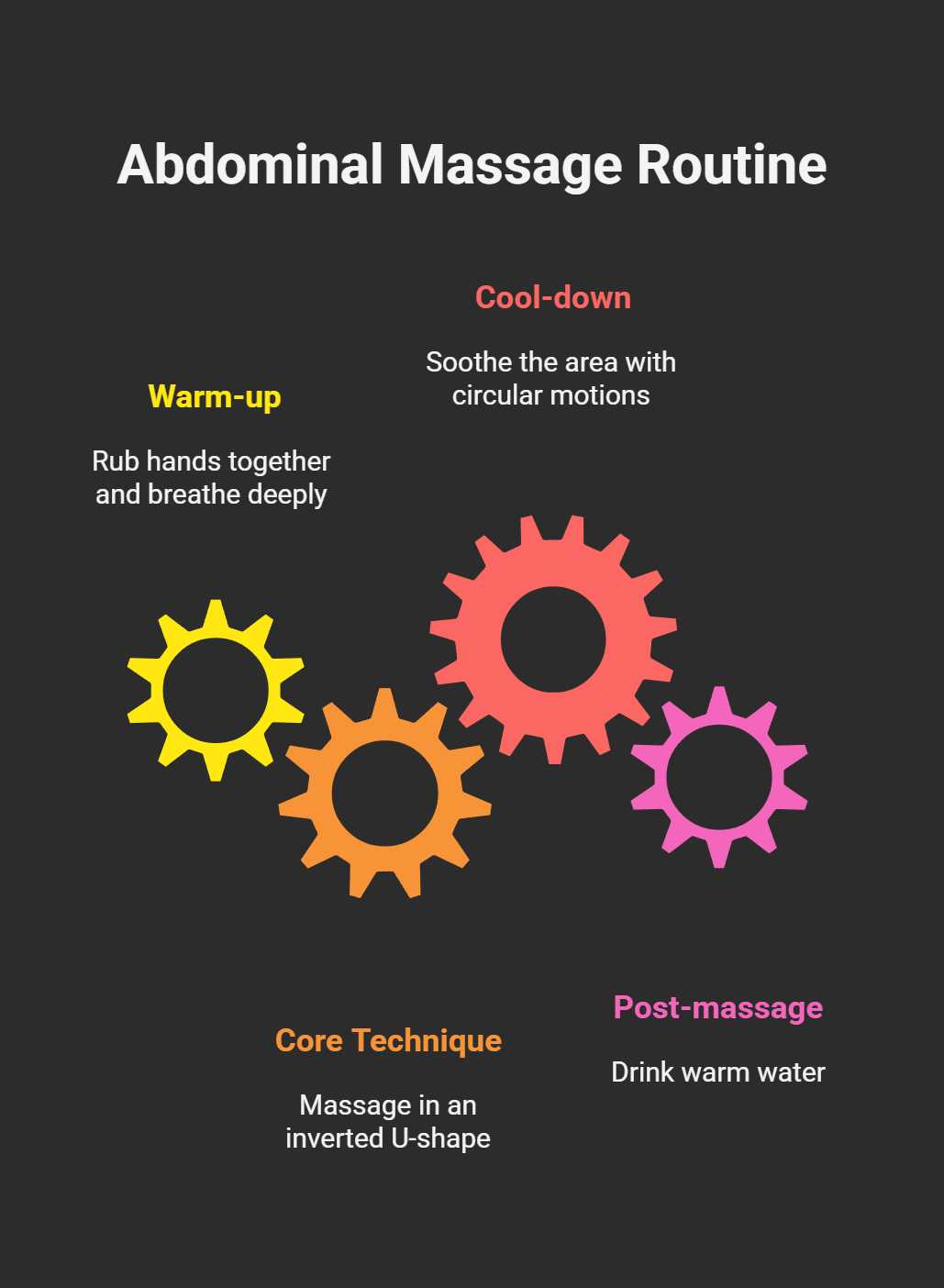
The recommended massage routine should be performed for 5 to 10 minutes daily; persistence is key.Warm-up: First, rub your hands together to warm them, then place them lightly on your abdomen and take a few deep breaths to warm up the area.Core Technique: Using your right palm or a lightly clenched fist, begin at your lower right abdomen (the start of the ascending colon). Slowly and steadily, slide upwards to just below your right ribs.Next, slide horizontally across your upper abdomen until you reach the area just below your left ribs.Finally, slide down along your left abdomen to your lower left abdomen.This continuous, smooth, "inverted U-shape" path should be repeated about 10 times. The pressure should be deep enough to feel firm but not painful, with a depth of about 4 to 5 cm, in order to effectively stimulate the large intestine.Cool-down: After you finish, soothe the area by making large, clockwise circles around your navel.Post-massage: Drink a glass of warm water.
Evidence-Based Benefits: It's More Than Just Feeling Good
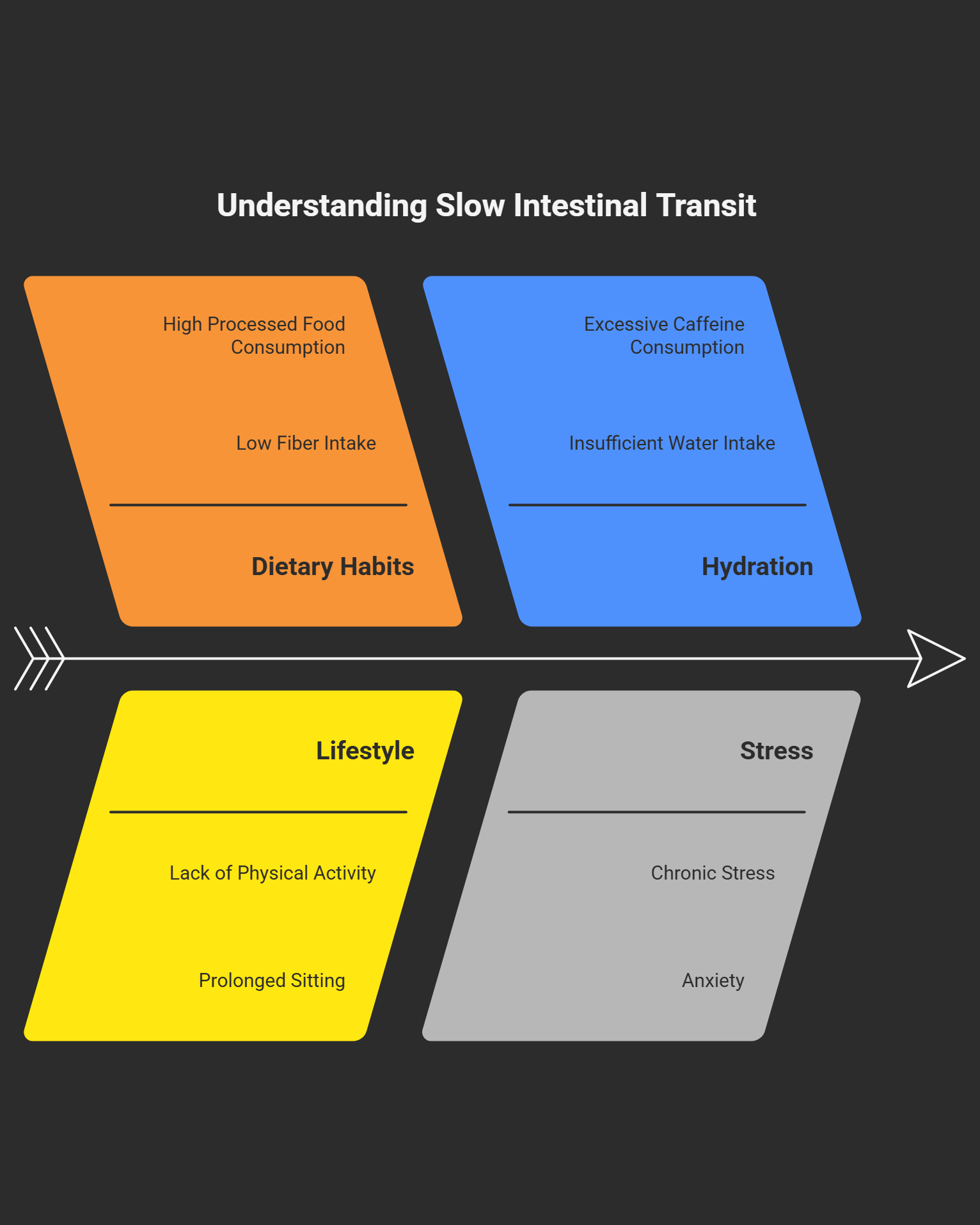
The efficacy of abdominal massage is not merely a subjective feeling of comfort; it is also backed by a growing body of scientific research.A meta-analysis focusing on functional constipation clearly showed that the treatment group receiving abdominal massage had significant improvements in bowel movement frequency, reduced difficulty with defecation, and an enhanced quality of life. This proves that it is an effective non-pharmacological intervention.You might ask, "My problem is 'indigestion,' not 'constipation.' Will this method be effective for me?" The answer is a definitive yes. Many symptoms of "indigestion," such as bloating, gas, and a feeling of stagnation, are the direct consequences of slow intestinal transit.
We can imagine slow intestinal transit as a "traffic jam." When waste material moves more slowly, it leads to an accumulation of gas (flatulence) and an increase in abdominal pressure (bloating), which in turn affects the stomach, causing a persistent feeling of fullness.Therefore, although you may feel the discomfort in your upper abdomen, the root of the problem is likely insufficient peristalsis in your lower digestive tract. By directly addressing this "traffic jam"—that is, by shortening the colonic transit time and promoting bowel movements—abdominal massage fundamentally alleviates those nagging symptoms we collectively call "indigestion" and restores the smooth operation of the entire digestive system.
Safety First: Key Contraindications and Precautions for Abdominal Massage
As a responsible therapist, I must emphasize: safety always comes first. Although abdominal massage is gentle, it is by no means suitable for all situations. Before you begin, you must review your own condition, and if you have any doubts, please consult your doctor first.Situations that are absolute contraindications include:During pregnancyAfter recent abdominal or pelvic surgeryAcute abdominal inflammation or infection (such as appendicitis or acute gastroenteritis)Abdominal or pelvic cancerHerniaSevere and unexplained abdominal painSevere vascular diseases such as an abdominal aortic aneurysmPerforming a massage under these conditions could worsen your condition or be dangerous, so please avoid it completely.
Additionally, there are some relative precautions, which mean you need to be especially careful and it is best to proceed only after consulting your doctor and receiving their permission. These situations include:Uncontrolled high blood pressureSevere osteoporosisOpen wounds or severe rashes on the abdominal skinDuring a heavy menstrual periodDuring a bout of diarrheaFor some people, massage may exacerbate discomfort during these times. Please remember, this safety guide is here to protect you and reflects the most important principle in professional therapy—"First, do no harm." Proactively assessing your own condition is the foundation for using this method safely.
Conclusion: Mastering the Power to Heal Your Own Body
We have had a detailed discussion on clockwise abdominal massage—an ancient wisdom rooted in anatomy and validated by modern science. We have learned that it is effective because it follows and assists the body's natural rhythms to alleviate digestive discomforts such as bloating, fullness, and constipation.The core of this article is to empower you with a sense of "self-efficacy." By providing you with knowledge, techniques, and safety guidelines, you are no longer a passive victim of discomfort, but an active manager of your own health. Please remember, cooperating with your body requires patience. With consistent practice, you will gradually feel your body's response.Most importantly, always put safety first. If you are experiencing persistent and severe digestive symptoms, you must seek assistance from a qualified healthcare professional.

![[Happy Healthy Life Column] A Massage Therapist's Guide to Proper Heat Therapy for Deep Tissue Relief](https://happyhealthylife.cv/wp-content/uploads/2026/03/樂健生活專欄:推拿師教你正確溫熱敷,達到深層肌肉舒緩-540x360.jpg)
![[Happy Healthy Life] Unlocking Your Body’s Self-Healing Power: A Professional Massage Therapist’s Guide to Ending Chronic Fatigue Through Gua Sha and Fascial Release](https://happyhealthylife.cv/wp-content/uploads/2026/02/樂健生活】解鎖身體自癒力:專業按摩師帶你以刮痧與筋膜放鬆告別慢性疲勞抽象藝術圖像-540x360.jpg)
