
Foreword: A Heartfelt Message from Your Massage Therapist
Hello, I am your massage therapist. In my work, one of the most common complaints I hear about is, without a doubt, the sudden muscle spasm that shatters the peace—the "cramp."Whether it's being woken from a deep sleep at night by the pain, or suddenly collapsing during exercise, the intense pain of a muscle going out of control often leaves a lasting sense of fear. Many people's intuitive reaction is to forcefully pull on it, fighting through the pain. But today, I want to share with you a smarter, more scientific, and gentler way to handle it.
As a clinical massage therapist, we view a cramp as more than just muscle fatigue. We see it as a "temporary malfunction" of the nervous system. Therefore, our solution also begins at the neurological level.This article will give you an in-depth understanding of the truth about cramps and provide a complete strategy, from "instant shutdown" to "long-term defense." This will empower you to no longer fear cramps and to become the master of your own body's health.
Section One: Unraveling the Mystery—Why Do Your Muscles "Rebel"?
Let's first clarify a core concept: a cramp is not the muscle's fault, but rather a glitch in the neural signals that control the muscle.You can imagine your muscle is like a lamp, and the nervous system is its switch. When a cramp occurs, the "alpha motor neuron"—the "switch"— becomes hyperexcited and frantically fires "Contract!" commands at an extremely high frequency. This causes the muscle to get stuck in a painful, continuous contraction, unable to relax.
Behind this neurological storm, two key players have become imbalanced.One is the "muscle spindle," which, when a muscle is fatigued, continuously sends out "contract!" alarms. The other is the "Golgi Tendon Organ," which is supposed to hit the "relax" brake when tension becomes too high, but in this situation, its function is diminished.When the "contract" signals far overwhelm the "relax" signals, a violent spasm is triggered. This isn't a rebellion by the muscle, but a "loss of control" within the nervous system.
The traditional concepts of dehydration and electrolyte loss are not wrong, but they act more as "triggers" that add fuel to the fire.When your body lacks sufficient water and minerals like sodium, potassium, calcium, and magnesium are imbalanced, the stability of your nerve cells is compromised, making them highly prone to "misfiring." This explains why after prolonged exercise, the combination of muscle fatigue (the neurological factor) and heavy sweating (the electrolyte factor) puts you in the high-risk group for cramps.
Section Two: The Neurological "Off Switch"—The Miracle of Reciprocal Inhibition
When a cramp occurs, forcefully stretching the painful muscle is like going head-to-head with an out-of-control motor. It is not only painful but can also worsen the spasm by stimulating the sensitive muscle spindles.Now, please remember this smarter technique: "Reciprocal Inhibition." This is a magical mechanism built into our bodies, and it is the most elegant and effective first response for handling an acute cramp.
The principle of reciprocal inhibition is very simple: when you actively contract a group of muscles, your nervous system automatically sends a command to its "opponent" muscle (the antagonist) to relax.For example, when you contract the muscles on the front of your thigh to straighten your knee, the muscles on the back of your thigh must relax. This is an irresistible physiological reflex, as precise as flicking a light switch to "off," and we can use it to deactivate the cramp alarm.
Therefore, instead of directly confronting the "screaming" cramping muscle, we choose to work on its "neighbor."By actively contracting the antagonist muscle of the one that is cramping, we are, in effect, issuing an undeniable "relaxation order" through the back door of the nervous system. This method bypasses the pain and gets right to the core of the problem, making it a safer and faster "off switch." This is also the first-aid method that we massage therapists highly recommend in a clinical setting.
Section Three: Clinical Application—Resolve Common Cramps in Three Seconds
Now, let's turn theory into action. The next time a cramp strikes, please remain calm and follow the steps below:
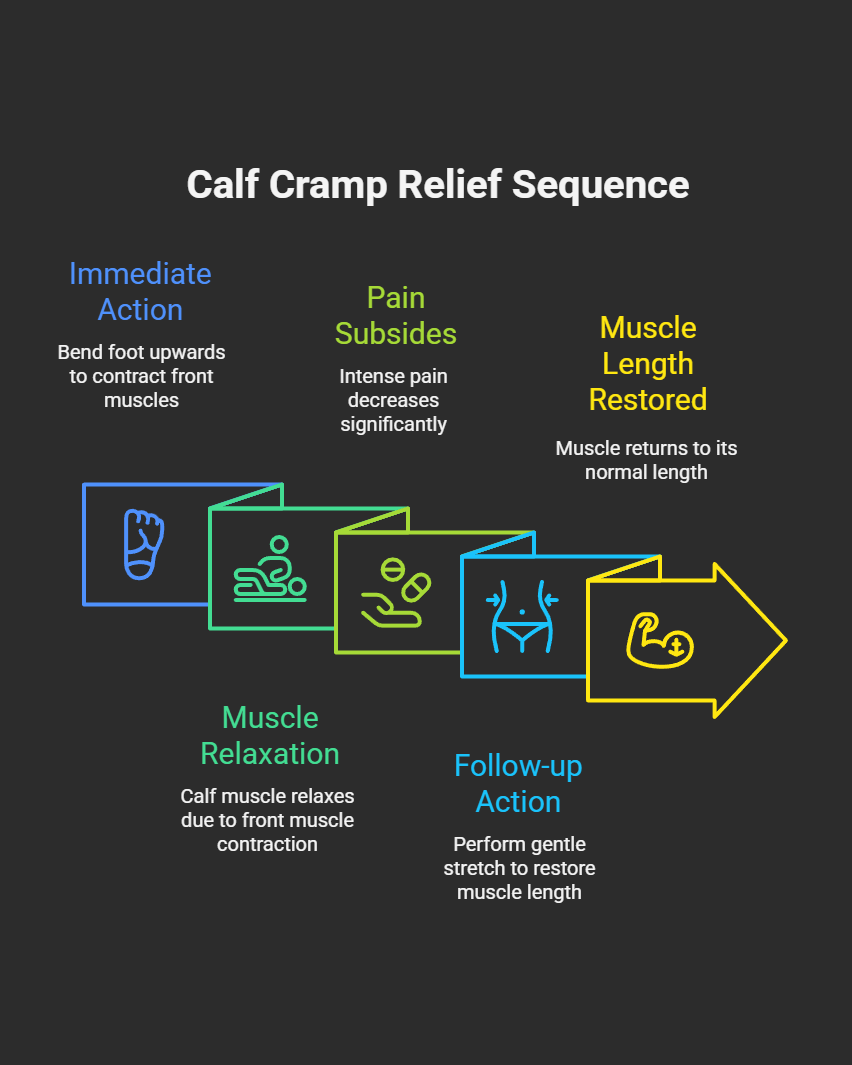
Scenario 1: Calf (Gastrocnemius) Cramp
- Step One (Immediate Action):Immediately and actively bend the sole and toes of the cramping foot upwards with all your might, as if trying to touch your shinbone (this is called dorsiflexion). Focus on contracting the muscles on the front of your lower leg. You will be surprised to find that when you forcefully contract these front muscles, the cramping calf muscle at the back will instantly receive the signal to relax, and the intense pain will subside.
- Step Two (Follow-up Action):Once the intense pain has subsided, you can then perform a gentle stretch. You can either get into a lunge position, extending the cramped leg straight back with the heel on the floor, or sit down and use a towel to gently pull the sole of your foot towards your body. The purpose of stretching at this point is to restore the muscle's normal length, not to fight against the spasm.
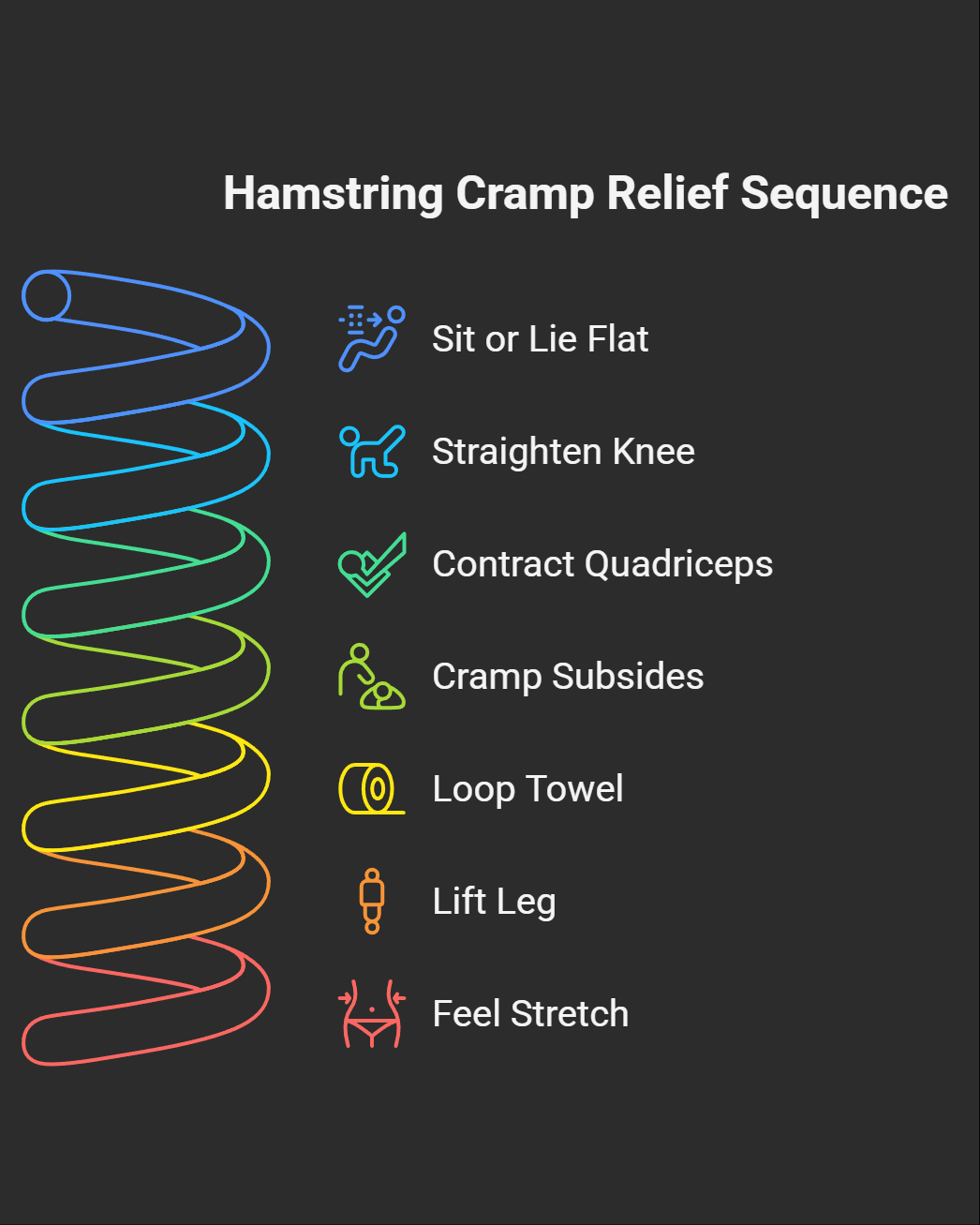
Scenario Two: Hamstring (Back of Thigh) Cramp
- Step One (Immediate Action):Sit down or lie flat. Actively completely straighten the knee of the cramping leg and forcefully contract the quadriceps on the front of your thigh. Concentrate all your intention on contracting the front of your thigh, and the cramping sensation at the back will naturally subside. This is the most perfect demonstration of reciprocal inhibition.
- Step Two (Follow-up Action):After the spasm has stopped, lie flat on the floor. Loop a towel around the sole of your foot and gently lift your leg upwards until you feel a comfortable stretch in the back of your thigh. Remember to perform this movement slowly and gently.
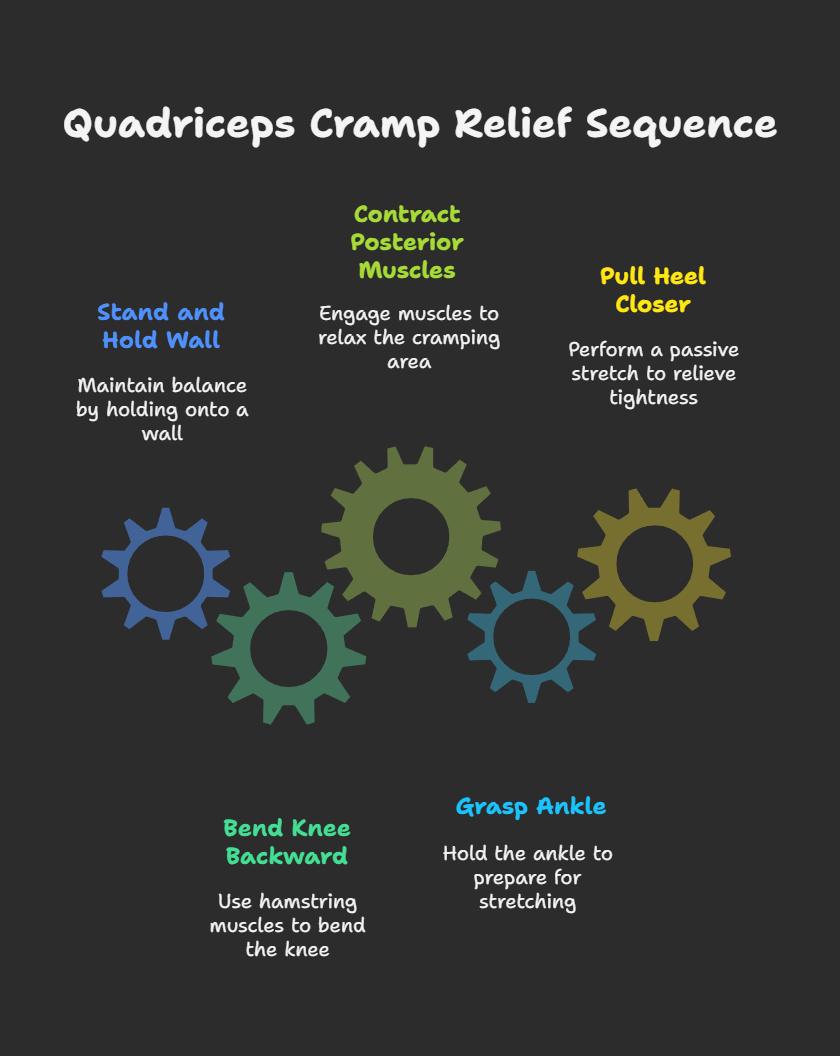
Scenario Three: Quadriceps (Front of Thigh) Cramp
- Step One (Immediate Action):Stand and hold onto a wall to maintain your balance. Actively bend the knee of the cramping leg backward, using the strength of the hamstring muscles on the back of your thigh to pull your heel towards your buttock. By contracting the posterior muscles, you are commanding the cramping muscles at the front to relax.
- Step Two (Follow-up Action):Continuing from the previous movement, once the spasm has subsided, gently grasp your ankle with your hand and pull your heel closer to your buttock. This will perform a passive stretch on the front of your thigh to soothe any residual tightness.
Section Four: After the Cramp—A Massage Therapist's Professional Recovery Guide
A severe cramp is like a minor muscle strain, and the subsequent soreness should not be ignored. Proper care at this stage is crucial. Please remember this timeframe: 48 hours.
- Acute Soreness Phase (Within 48 hours after the cramp):During this time, there may be a mild inflammatory response within the muscle. Our goals are to calm the area and reduce inflammation. Please use a cold compress. Wrap an ice pack in a towel and apply it to the sore area for 15-20 minutes. The cold helps to constrict blood vessels, reduce swelling, and numb nerve endings to relieve pain.
- Residual Tightness Phase (After 48 hours):When the acute inflammation has subsided, the goal shifts to promoting circulation and relaxation. At this stage, you should switch to using a warm compress. Use a heating pad or take a hot bath, applying heat to the affected area for 15-20 minutes. The warmth promotes blood flow, brings oxygen and nutrients, accelerates the removal of metabolic waste, and effectively relieves the sensation of muscle stiffness.
Professional massage is one of the most effective ways to prevent cramps. Through our professional techniques, we therapists are not just relaxing your tight muscles; we are conducting a form of "neuromuscular re-education."Using effleurage (light stroking), petrissage (kneading), and trigger point therapy, we can effectively reduce the hyperexcitability of your nervous system, improve local blood circulation, and recalibrate the balance between the muscle spindles and the Golgi Tendon Organs. This fundamentally raises your body's "cramp threshold."
Section Five: Red Flags—When You Should Seek Medical Assistance
The vast majority of cramps are benign, but if the following "red-flag" warning signs appear, you must seek a professional evaluation from a doctor:
- The cramp is accompanied by persistent muscle weakness, numbness, or atrophy.
- The affected area shows abnormal swelling, redness, or a burning sensation.
- The severity and frequency of the cramps have significantly increased, severely impacting your quality of life.
- The cramping problem began or worsened after you started taking a new medication.
Conclusion: Become the Master of Your Own Health
Although muscle cramps are painful, they are by no means unsolvable. By understanding the neurological mechanism behind them, we can handle them in a much smarter way.Please remember:In the moment of an attack, utilize the "reciprocal inhibition" neurological off-switch.After the cramp, perform scientific cold and heat therapy along with maintenance massage.In your daily life, build a solid defensive line for your body through hydration, nutrition, and lifestyle habits.
When you learn to interpret your body's signals and respond based on knowledge, you are no longer a passive victim of cramps. You become the most competent manager of your own neuromuscular health.I hope this guide helps you to embrace a more flexible, more fearless "Happy Healthy Life."

![[Happy Healthy Life Column] A Massage Therapist's Guide to Proper Heat Therapy for Deep Tissue Relief](https://happyhealthylife.cv/wp-content/uploads/2026/03/樂健生活專欄:推拿師教你正確溫熱敷,達到深層肌肉舒緩-540x360.jpg)
![[Happy Healthy Life] Unlocking Your Body’s Self-Healing Power: A Professional Massage Therapist’s Guide to Ending Chronic Fatigue Through Gua Sha and Fascial Release](https://happyhealthylife.cv/wp-content/uploads/2026/02/樂健生活】解鎖身體自癒力:專業按摩師帶你以刮痧與筋膜放鬆告別慢性疲勞抽象藝術圖像-540x360.jpg)
