
On these scorching summer days, when clients step into my studio, I often hear similar complaints: "Lately, I've been feeling especially tired," "My mind feels foggy in the afternoons, and I have no energy," or "I feel inexplicably irritable, and my shoulders and neck have become stiff along with it."These are more than just subjective feelings; they are real responses from your body to the intense heat and humidity of summer. As a massage therapist, I am deeply aware of the resonance between the human body and the seasons. Ancient Traditional Chinese Medicine (TCM) wisdom calls this "shùn shí yǎng shēng," or "nourishing life in harmony with the seasons." This insight, passed down for thousands of years, aligns perfectly with the mind-body conditions I observe on my massage table every day.Summer fatigue is not simple laziness; rather, it is a warning sign that our bodies—especially our cardiovascular and nervous systems—are working overtime.
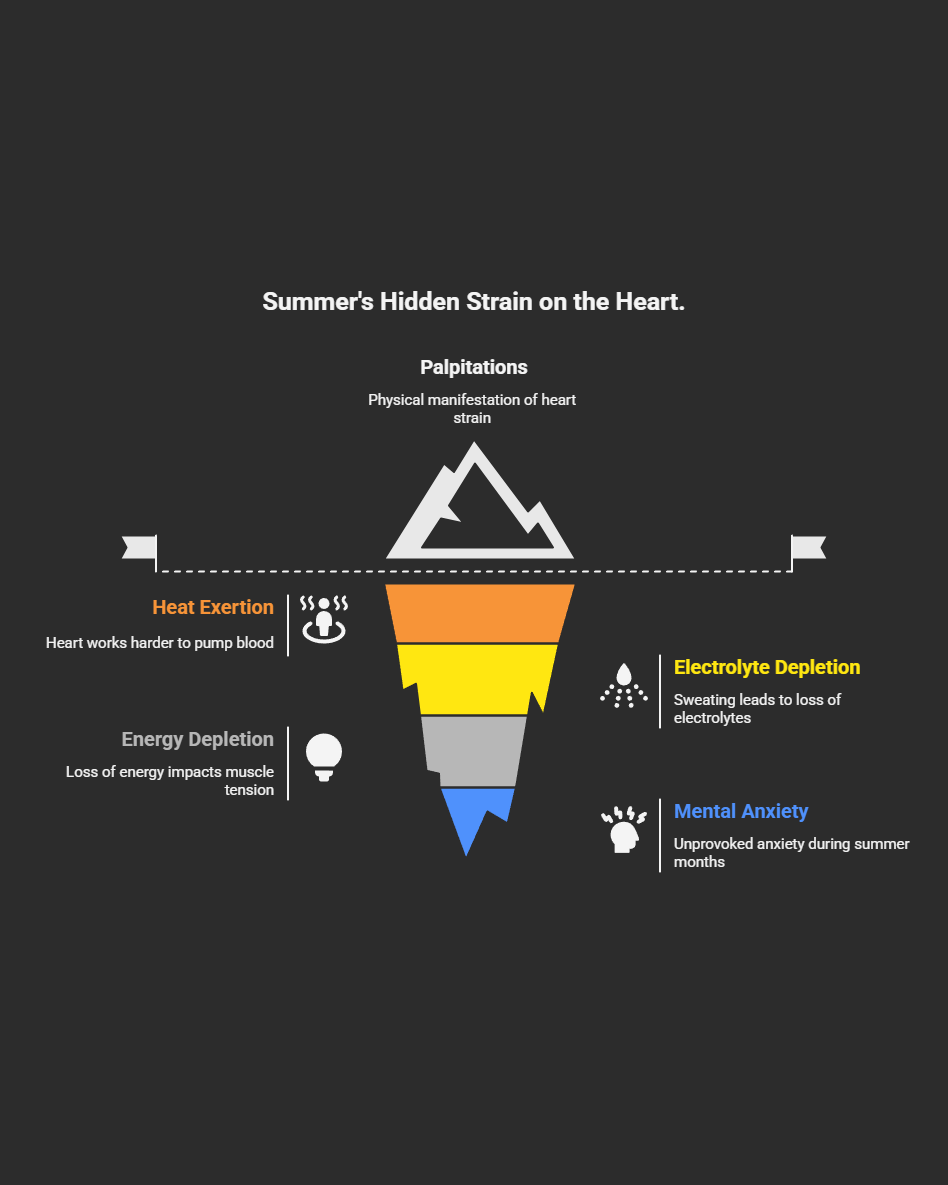
From my professional perspective, summer is the season when the heart bears the heaviest load of the year. High temperatures force the blood vessels in the skin to dilate in order to dissipate heat, which means your heart has to work harder to pump blood to every corner of your body.At the same time, profuse sweating leads not only to fluid loss but also to the depletion of electrolytes and energy that are essential for bodily functions—a phenomenon known in Traditional Chinese Medicine (TCM) as "hào qì shāng jīn" (consuming Qi and injuring fluids). This depletion of energy is directly reflected in your muscle tension and your mental state. Many clients experience palpitations, chest tightness, or a sense of unprovoked anxiety in the summer, which are the physical manifestations of the TCM concepts of "xīn huǒ wàng shèng" (Flourishing Heart-Fire) and "xīn shén bù níng" (unsettled Heart-Spirit).Therefore, a midday rest becomes a proactive and essential strategy for physical restoration.
In our modern, fast-paced lives, the "midday nap" is often labeled as a sign of laziness, but please allow me, as a therapist, to set the record straight: a well-planned nap is one of the most effective investments you can make for your physical and mental health.It is by no means a waste of time; rather, it is a powerful "reboot button." Scientific research has confirmed that a short nap can significantly lower blood pressure, which provides a precious respite for the heart, already under considerable strain during the summer.
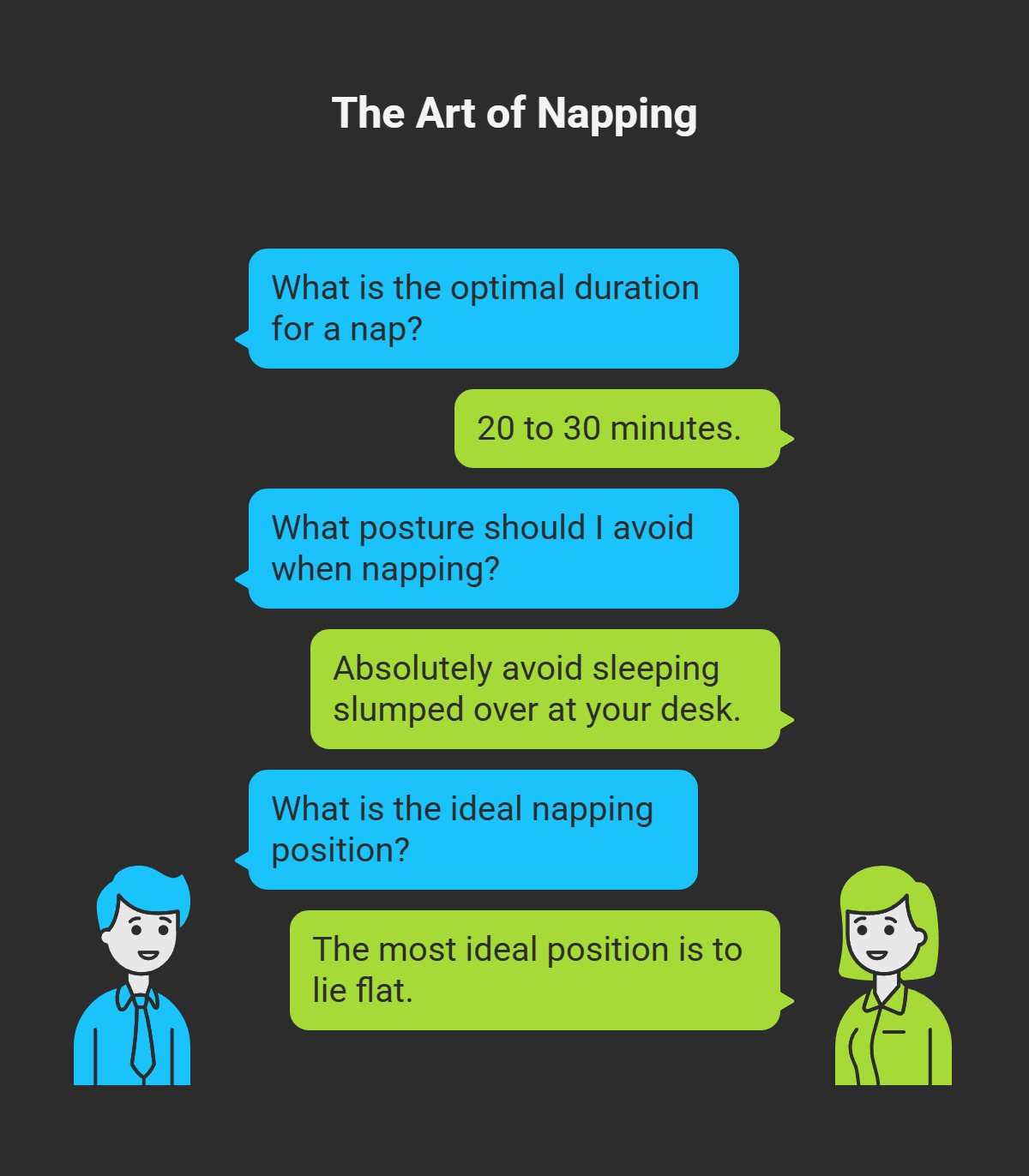
However, napping is a precise art, and the key lies in the "dosage." I always remind my clients to avoid the predicament of "waking up more tired than before."The optimal duration for a nap is 20 to 30 minutes. This is long enough for your brain to clear out fatigue-inducing substances, yet not so long that you fall into a deep sleep from which it is difficult to awaken, thus allowing you to perfectly avoid the post-nap grogginess known as "sleep inertia."Even more important is your posture! As a therapist, I must stress this: absolutely avoid sleeping slumped over at your desk. This position puts pressure on your eyeballs, contorts your cervical spine, and impedes both breathing and digestion. In the long run, it does a hundred harms and not a single benefit. The most ideal position is to lie flat. If conditions don't allow for that, you should at least try to use a reclining chair and ensure your neck is well-supported.
At the same time, we must also be mindful of the other side of napping. If you find that you need more than an hour-long nap to feel refreshed, or if the frequency of your napping is increasing, this may no longer be simple fatigue but rather a deeper warning signal from your body.This could reflect poor-quality nighttime sleep (such as undiagnosed sleep apnea) or other underlying health issues. In such a situation, out of my professional responsibility, I would advise you to treat this as an important opportunity for a health screening and to consult a physician in a timely manner to identify the root cause.Please remember: a strategic, short rest is a form of health maintenance, whereas an excessive dependence on long periods of sleep may be a symptom that needs to be taken seriously.
I know, of course, that for many of my clients, your office environment and tight schedule make a standard nap an impossible luxury. But don't worry; being unable to lie down and rest doesn't mean you must simply let fatigue accumulate.Traditional Chinese Medicine (TCM) meridian theory provides us with an extremely clever alternative: acupoint massage. You can think of it as a form of "self-healing at your fingertips" that can be done anytime. Our bodies are covered with energy channels (meridians), and by applying pressure to specific acupoints, we can effectively regulate our physical and mental state.This is like finding a pressure-release valve for a tense nervous system, allowing you to achieve a sense of calm and settled focus without ever leaving your seat. It is an essential health secret that every modern office worker should learn.
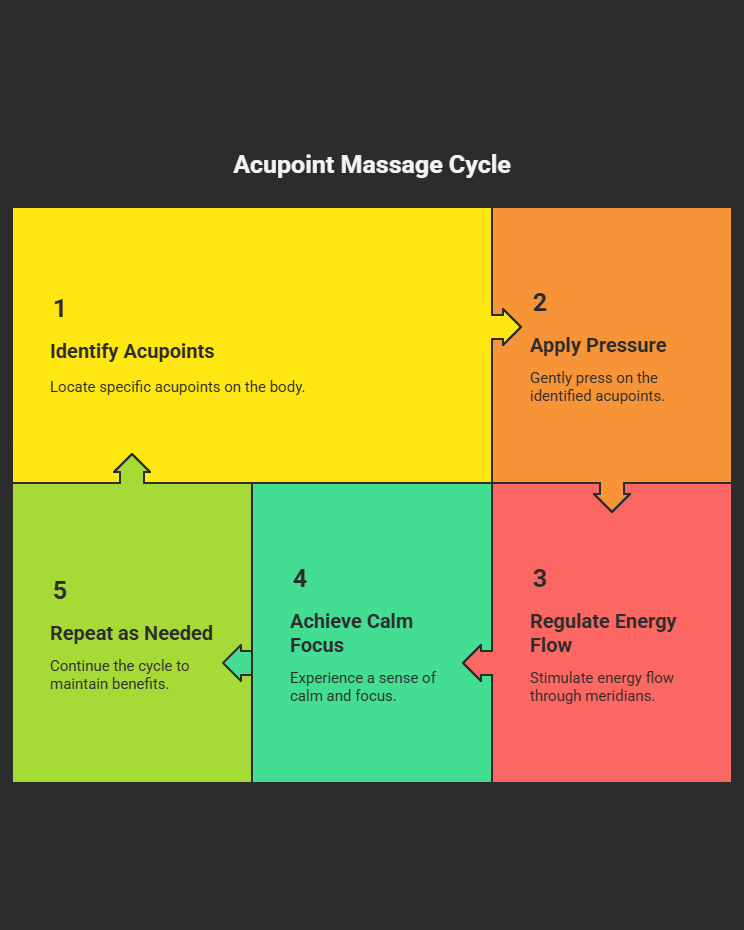
Here, I want to share two "mind-calming" acupoints that I most frequently recommend to my clients.1. The "Shenmen" Point (HT7) The first is the Shenmen ("Spirit Gate") point, located on your wrist.How to Locate: Trace a line down from your little finger until you reach the major crease of your wrist. You will find the point in the hollow on the thumb-side of the small, prominent, knobby bone at the base of your palm (the pisiform bone).Its Significance: This is the Yuan-Source point of the Heart Meridian, considered the gateway through which the Heart-Spirit (Shen) enters and exits.How to Use: When you feel vexed, irritable, or your thoughts are scattered, gently press this point with the thumb of your other hand for 2 to 3 minutes. This can effectively help you to calm your mind and spirit, like pressing a cooling button for an overheated brain. This action is simple and discreet; you can do it instantly during a break in a meeting or whenever you feel stressed to bring immediate tranquility to your mind.
The second key acupoint is Neiguan ("Inner Pass"), located on your inner forearm.How to Locate: Place three fingers from your other hand on your wrist, starting from the major wrist crease. The Neiguan point is located just beyond your third finger, directly in the center of your forearm between the two prominent tendons you can feel there.Its Significance: Neiguan is a crucial point on the Pericardium Meridian. It acts as the "Inner Pass" that protects the Heart.How to Use: When you experience chest tightness, palpitations, or even nausea due to nervousness or anxiety, pressing Neiguan helps to open the chest, regulate Qi, harmonize the stomach, and suppress nausea. Its effects are remarkably significant, especially for alleviating physiological discomfort caused by stress.Combined Approach: You can combine the massage of the Shenmen and Neiguan points for a powerful, synergistic effect. First, massage Shenmen to calm the spirit (ān shén), then massage Neiguan to regulate the Qi (lǐ qì). This two-pronged approach takes only a few minutes and can bring about a profound sense of ease and tranquility that spreads from the inside out.
In addition to acupoint massage, I want to teach you one of the most powerful and fundamental relaxation tools available: diaphragmatic breathing (also known as belly breathing). During my treatment sessions, I often guide clients through deep breathing because it is the most direct way to activate our parasympathetic nervous system—the body's "rest and repair" mode.Method:Sit up straight in a comfortable position and place one hand on your abdomen.Inhale slowly and deeply through your nose, concentrating on feeling your abdomen gently expand like a balloon as it fills with air.Then, exhale even more slowly through your mouth, feeling your abdomen gently draw inwards as you empty your lungs.This simple action effectively slows the heart rate, lowers blood pressure, and brings your attention away from scattered thoughts and back to the center of your body.Spending five minutes on diaphragmatic breathing during your midday break can have a restorative effect on your mind and body that is in no way inferior to that of a short nap.
To conclude, the "Happy Healthy Life" philosophy is not about pursuing a rigid set of wellness rules, but about learning to listen and respond to our body's signals. The summer midday pause—whether it's realized through a perfect 20-minute "power nap" or achieved through a few minutes of acupoint massage and deep breathing—is, at its core, all about giving our "Heart," which works so hard in the summer heat, a precious moment of nourishment and comfort.This is a form of wisdom that aligns with the natural rhythm of the seasons, and it is also an art for maintaining mind-body balance amidst the high pressures of modern life. As your massage therapist, I encourage you to integrate these simple yet effective techniques into your daily routine. By investing in your own well-being, you will reap the reward of a more vibrant and peaceful summer.

![[Happy Healthy Life Column] A Massage Therapist's Guide to Proper Heat Therapy for Deep Tissue Relief](https://happyhealthylife.cv/wp-content/uploads/2026/03/樂健生活專欄:推拿師教你正確溫熱敷,達到深層肌肉舒緩-540x360.jpg)
![[Happy Healthy Life] Unlocking Your Body’s Self-Healing Power: A Professional Massage Therapist’s Guide to Ending Chronic Fatigue Through Gua Sha and Fascial Release](https://happyhealthylife.cv/wp-content/uploads/2026/02/樂健生活】解鎖身體自癒力:專業按摩師帶你以刮痧與筋膜放鬆告別慢性疲勞抽象藝術圖像-540x360.jpg)
