Hello, I am your massage therapist. In my practice, I have observed a common phenomenon: after a long day of hard work, many people are plagued by stiffness and soreness in their lower back, along with sluggishness in their digestion. These two seemingly unrelated symptoms often go hand in hand, significantly impacting our quality of life.In reality, our bodies are far wiser than we imagine. We possess a built-in "key hub" capable of addressing both of these major challenges simultaneously. Today, drawing on my professional experience, I would like to guide you to a deeper understanding of this health secret located in your lower back—the **"Dachangshu Point" (Bladder 25)**. I will also share how you can integrate it into your daily routine to build, step by step, a "wellness lifestyle" that belongs to you.
Precise Positioning: Finding Your Body's Dual-Action Control Valve
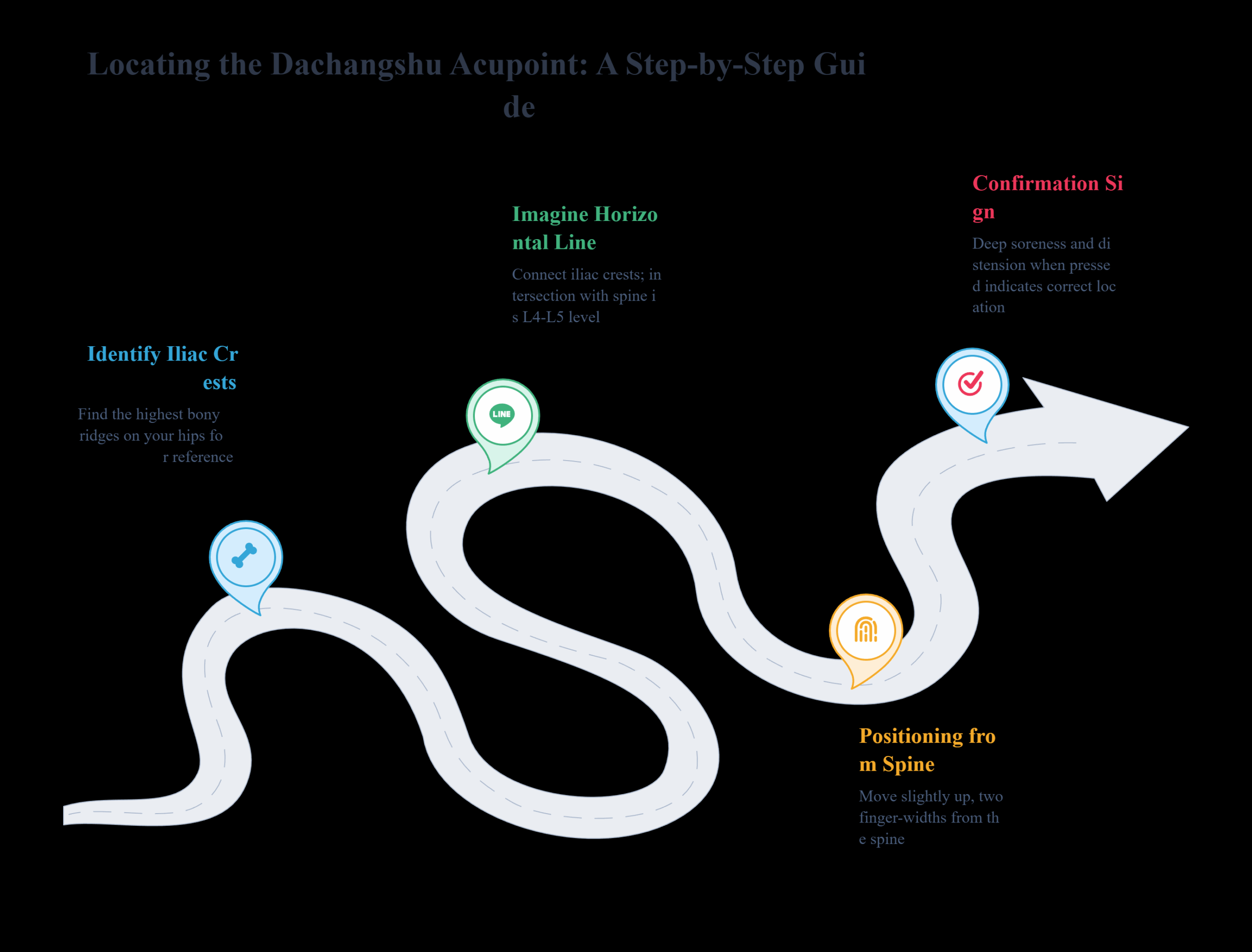
To awaken this powerful acupoint, precise location is the first step. The Dachangshu point belongs to the "Bladder Meridian of Foot-Taiyang." This meridian acts like the body's defensive Great Wall, extending along the back to guard our Yang energy. The Dachangshu point is situated within the lumbar segment of this meridian.Please stand up and place your hands comfortably on your hips to locate the highest, most prominent bony ridges on both sides of your pelvis (the iliac crests). Imagine a horizontal line connecting these two points; the intersection of this line with your spine is approximately at the level of the fourth and fifth lumbar vertebrae. From there, move slightly upward. The Dachangshu point is located about two finger-widths to the side of the spine. When you press with the pads of your fingers, you will feel a deep sensation of soreness and distension—that means you have found the right spot!
The Secret Behind Your Back: Why Is the Dachangshu Point So Crucial?
The extraordinary efficacy of the Dachangshu point stems from its unique status as a "Back-Shu point." The character "Shu" carries the meaning of "transporting" and "infusing."You can visualize the Bladder Meridian running along your back as an energy superhighway. In this analogy, the Back-Shu points serve as exclusive off-ramps for specific internal organs, directly transporting their vital energy (Qi) to the surface of the body. The Dachangshu point acts as the dedicated gateway on the back for the Qi of the Large Intestine; therefore, it maintains the most direct connection to the organ's functional state.This mechanism makes the Dachangshu point not only a site for treatment but also a diagnostic window. When the large intestine is out of balance, this area often becomes tight or tender to the touch. Conversely, stimulating this point can directly regulate the intestine's function. This is a tangible embodiment of the wisdom of Traditional Chinese Medicine.
Benefit 1: Regulate the Bowels—Be the Commander of Your Own Gut
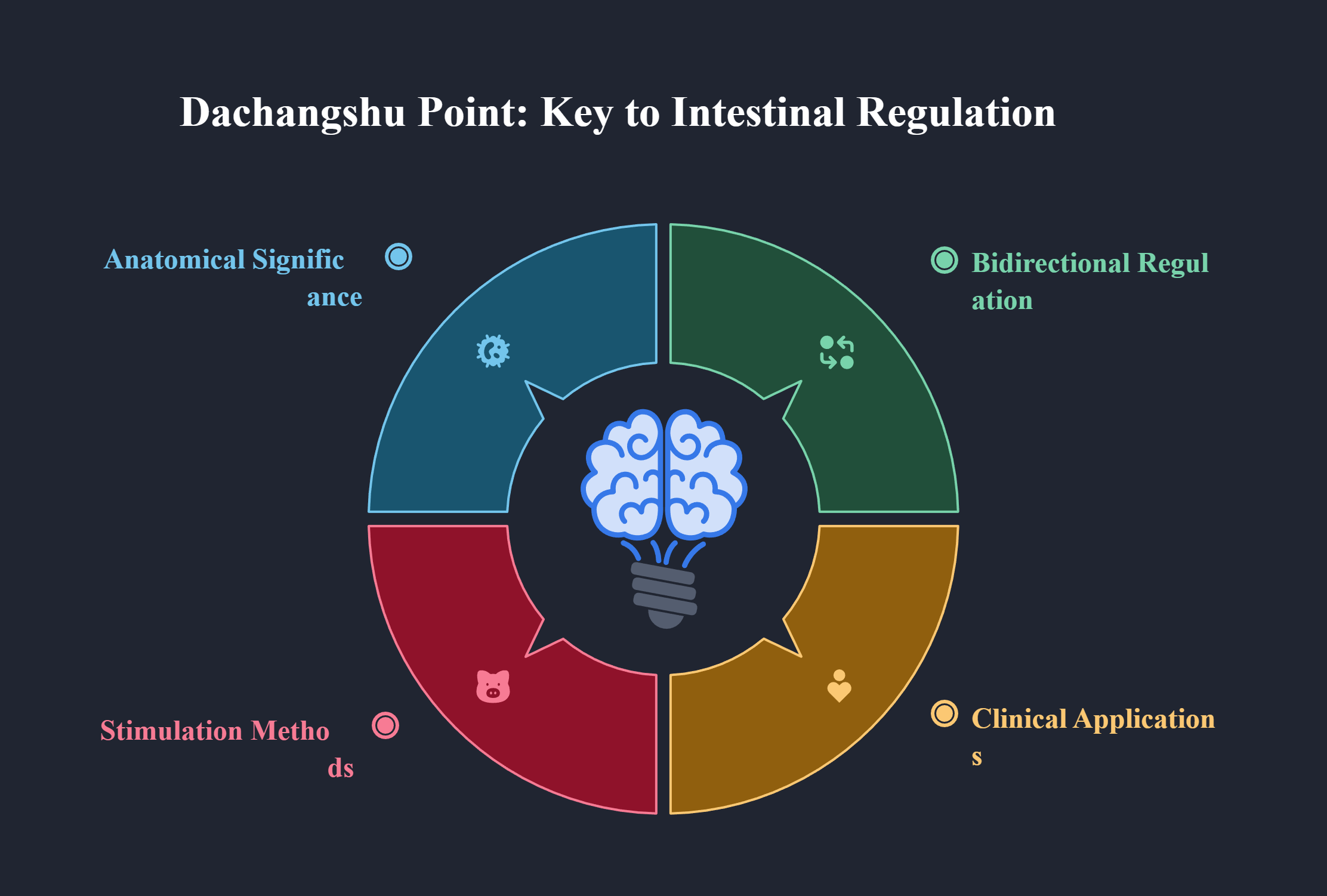
As the dedicated "Back-Shu" point of the Large Intestine, its primary duty is to unblock and regulate intestinal function. Whether you are dealing with constipation caused by sluggish peristalsis and stagnant Qi, or diarrhea resulting from functional disorders and internal "dampness," the Dachangshu Point exerts an intelligent, "bidirectional regulation" effect. Like a commander-in-chief for the intestines, it helps restore their normal operational rhythm.By consistently stimulating this point, we can effectively mobilize the intestinal Qi and promote the body's transportive functions, making bowel movements smooth again. Therefore, for common digestive distress such as abdominal bloating, rumbling, constipation, or diarrhea, the Dachangshu Point serves as a vital and effective hub for regulation, improving intestinal health from the very root.
Benefit 2: Strengthen the Lower Back and Legs, Stabilizing the Body's Core Pillar
The second powerful benefit of the Dachangshu point stems from its unique anatomical location. It is situated precisely near the apex of the lumbar spine's natural curvature—a core zone where the body bears the brunt of weight and movement stress.Due to prolonged sitting or poor posture, modern individuals are prone to excessive tension in the deep muscles found here (such as the **erector spinae** and **quadratus lumborum**), leading to stiffness and pain in the lower back. Massaging the Dachangshu point provides deep, direct relaxation to these tight muscle groups and stimulates local Qi and blood circulation. This effectively alleviates back soreness and pain resulting from muscle strain or the stagnation of Qi and blood. Whether for common **lumbar muscle strain** or **sciatica**, it offers immediate and significant relief.
Home Practice: Self-Massage Techniques to Activate the Dachangshu Point
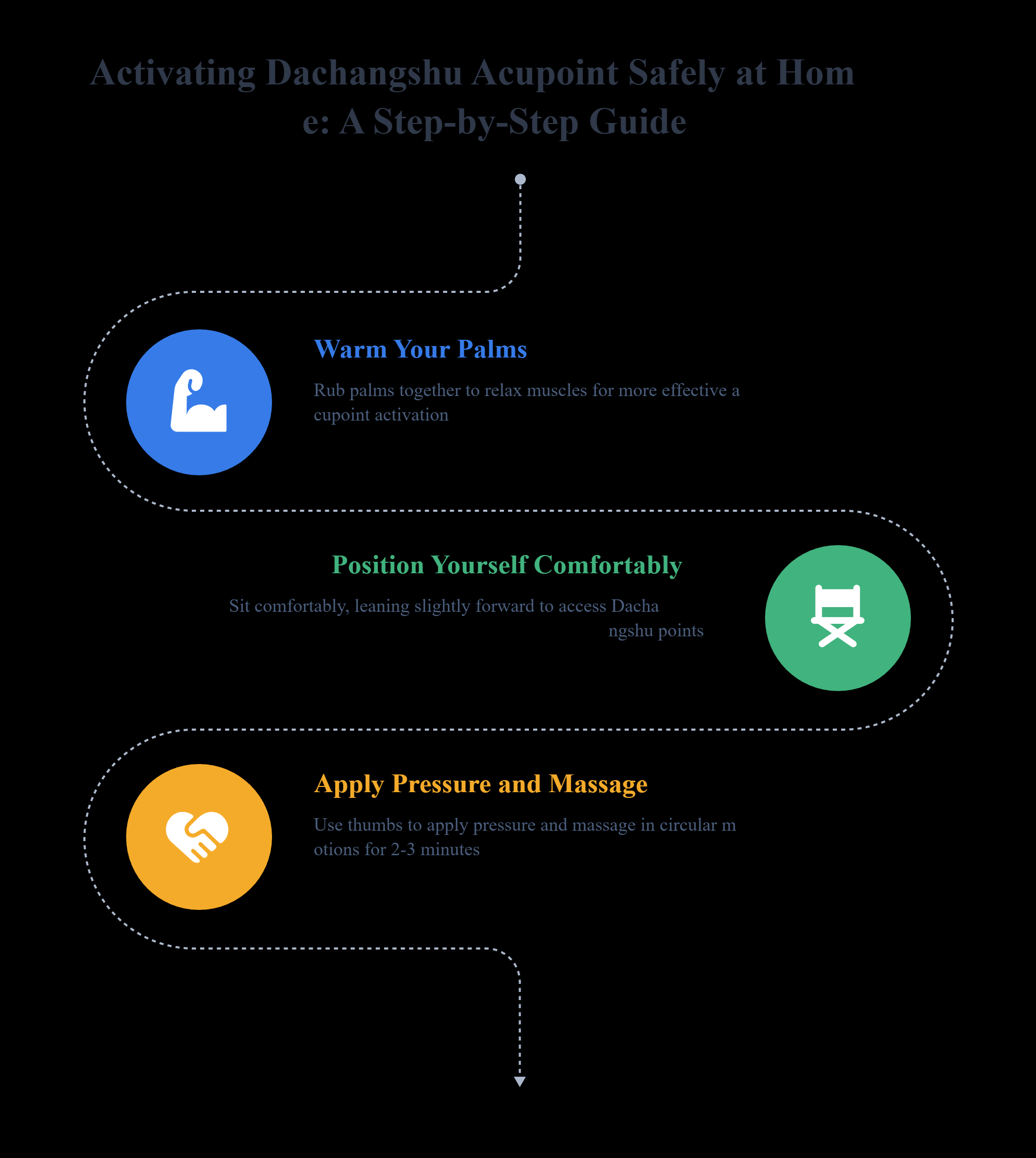
Learning how to safely activate this acupoint at home is the best health gift you can offer yourself. First, please be sure to rub your palms together to warm them up; warm hands allow the muscles to relax more easily, making your efforts significantly more effective.You can sit comfortably and lean your upper body slightly forward. Place the pads or knuckles of your thumbs on the Dachangshu points on both sides. Next, allow your body weight to sink naturally to apply steady, deep, perpendicular pressure until you feel that characteristic sensation of "soreness, numbness, or distention." Maintain this pressure and use your thumbs to perform small, circular kneading motions, massaging each point for about 2 to 3 minutes.
Daily Maintenance: Massage Frequency and Secrets for Enhanced Results
To achieve optimal results, I suggest performing this self-massage once or twice daily. I particularly recommend two "golden times" for this practice:Upon waking in the morning, massaging the Dachangshu point can gently awaken intestines that have been at rest overnight, helping to establish a healthy habit of regular morning bowel movements. Conversely, performing the massage before bed can deeply release lower back fatigue accumulated throughout the day, improving sleep quality and repairing muscle tissue.Additionally, the effects are significantly enhanced when combined with heat therapy. Before massaging, you can apply a hot towel or a homemade coarse salt pack to your lower back for 15 minutes. This promotes blood circulation and ensures total muscle relaxation, allowing the subsequent massage pressure to penetrate more deeply and effectively.
Holistic Healing 1: Cat-Cow Stretch—Revitalize Your Spine
While acupressure provides deep, point-to-point clearing, regular stretching offers holistic activation across lines and planes. I highly recommend starting with the "Cat-Cow" pose, as it gently mobilizes every segment of the spine.Please start on your hands and knees in a tabletop position, with your hands directly under your shoulders and your knees under your hips. As you inhale, drop your belly, lift your head and tailbone, and extend your spine to gently stretch your abdomen. As you exhale, gently arch your back upwards, much like a cat stretching.This movement not only directly soothes the entire lower back region—including the Dachangshu point—but the rhythmic contraction and expansion of the abdomen also softly massages your internal organs. This promotes intestinal peristalsis, making it a perfect complementary exercise.
Integrated Healing II: The Supine Twist—Deeply Releasing Lower Back Tension
The next exercise, the "Supine Twist," is an excellent movement for releasing tension in the deep muscle groups surrounding the Dachangshu point.Please lie on your back on a yoga mat or your bed, with your knees bent and your feet flat on the floor. Extend your arms out to the sides to form a "T" shape; this will help stabilize your upper body.Next, keeping both shoulders firmly grounded, slowly lower your bent knees together to the right side of your body. Feel the gentle stretch along your left lower back and glutes. Hold this position for 20 to 30 seconds, taking deep, long breaths.When finished, return to the center and repeat the same movement on the other side. This twist effectively relaxes the quadratus lumborum muscle and provides a gentle compression to the abdominal cavity, stimulating the intestines.
Integrated Healing 3: The Knees-to-Chest Stretch—Gently Soothe Your Lower Back
The final recommended movement is the "Knee-to-Chest Stretch." It directly and gently elongates the muscle groups of the lower back, alleviating tension in the area surrounding the Dachangshu point.Once again, begin in a supine position (lying on your back) and completely relax your body. Gently bend your right knee, clasp your hands around your leg just below the knee, and softly pull it towards your chest. You should feel a comfortable stretch in your right lower back and buttocks; please hold this position for 20 to 30 seconds. Then, slowly lower your right leg and repeat the process with your left leg.This movement not only soothes discomfort in the lower back, but from a physical perspective, it also applies slight pressure to the ascending or descending colon, thereby aiding intestinal peristalsis.
From the Inside Out: Fundamental Conditioning through Diet and Lifestyle
While acupressure and stretching are effective methods for clearing the body's pathways, a healthy diet and lifestyle habits serve as the fundamental source of high-quality energy for your body.Please ensure you consume an adequate amount of dietary fiber daily, as it is the intestinal tract's best cleanser. At the same time, maintaining sufficient hydration is crucial, as water is the key to allowing that fiber to do its job effectively. Furthermore, try to establish a regular biological rhythm, such as eating meals at set times and cultivating a consistent schedule for bowel movements. Regular daily walks or exercise are also excellent ways to promote intestinal motility and improve circulation in the lower back.Only by integrating these positive habits into your daily life can the therapeutic effects of acupressure become more stable and long-lasting.
Conclusion: Your Health is in Your Own Hands
The Dachangshu Point, this vital hub situated in our lower back, is a precious gift from our body. It serves as a constant reminder that the strength of our lower back and the smooth flow of our intestines are an inseparable, holistic entity.Starting today, I invite you to integrate this daily five-minute self-care ritual into your life: applying heat and gentle acupressure to the Dachangshu Point, paired with a few simple stretches. This is more than just an effective remedy for immediate discomfort; it is a long-term investment in nurturing your body. The path to a true "wellness lifestyle" begins with this simple yet profound act of self-healing—a power that lies firmly within your own warm hands.


![[Happy Healthy Life] A Professional Massage Therapist's Therapeutic Secrets for the Rangu Acupoint: A Dual-Action Guide to Saying Goodbye to Plantar Fasciitis and Insomnia](https://happyhealthylife.cv/wp-content/uploads/2026/02/樂健生活:專業按摩師的然谷穴理療秘笈,告別足底筋膜炎與失眠的雙效指南-540x360.jpg)
