
Introduction: The Silent Torture of the Office
When the workday is over and you finally stand up from your chair, do you feel that familiar, dull ache in your lower back? It's a feeling that can seem like it has become a part of your body—a kind of chronic torment you can't escape.As a massage therapist, I encounter clients every day whose bodies have become "stuck" due to prolonged sitting. Their muscles are tight, their fascia has adhesions, and their bodies are silently protesting the static nature of modern life. Many people believe back pain is a complex problem that's difficult to solve, but today, I want to share a concept with you: the most effective healing stems from your own active participation. This journey to liberating your body begins with understanding your pain.
Where Does Your Back Pain Come From? Deconstructing the Invisible Damage of Prolonged Sitting
To solve a problem, one must first understand its root cause. The ache in your lower back didn't appear out of thin air; it is the result of the day-after-day accumulation of micro-stresses.First, we must recognize that a seated posture places far more pressure on the spine than a standing one. When you sit, the load on your lumbar spine increases significantly, which causes the deep stabilizing muscles responsible for maintaining your posture to gradually fatigue. When these deep muscles "go on strike," the larger, superficial muscle groups (like the erector spinae) are forced to take over the stabilization work they are not designed for. This prolonged compensatory contraction causes them to become overworked and stiff, ultimately triggering pain.This is the source of that "inexplicable" ache that you feel.
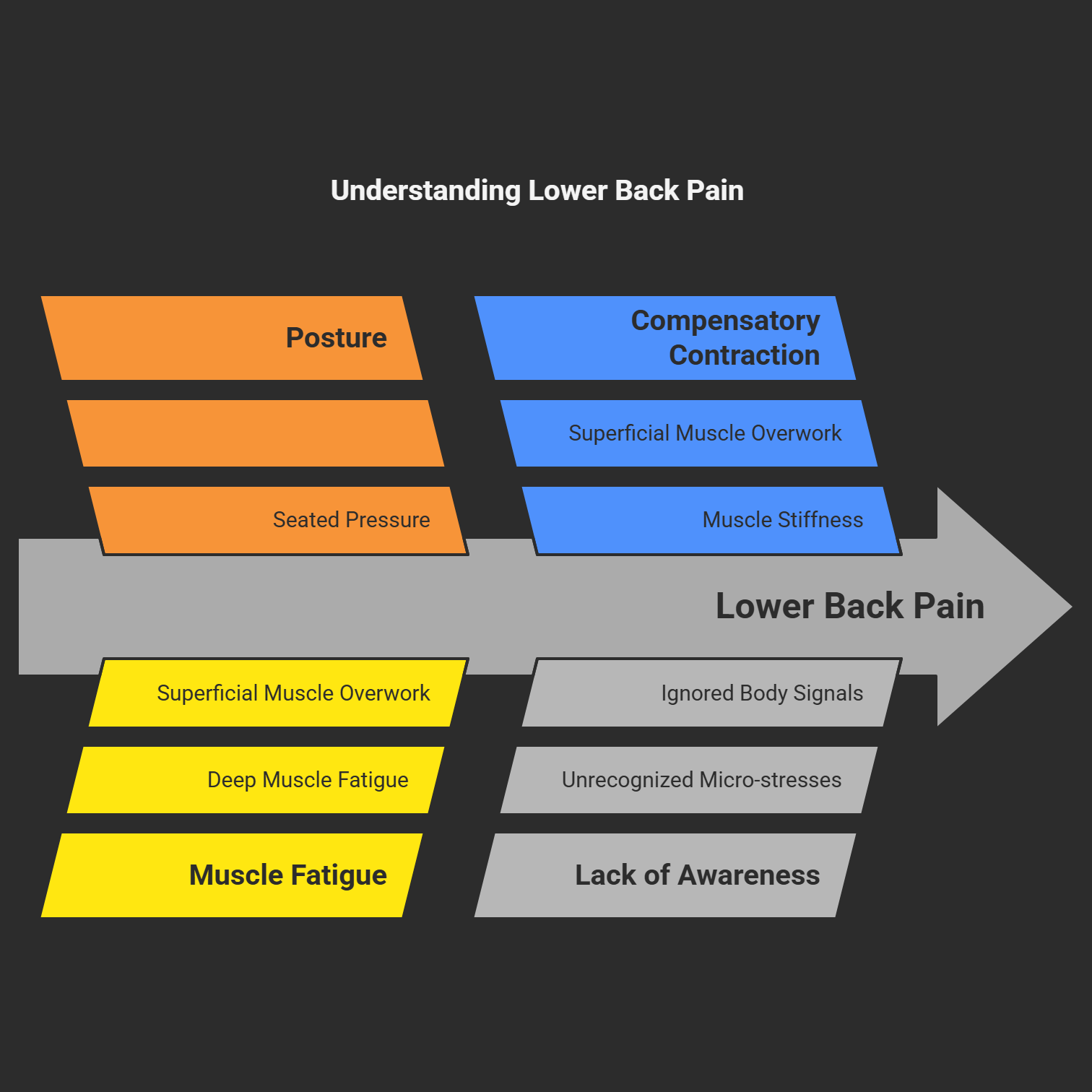
In addition to pressure, poor sitting posture makes matters worse. The common habit of slouching or hunching over leads to a posterior pelvic tilt, which lengthens the back muscles while shortening the abdominal and hip flexor muscles, creating a front-to-back tension imbalance in the body.Furthermore, the seemingly relaxing habit of crossing your legs is a killer for pelvic health. It can cause a pelvic tilt, forcing the lumbar spine into a compensatory lateral curve (scoliosis), and can even compress the gluteal muscles, triggering symptoms similar to sciatica.In my treatment room, I can feel the physical evidence of these issues with my hands—what are often referred to as "qi knots" are known in medical terms as "myofascial trigger points." These tight nodules are the true culprits behind lower back and gluteal pain.
One Twist, Why Is It Effective? A Healing Journey Deep into the Body
The "Seated Spinal Twist" that I am about to introduce is not just a simple movement; it is a powerful self-therapy tool.To perform it safely and effectively, we must remember one crucial principle: true spinal rotation primarily occurs in your thoracic spine (mid-back), not your lumbar spine (low back). Forcing a twist from the lower back is a primary cause of injury. Therefore, all healthy twists should be built upon a stable pelvic foundation and led by the more mobile thoracic spine.This movement can gently "awaken" the deep stabilizing muscles (like the multifidus) that have atrophied and gone dormant from prolonged sitting, thereby enhancing the spine's own protective capacity.
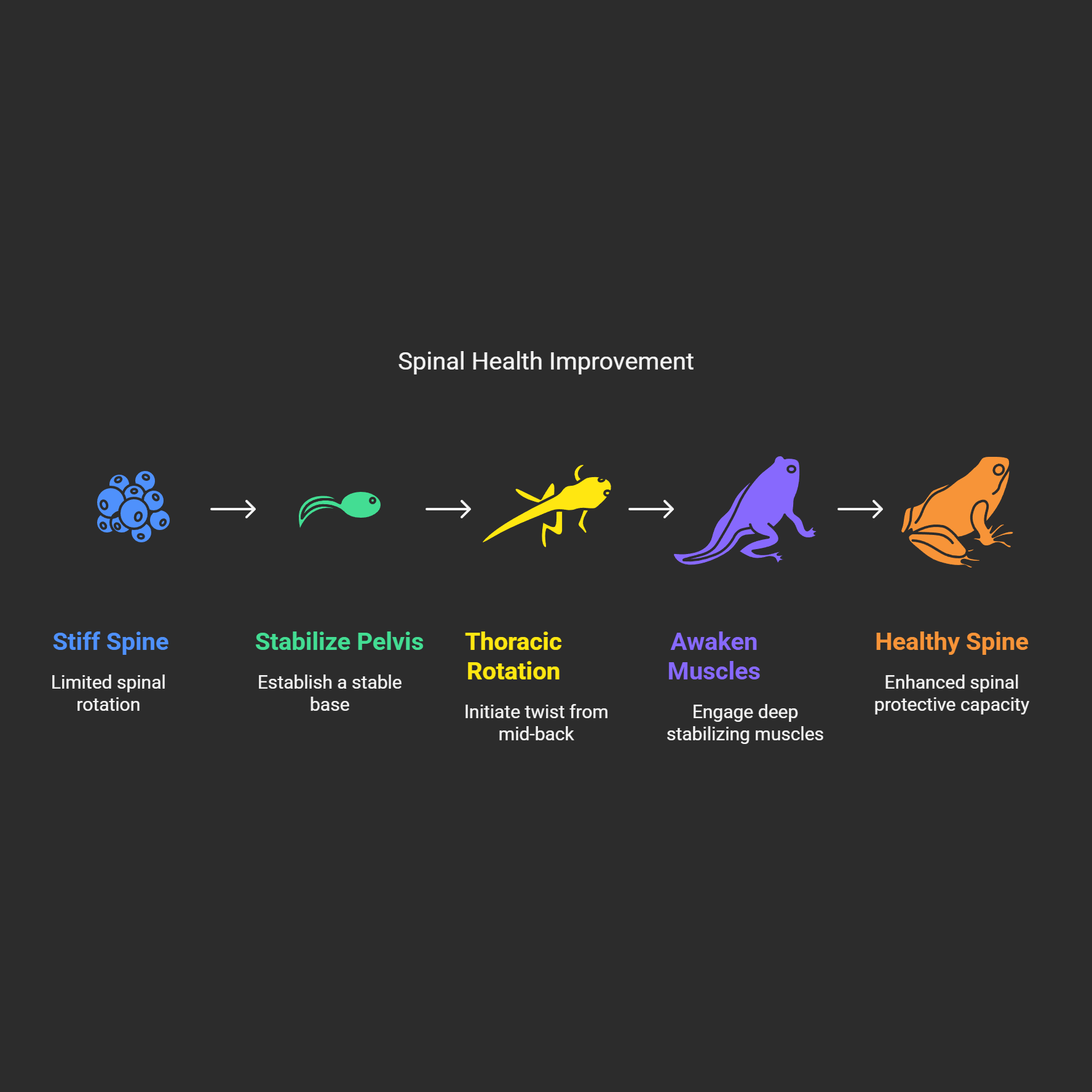
When you perform a twist, the internal and external oblique muscles in your abdomen are working as the primary engine, while the muscles on the opposite side of your body enjoy a wonderful stretch.When you twist to the right, the erector spinae and the quadratus lumborum (QL) on the left side of your body are gently lengthened, which is extremely beneficial for releasing tightness accumulated from chronic poor posture. This movement is especially effective for the quadratus lumborum, as it can stretch this deep muscle on the side of your body that is normally difficult to reach, relieving tightness caused by pelvic tilt right at the source.This is a form of precise healing that works from the inside out.
Precise Execution: A Complete Tutorial for the Seated Spinal Twist
While theoretical knowledge is the foundation, precise execution is what guarantees results. You can practice this easily at home or in the office.
The Classic Ground Version:
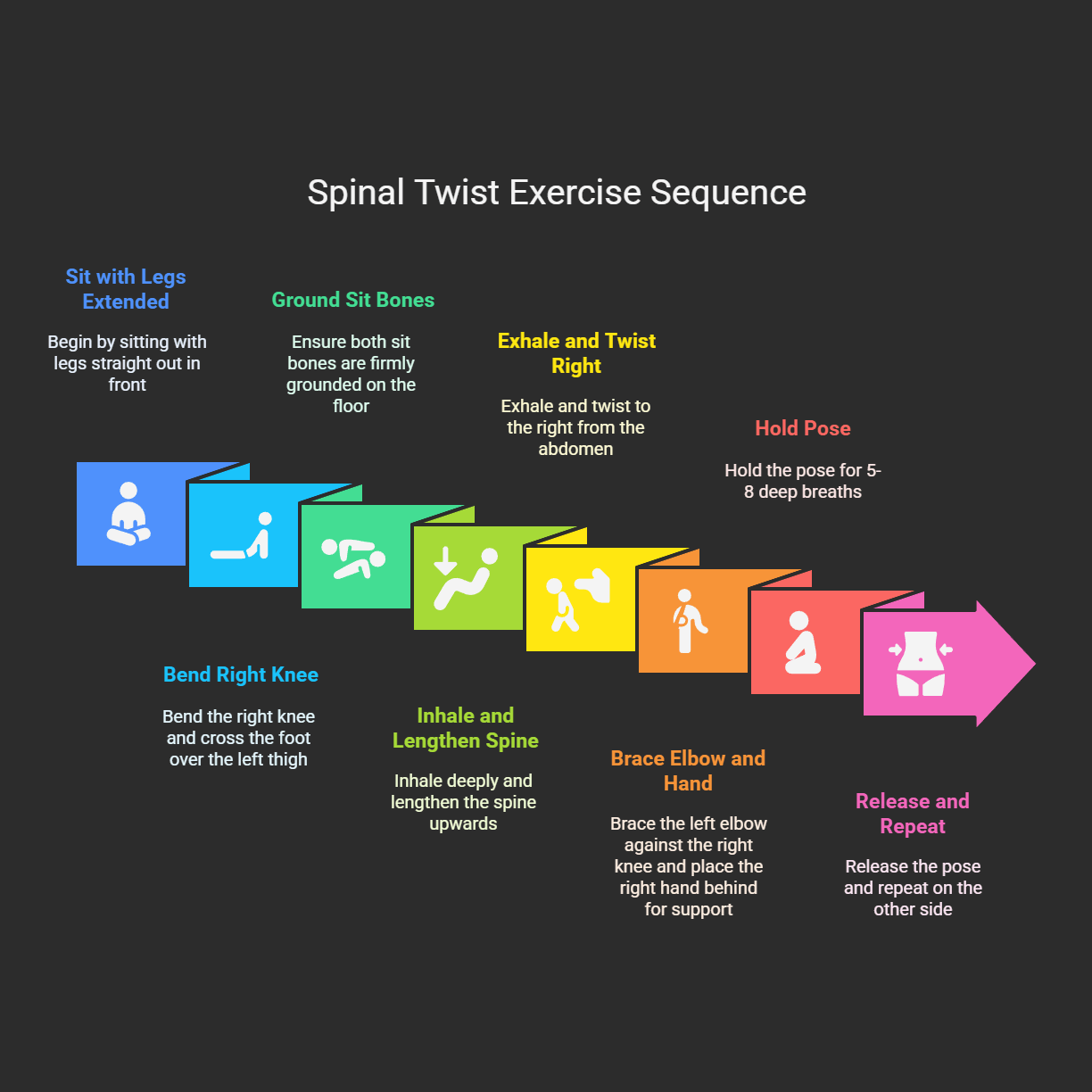
- Sit on the floor with both legs extended straight out in front of you. Bend your right knee and cross your right foot over the outside of your left thigh, placing the sole of your right foot flat on the floor. Ensure that both of your sit bones are firmly grounded on the floor.
- As you inhale, lengthen your spine, imagining a string pulling you up from the crown of your head.
- As you exhale, begin to twist to the right from your abdomen and mid-back, gently bracing your left elbow against the outside of your right knee and placing your right hand on the floor behind you for support.
- Hold the pose for 5-8 deep breaths (about 15-30 seconds). With each inhale, lengthen your spine; with each exhale, deepen the twist. Then, release and repeat on the other side.
The Office Chair Version:
- Sit on the front edge of your chair with your feet flat on the floor and your back straight.
- Inhale to lengthen your spine, and exhale as you twist to the right, using your hands to hold onto the backrest or armrests for assistance.
- The key is to keep your pelvis and knees stable and facing forward, ensuring the twist occurs in the spine.
- Hold for 5-8 deep breaths in the same way, then switch sides. Breathing is the soul of this movement, so be sure to remember: 'inhale to lengthen, exhale to twist'.
Avoid These Common Mistakes to Make Your Stretching Safe and Effective
To ensure your practice is both safe and effective, please be sure to avoid a few common mistakes.First, never twist with a slouched or rounded back, as this places undue pressure on your lumbar intervertebral discs. Before you begin, you must first lengthen your spine upwards—imagine you are trying to grow a few centimetres taller.Second, when you twist, the opposite hip (sit bone) must not lift off the surface. It should remain firmly "glued" to the floor or chair like superglue; otherwise, the stretch will lose its foundation.Finally, remember that the power for the twist comes from your core and mid-back, not from forcefully pulling with your arms. Your neck should only naturally follow your line of sight; do not twist it excessively, to avoid causing a strain.
Safety First: When to Stop and Seek Professional Help
Although the seated spinal twist is an excellent exercise, learning to listen to your body's signals is of the utmost importance. You need to distinguish between a "good stretching sensation" (a gentle, sustained pull) and "bad pain" (sharp, stabbing, burning, or radiating pain). If you experience the latter, stop immediately.If you have an acute herniated disc, acute sciatica, or have been diagnosed with structural instability issues such as spondylolisthesis, you must avoid performing this movement until you have consulted with a doctor or physical therapist. Self-care cannot replace a professional diagnosis. If your pain is severe, persists for several weeks without improvement, or is accompanied by neurological symptoms such as numbness or weakness, please be sure to seek professional medical assistance.
Conclusion: Starting Today, Reclaim Control Over Your Body's Comfort
We began by deconstructing the damage caused by prolonged sitting, delved into the subtleties of the twisting movement, and learned how to integrate it into a complete wellness ritual. I hope you now understand that the stiffness and pain in your lower back are not an unavoidable fate, but a condition that can be understood, managed, and even reversed.As a massage therapist, my greatest wish is to empower you with the knowledge and tools to become the most active guardian of your own health. A few deep breaths and a few gentle twists each day are the most solid path toward a body that is freer, more comfortable, and more vibrant. Your body possesses an amazing capacity for self-healing, and now, you hold the key to awaken it.

![[Happy Healthy Life Column] A Massage Therapist's Guide to Proper Heat Therapy for Deep Tissue Relief](https://happyhealthylife.cv/wp-content/uploads/2026/03/樂健生活專欄:推拿師教你正確溫熱敷,達到深層肌肉舒緩-540x360.jpg)
![[Happy Healthy Life] Unlocking Your Body’s Self-Healing Power: A Professional Massage Therapist’s Guide to Ending Chronic Fatigue Through Gua Sha and Fascial Release](https://happyhealthylife.cv/wp-content/uploads/2026/02/樂健生活】解鎖身體自癒力:專業按摩師帶你以刮痧與筋膜放鬆告別慢性疲勞抽象藝術圖像-540x360.jpg)
