
Are you also troubled by that deep-seated, aching, numb, or stabbing pain in your buttock that follows you like a shadow? Whether you're working at a desk for long hours, driving, or even just going up and down stairs, does that feeling of being unable to sit or stand comfortably have you constantly shifting in your chair to find a position of relief?If this resonates with you, then it's very likely you've encountered a common affliction of modern life: piriformis syndrome. As a clinical massage therapist, I see clients every day who have lost their quality of life because of this small muscle.My goal is not just to relieve your immediate discomfort, but to lead you on a journey of bodily exploration—to understand the message behind your pain and to establish a complete self-care system. The aim is to make a "Happy, Healthy Life" not just a slogan, but a real state of being that you can enjoy every day.
Anatomy of Pain: Get to Know the Deep, Multitasking Employee in Your Buttock
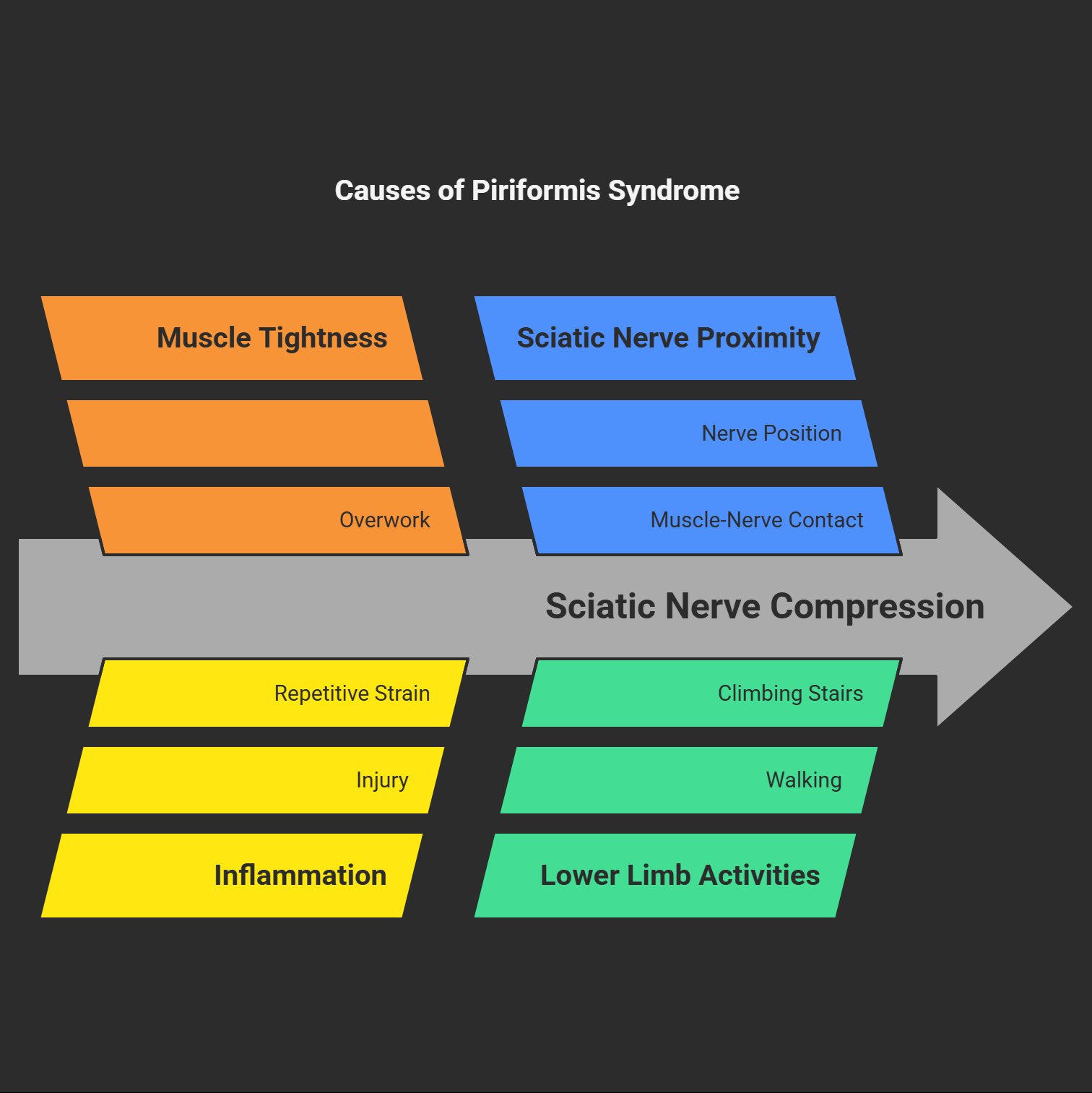
First, let's get to know the piriformis muscle. It is a pear-shaped muscle located deep to the gluteus maximus, connecting our sacrum to the top of the thigh bone (femur). Its main job is to help with the outward rotation of the thigh, but it also participates in nearly all lower limb activities, such as walking, climbing stairs, and maintaining balance.However, the reason the piriformis can cause such severe trouble is its status as a "close neighbor" to the body's longest nerve: the sciatic nerve. In the vast majority of people, the sciatic nerve passes directly underneath the piriformis. Once the piriformis becomes tight and inflamed from overwork or injury, it acts like a rock pressing on a water hose, directly compressing the sciatic nerve and triggering that troublesome radiating pain and numbness.
Broadening Your Perspective: Your Pain Is Not Just 'Piriformis Syndrome'
In the past, we were accustomed to attributing this type of pain to the piriformis muscle. However, in recent years, the medical community has proposed a more precise concept: "Deep Gluteal Syndrome."This concept tells us that the piriformis is not the only culprit. Other deep muscles surrounding it, such as the gemelli muscles and the obturator internus, can also potentially compress the sciatic nerve. This is an important revelation for you: if you have tried all the stretches targeting the piriformis with limited effect, the problem might lie with its "neighbors."Therefore, our strategy needs to be more comprehensive. We shouldn't just focus on a single muscle, but instead look at the entire deep gluteal structure and perform a holistic relaxation and reconditioning to find the true root of the problem.
Getting to the Root of It: Why Is Your Piriformis Muscle So 'Angry'?
The "anger" of the piriformis muscle comes from two main causes: "too much" impact and "too little" activity.The former refers to acute trauma, such as from falls or sports injuries, which can lead to inflammation or the formation of scar tissue in the muscle. The latter is the more common chronic accumulation, especially from prolonged sitting. Sitting for long periods puts the piriformis in a state of constant shortening and compression, leading to poor blood circulation and a lack of oxygen in the tissue (hypoxia).An even more central issue often lies in the "functional amnesia" of the gluteus maximus and gluteus medius. Due to prolonged sitting, our most powerful gluteal muscles become weak, so the body has no choice but to recruit the deep piriformis muscle to "compensate" for the job of stabilizing the pelvis. This is like a department manager slacking off, forcing all the work onto the team leader; long-term overwork will naturally lead to protest.
The Art of Stretching: A Therapist-Level, In-Depth Guide to the 'Seated Figure-4 Stretch'
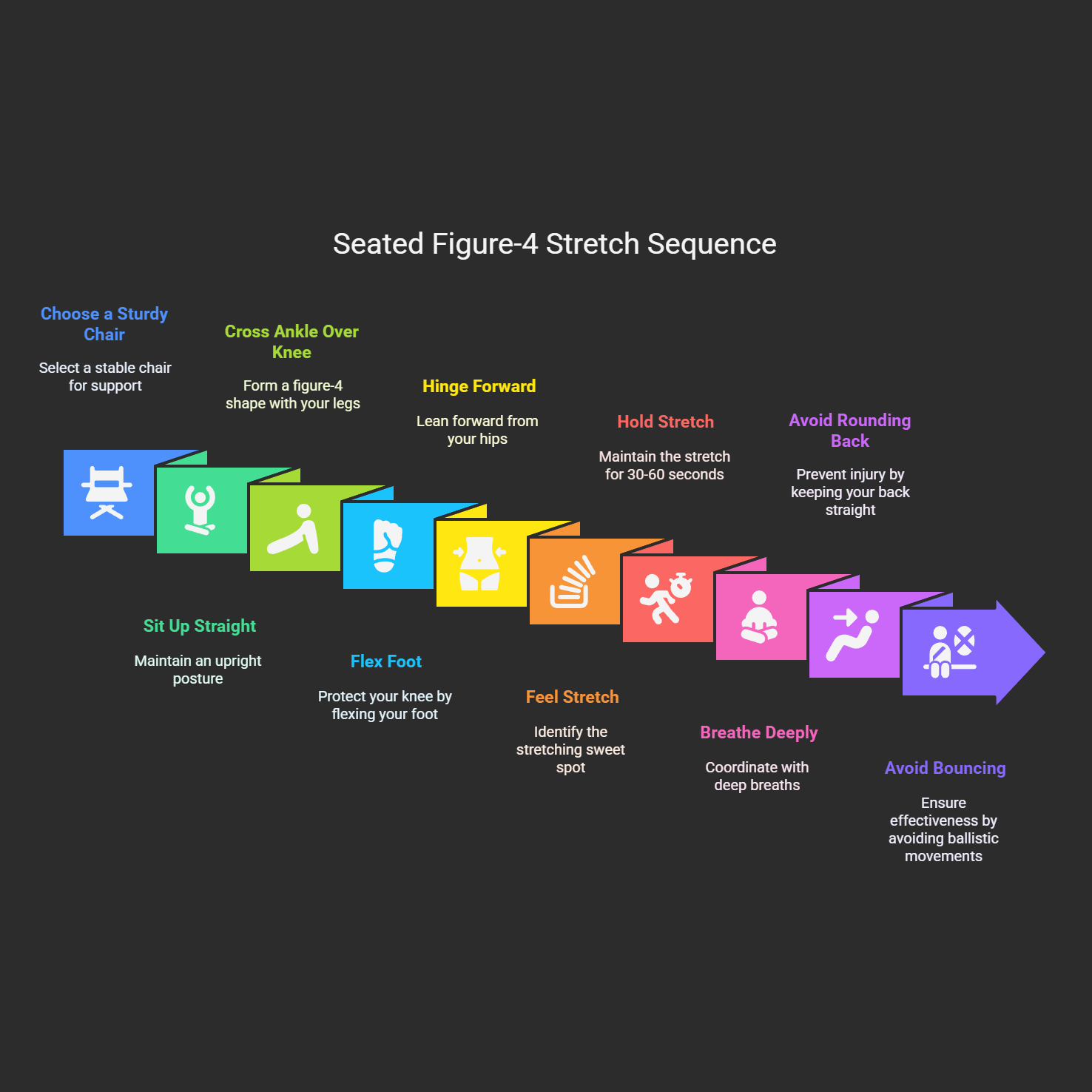
The Seated Figure-4 Stretch is the most convenient and effective "ace in the hole" for dealing with piriformis issues.First, choose a sturdy chair. Sit up straight and feel the pressure evenly across both of your sit bones. Cross the ankle of the affected side over the opposite knee to form a "figure-4" shape. Gently flex the foot (pulling your toes towards your shin) to protect your knee.Next, keeping your back perfectly straight, imagine bringing your chest towards your shin as you hinge forward from your hip joints. When you feel a clear, deep, but tolerable ache or tightness deep in your buttock, stop right there at that "stretching sweet spot."Coordinate with deep, long breaths and hold for 30 to 60 seconds, feeling the muscle release with every exhalation. Remember to avoid rounding your back or making any ballistic, bouncing movements, as this will render the stretch ineffective and can even cause injury.
Expand Your Toolbox: Stretching Variations for Different Scenarios
Although the seated stretch is extremely convenient, learning more variations can make your self-care more complete.The "Supine Figure-4 Stretch" is an excellent choice for relaxing before bed or upon waking, as it allows your back to be completely supported so you can perform the stretch in a fully relaxed state. You simply need to lie on your back, cross one leg into the figure-4 position, and then use both hands to hug the thigh of the bottom leg, gently pulling it towards your chest.For athletes or those wishing to incorporate balance training, the "Standing Figure-4 Stretch" is a more advanced challenge. Hold onto a wall to maintain your balance, get into the figure-4 position, and then slowly bend your standing leg and sit your hips back, as if you were about to sit on an invisible chair. This not only stretches the piriformis but also simultaneously trains your core and the stability of your standing leg.
Beyond Stretching: Self-Massage for Releasing Deep Knots
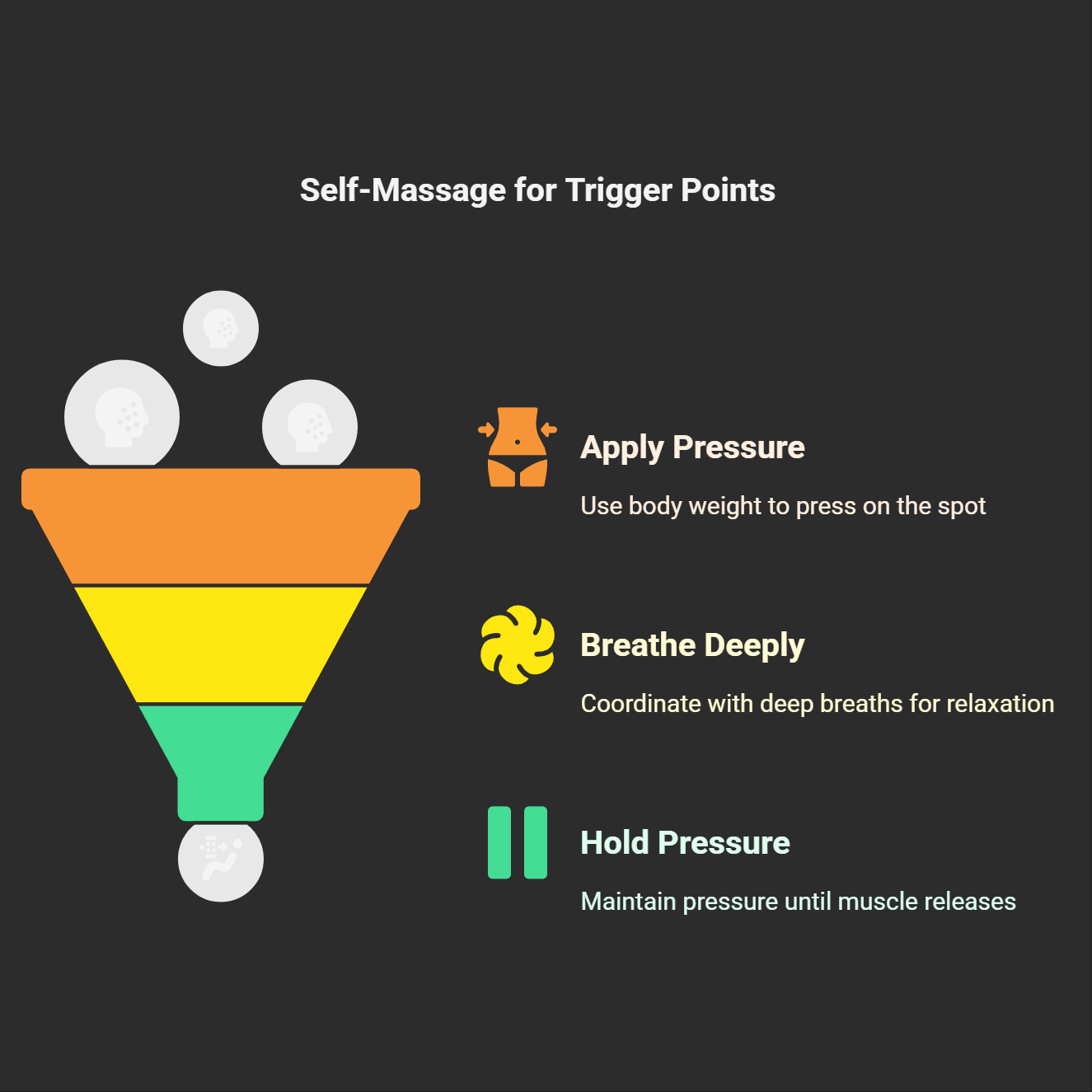
Stretching can lengthen muscles, but for deep, stubborn "trigger points" or fascial adhesions, self-massage has a more direct effect. You just need a tennis ball or a massage ball.Place the ball under the sorest spot in your buttock area and use your body weight to gently roll, searching for those particularly tight "tender spots." Once you find one, stop rolling and apply steady pressure to that point. Coordinate with deep breathing and hold for 30 to 60 seconds, or until you feel a "melting" or "releasing" sensation in the muscle.This method can effectively loosen up deep knots that are difficult to reach with stretching alone, improve local blood circulation, and is a key step towards lasting relief. Please avoid pressing directly on bone or triggering any radiating nerve pain.
Consolidating the Results: Strength Training for Fundamental Prevention
Let's return to the core of the issue: a tight piriformis is often a distress signal from a weak gluteus maximus. If you only stretch without strengthening, the problem will eventually recur. Therefore, awakening and strengthening your gluteal muscle group is the fundamental path to prevention.The "glute bridge" can effectively activate the gluteus maximus; you simply need to lie on your back with your knees bent, then squeeze your glutes to lift your hips upwards. The "clamshell" specifically trains the gluteus medius, which is responsible for pelvic stability; just lie on your side with your knees bent and open the top knee like a clamshell.I recommend you perform these strengthening exercises 3 to 4 times per week. This allows the strong gluteal muscles to resume their duty of stabilizing the pelvis, so the piriformis is no longer forced to work overtime. By doing this, you will build a more resilient and robust physical foundation.
The Professional's Touch: When Self-Care Is No Longer Enough
Although self-care is very powerful, we must also understand its limits. If you experience "red flag" symptoms such as sudden weakness or numbness in the leg, or loss of bowel or bladder control (incontinence), please seek immediate medical attention.Furthermore, if your pain began after a specific injury, or if it has not improved or has even worsened after several weeks of diligent self-care, you should also seek professional assistance. A physical therapist can provide you with a precise functional diagnosis; a clinical massage therapist is skilled at addressing deep soft tissue problems; and a medical doctor can rule out other underlying causes and provide medical intervention if necessary.Seeking a professional evaluation ensures that your treatment is on the right path and helps you avoid delaying proper care.
Conclusion: Take Control of Your Mobility, Starting with Every Stretch
Looking back on this journey, you will discover that the deep pain in your hips is not an unsolvable mystery. True relief comes from an integrated strategy: using "massage" to release knots, "stretching" to lengthen muscles, "strengthening" to solidify support, and finally, "changing habits" to remove the root cause.Please view these exercises as a valuable opportunity to reconnect with your body. With patience and consistency, listen carefully to your body's feedback. You absolutely have the power to break free from the shackles of pain and reclaim the freedom of movement and quality of life. Starting today, begin with a mindful seated figure-four stretch, and step by step, walk towards your own "Happy Healthy Life."

![[Happy Healthy Life Column] A Massage Therapist's Guide to Proper Heat Therapy for Deep Tissue Relief](https://happyhealthylife.cv/wp-content/uploads/2026/03/樂健生活專欄:推拿師教你正確溫熱敷,達到深層肌肉舒緩-540x360.jpg)
![[Happy Healthy Life] Unlocking Your Body’s Self-Healing Power: A Professional Massage Therapist’s Guide to Ending Chronic Fatigue Through Gua Sha and Fascial Release](https://happyhealthylife.cv/wp-content/uploads/2026/02/樂健生活】解鎖身體自癒力:專業按摩師帶你以刮痧與筋膜放鬆告別慢性疲勞抽象藝術圖像-540x360.jpg)
