
As a massage therapist, my hands read the stories of bodies every day. I can feel the fatigue in the muscles, the stress on the joints, and the tension hidden within the deep fascia.As the summer heatwaves arrive, I've noticed many of my sports-loving clients coming into my studio with similar issues—a lingering sense of fatigue, stubborn muscle cramps, and soreness that is exacerbated by training in the high temperatures. They enjoy the exhilarating feeling of working up a good sweat, but they often overlook the distress signals their bodies are sending out in the heat.In this article, from a therapist's perspective, I want to share a comprehensive guide to summer exercise, covering everything from prevention to recovery. My goal is to help you listen to your body's signals so that you can enjoy the sunshine while also truly nourishing your body.
Why Your Body Is Your Greatest Challenge During Summer Exercise
To understand the challenges of summer exercise, we must first understand the body's operating mechanisms in high temperatures. Imagine your body is a high-performance engine that generates a massive amount of heat during exercise. To maintain a stable core temperature, the body's primary method of dissipating this heat is through sweating.The crucial part of this process, however, is not the act of sweating itself, but the evaporation of sweat from the skin, which is what carries the heat away. During the hot and humid summers in Hong Kong, the air is already saturated with moisture, which greatly reduces the efficiency of sweat evaporation.As a result, your body can get caught in a vicious cycle: your core temperature continues to rise, prompting you to sweat even more, but this sweat simply remains on the skin's surface without cooling you down effectively. Instead, it accelerates the loss of water and electrolytes, plunging the body into a predicament where heat production is greater than heat dissipation.
The Dehydration Domino Effect: It's More Than Just Thirst
Many people view "profuse sweating" as an indicator of an effective workout, but in the summer, it is more likely a dangerous warning sign. When sweat cannot evaporate efficiently, the chain reaction of dehydration begins.Research shows that losing just 1% of your body weight in fluid can cause your core temperature to rise. When dehydration reaches 2%, your cardiovascular function and athletic performance will decline significantly. More critically, dehydration causes the blood to become more viscous (thicker), forcing the heart to work much harder to pump blood to the muscles and skin. This undoubtedly places a huge double burden on your cardiovascular system.Therefore, it is essential to dispel the myth that "the more you sweat, the better." Instead, learn to view it as a signal that your body's cooling system is under immense pressure.
The Body's Warning Signs: From Heat Cramps to Heatstroke
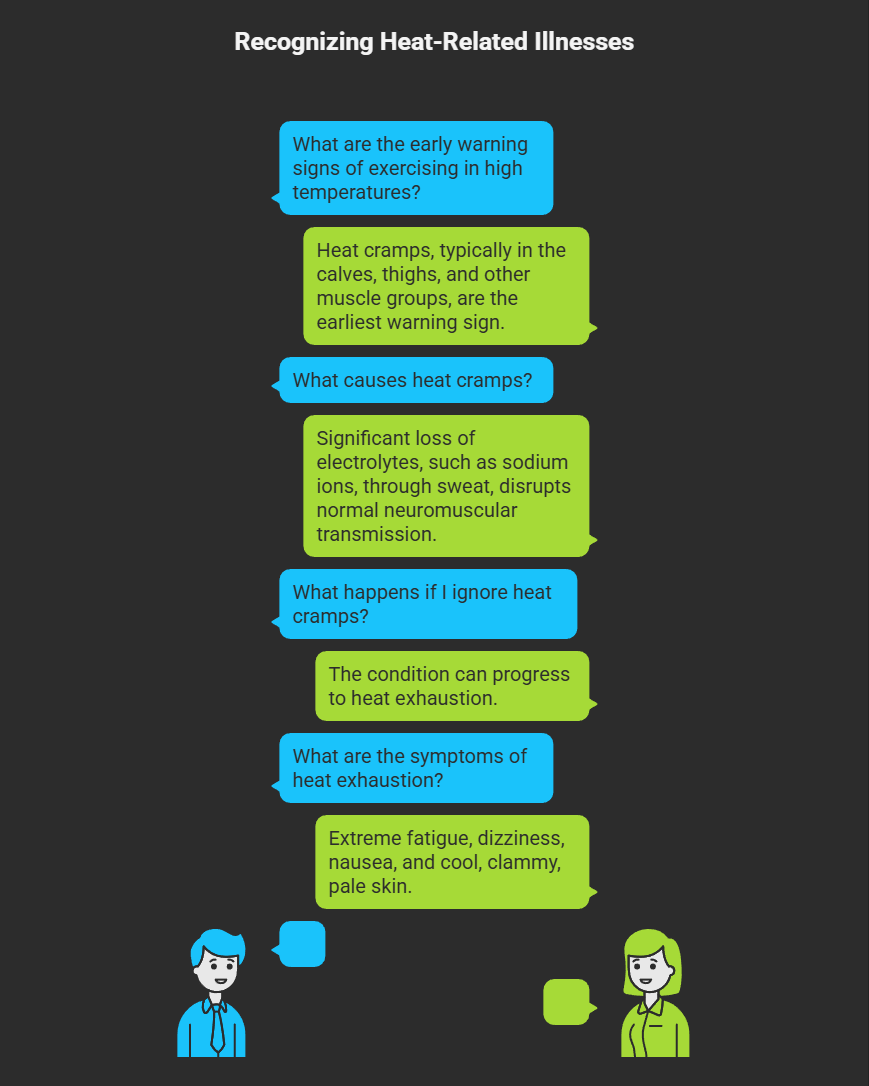
When exercising in high temperatures, your body will warn you through a series of signals. Learning to recognize these signals is the key to self-protection.The earliest warning sign is "heat cramps," which typically occur in the calves, thighs, and other muscle groups. The primary cause is the significant loss of electrolytes, such as sodium ions, through sweat, which disrupts normal neuromuscular transmission.If this warning is ignored, the condition can progress to "heat exhaustion." At this stage, you will feel extreme fatigue, dizziness, and nausea, and your skin may be cool, clammy, and pale. This is a sign that your body's cooling mechanism is nearing its limit. Although you will likely still be conscious, this is an emergency situation that requires immediate rest and cooling down.
The Most Dangerous Red Line: Recognizing Fatal Heatstroke
The most severe condition is "heatstroke," a life-threatening medical emergency where the core body temperature can exceed 40°C (104°F). It is accompanied by significant central nervous system dysfunction, such as confusion, seizures, or even coma.Please dispel a common myth: a person suffering from heatstroke does not necessarily stop sweating. The essence of heatstroke is the complete collapse of the body's thermoregulatory system. The extreme heat causes cellular dysfunction throughout the body, leading to multiple organ failure.The progression from heat exhaustion to heatstroke is not merely an increase in temperature; it is a qualitative shift from "physiological imbalance" to "systemic collapse." If you notice a teammate or partner showing signs of altered consciousness, seek immediate medical assistance while simultaneously taking active measures to cool them down.
Proactive Prevention: Becoming a Smart Summer Athlete
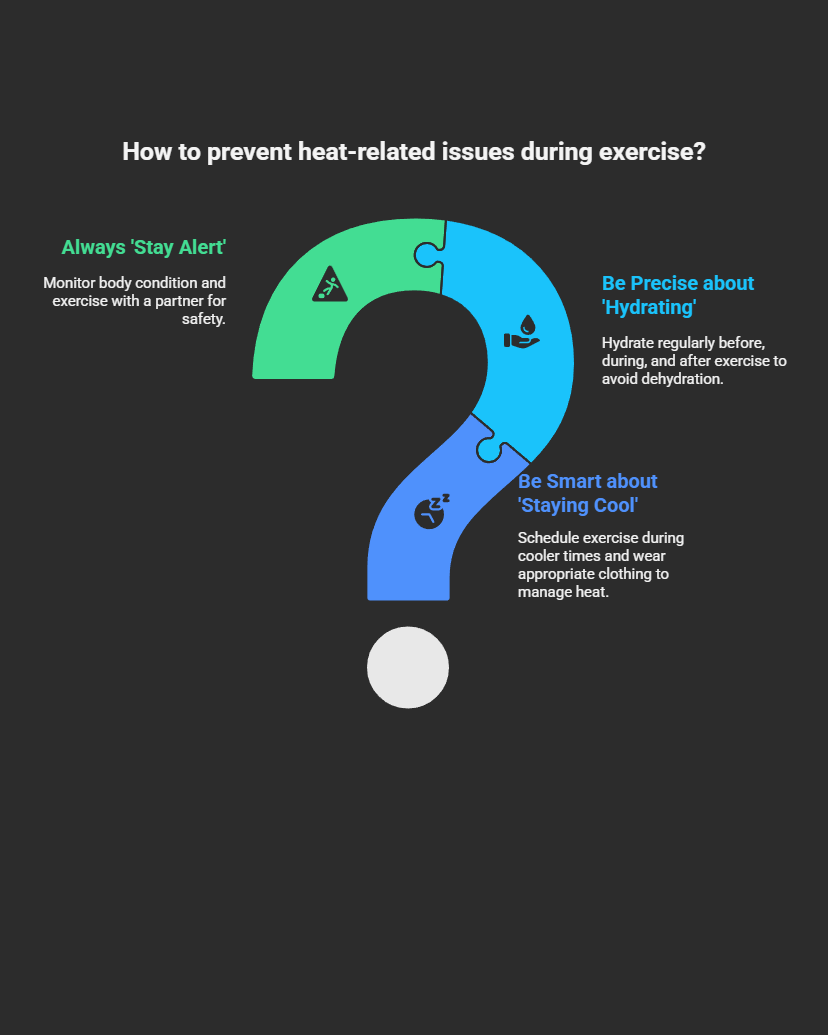
Rather than trying to remedy the situation after the fact, it is far better to adopt proactive prevention strategies.Be Smart about 'Staying Cool'.Try to schedule your outdoor exercise for the early morning or evening, avoiding the hottest part of the day, typically between 10 AM and 4 PM.Wear light-colored, loose-fitting, and breathable technical apparel. These fabrics act like a second skin, effectively helping sweat to evaporate and dissipate heat.Be Precise about 'Hydrating'.Don't wait until you feel thirsty to drink water, as the sensation of thirst is a delayed indicator of dehydration.Make it a habit to hydrate regularly before, during, and after your workout.Always 'Stay Alert'.Be aware of your body's condition. If you feel any discomfort, stop exercising immediately.Get into the habit of training with a partner so you can look out for one another.
The Art of Hydration: Why Pure Water is Far From Enough
In my practice, I frequently hear clients say they drank "a lot of water" after their workout but still feel fatigued. This highlights a common and critical misconception.Sweat carries away not only water but also large amounts of electrolytes, such as sodium and potassium. If you replenish with only large quantities of plain water at this point, it will dilute the sodium concentration in your blood, potentially triggering hyponatremia (low blood sodium). The symptoms of hyponatremia are similar to those of heat exhaustion but can worsen rapidly.Worse still, in an effort to maintain its electrolyte balance, your body will excrete this excess water as urine. This can lead to a paradoxical situation where the more plain water you drink, the thirstier you become, and the dehydration at a cellular level actually intensifies. Therefore, post-exercise replenishment should always involve drinks that contain electrolytes, or the simultaneous intake of water and salts through a balanced meal.
The Therapist's Touch: Immediate Relief for Heat Cramps
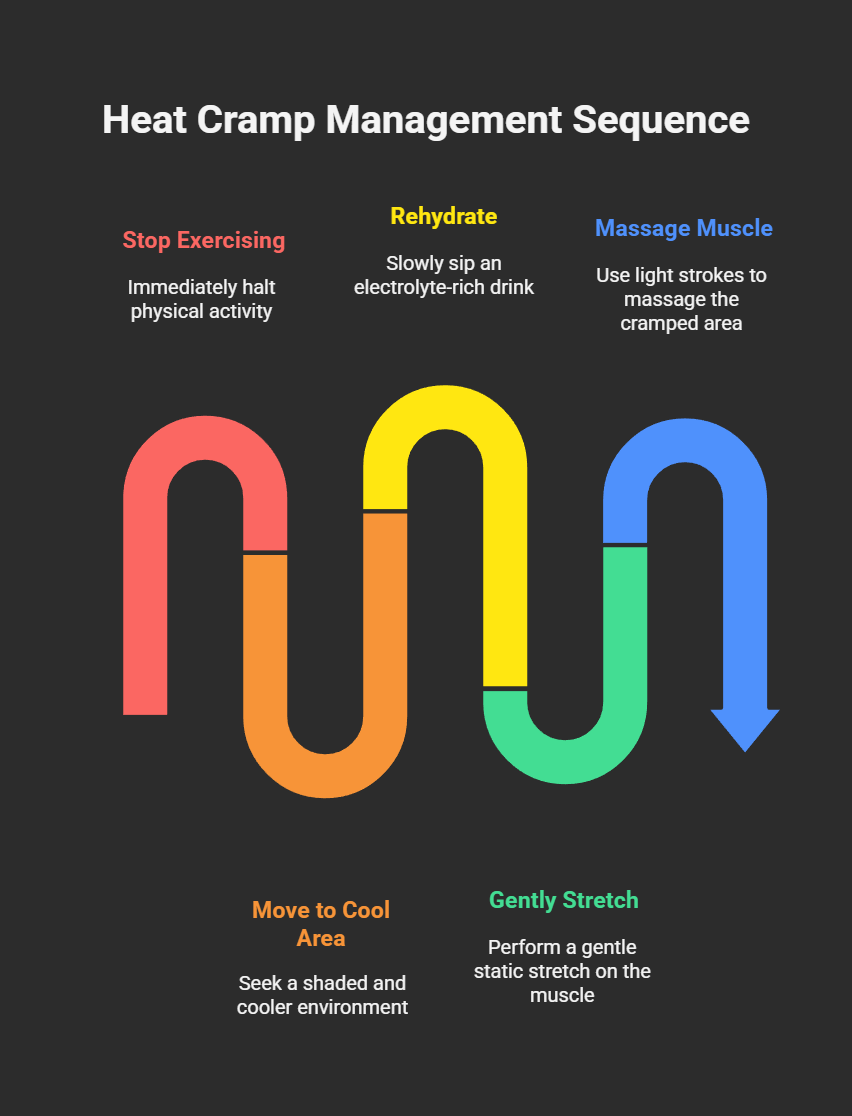
If you unfortunately experience a heat cramp, as a therapist, I advise you to take the following steps:Stop and Rehydrate: Immediately stop exercising, move to a cool, shady area, and begin slowly sipping a drink that contains electrolytes.Gently Stretch: Perform a very gentle static stretch on the cramping muscle. For example, if your calf is cramping, sit down, straighten your leg, and use a towel to gently pull your toes toward your body. Hold this stretch for 15 to 30 seconds.Soothe with Massage: After stretching, use the palm of your hand to slowly massage the cramped muscle and its surrounding area using a light, gliding stroke (Effleurage).The goal of this massage is not to "force the knot out," but rather to promote local circulation, send a relaxation signal to the overexcited nervous system, and gently soothe the tightened muscle fibers.
The Art of Recovery: The Timing of Post-Workout Massage
Many people believe they should get a deep tissue massage immediately after exercising, but timing is crucial.Right after a high-intensity workout, your body is still in a state of stress; your muscles have micro-tears and may be inflamed. At this moment, a light, broad, gliding massage (effleurage) is the best choice. The goal is to soothe the nervous system, assist lymphatic and venous return, and accelerate the clearance of metabolic waste.The more appropriate time for a deep tissue massage is after your heart rate has normalized, your body has cooled down, and you have completed your initial rehydration. A massage at this stage can effectively release deep muscular tension, alleviate Delayed Onset Muscle Soreness (DOMS), and help the body switch from an active "sympathetic nervous system" state to the "parasympathetic nervous system" dominant mode, which is responsible for rest and repair.
A Gift from Ancient Wisdom: Self-Acupressure
In addition to professional massage, you can also apply the wisdom of Traditional Chinese Medicine (TCM) to your daily self-care routine. By pressing specific acupoints, you can help the body clear heat and calm the mind and spirit (shen).Hegu (LI4): Located in the fleshy webbing between the thumb and index finger, this is a key acupoint for alleviating the initial symptoms of heat exhaustion, such as headache and dizziness.Neiguan (PC6): When you feel chest tightness, palpitations, or nausea, you can press this point on your inner wrist (about three fingers' width from the wrist crease, between the two tendons) to calm the heart and soothe the spirit.Quchi (LI11): Located at the outer end of the elbow crease when you bend your arm, this point helps the body to dissipate heat.These simple self-massage techniques are a portable wellness toolkit that you can carry with you, helping you find internal balance and comfort during the scorching summer months.
The Mind-Body Approach to Wellness or The Art of Nourishing Life Through Mind-Body Unity.
Traditional Chinese Medicine (TCM) theory states that "Sweat is the fluid of the Heart" (hàn wéi xīn zhī yè), a concept which aligns perfectly with the perspective of modern physiology. Profuse sweating increases the burden on the heart, which is a tangible manifestation of "consuming Heart Qi" (hàosǔn xīn qì).Practice maintaining awareness during your workouts. Feel every signal from your body—are you full of vitality, or are you exhausted? Do you feel comfortable, or are you tense? This internal listening is more important than the data from any wearable device.Only by combining the precise prevention strategies of modern science with the holistic wisdom of traditional yangsheng (the art of nourishing life) can we truly achieve the state of health that comes from the unity of mind and body.影片Canvas圖像引導式學習
Conclusion: Finding Your Wise Balance with Summer
In this vibrant season, exercise is a wonderful way to connect with the sunshine and nature. As your massage therapist, I sincerely hope that you not only challenge yourself but, more importantly, that you also learn to collaborate with your body.Please treat recovery as an equally important part of your training, whether that's through sufficient hydration, gentle stretching, professional massage, or quiet acupressure. Learn to listen to your body's whispers, so that it never has to shout at you.May you, this summer, not only gain a stronger physique but also deepen the connection with your own body, finding that unique and wise balance between movement and stillness that belongs only to you.

![[Happy Healthy Life Column] A Massage Therapist's Guide to Proper Heat Therapy for Deep Tissue Relief](https://happyhealthylife.cv/wp-content/uploads/2026/03/樂健生活專欄:推拿師教你正確溫熱敷,達到深層肌肉舒緩-540x360.jpg)
![[Happy Healthy Life] Unlocking Your Body’s Self-Healing Power: A Professional Massage Therapist’s Guide to Ending Chronic Fatigue Through Gua Sha and Fascial Release](https://happyhealthylife.cv/wp-content/uploads/2026/02/樂健生活】解鎖身體自癒力:專業按摩師帶你以刮痧與筋膜放鬆告別慢性疲勞抽象藝術圖像-540x360.jpg)
