
Have you ever had this experience? In a social situation, a cold and clammy handshake makes you feel a bit awkward. Or perhaps on a cool night, no matter how thick your duvet is, your feet remain as stubborn as two blocks of ice.This persistent feeling of coldness is far more than can be explained away by the simple reason, "that's just my constitution." I am your massage therapist, and in my professional career, cold hands and feet are one of the most common complaints I hear from my clients. This isn't just a matter of surface temperature; it is an important signal being sent to you from your body's internal circulatory system—a signal that invites us to listen and understand with care.
To truly say goodbye to cold extremities, we need a simple yet powerful concept. Imagine your body has a built-in "internal furnace." This represents your metabolism and core energy, responsible for continuously generating heat. At the same time, your body is equipped with a sophisticated network of "peripheral radiators"—your peripheral blood vessels—which are responsible for distributing this precious warmth to your fingertips and toes.Much of the time, the problem is either that the furnace's fire is insufficient, or the radiator pipes are blocked. This article, based on my professional experience, will guide you in a two-pronged approach: we will not only add firewood to the furnace but also properly maintain every inch of the radiators.
Why Does Warmth Always Get Lost Halfway? Uncovering the Secrets Behind the Cold
Before we can learn how to "warm up," we must first understand why we "cool down."The core physiological mechanism behind cold hands and feet is a self-protection response called "vasoconstriction." When we feel cold or stressed, our body activates an ancient survival instinct, prioritizing the flow of warm blood to core organs like the heart and brain. To achieve this, it constricts the blood vessels that lead to our arms and legs.This is normal in the short term. The problem is that the chronic anxiety and work-related stress of modern life can keep our nervous system in a long-term state of alert. This "survival switch" gets stuck, in a sense, leading to a chronically insufficient supply of warm Qi and Blood to the hands and feet.
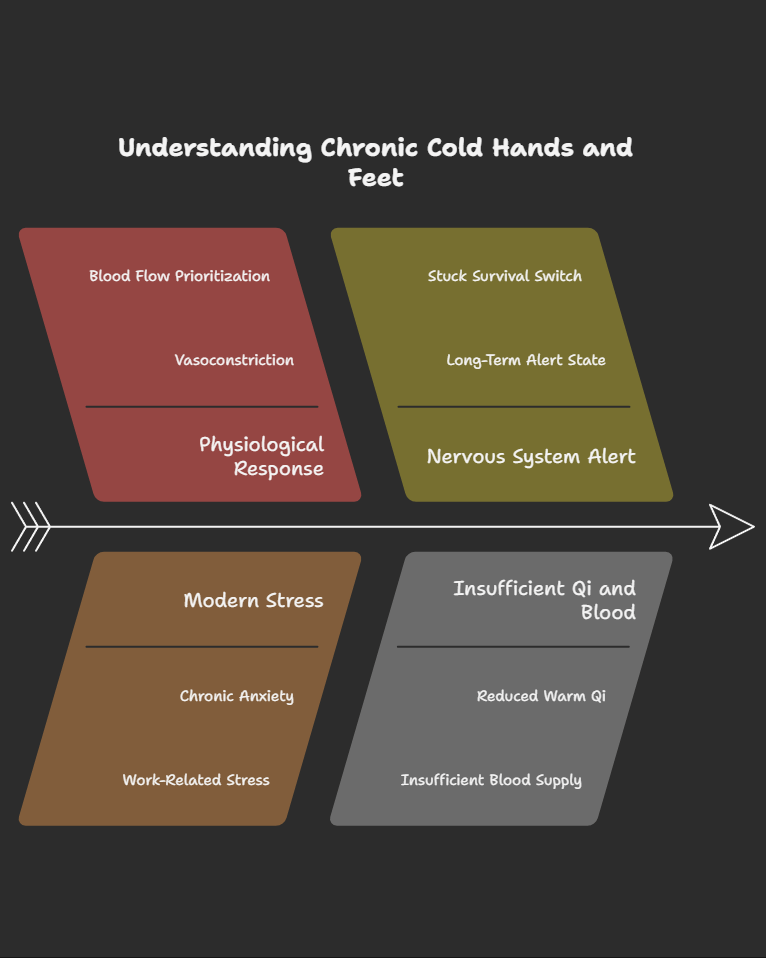
What's more interesting is that this can form a vicious cycle. Stress leads to cold hands and feet, and this physical sensation of coldness and clamminess in turn becomes a physiological stressor itself, triggering more unease and anxiety. This further reinforces the tense state of the nervous system, "locking" your hands and feet in a cold mode.Therefore, the real solution is by no means as simple as just putting on gloves; it requires fundamentally breaking this "psycho-physiological" negative loop. This also explains why therapies that combine physical touch with mental relaxation are always particularly effective.
The Touch of Warmth Therapy: A Therapist-Level Massage Plan in the Palm of Your Hand
As a massage therapist, I firmly believe in the healing power of "touch." Massage is one of the most direct and effective methods for improving peripheral circulation. It not only brings immediate warmth but can also fundamentally "educate" your blood vessels and nervous system, helping them to restore their healthy elasticity and responsiveness.When performing a circulatory massage, you must follow one golden rule: always work from the periphery (fingertips and toes) towards the heart. This is the most effective way to assist the return of venous blood.Now, let's begin this warm journey together.
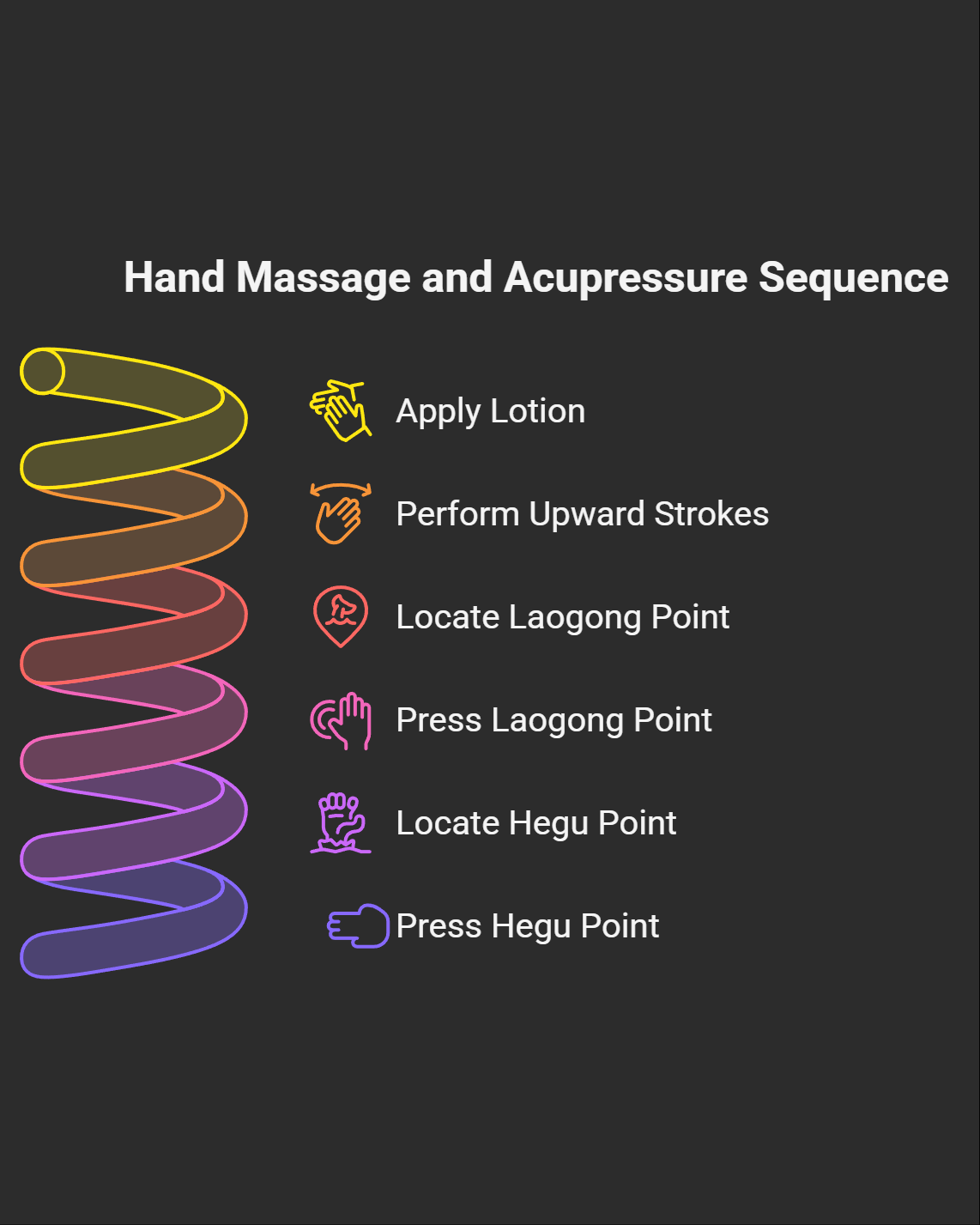
First, let's start with our hands. Sit comfortably and take a small amount of lotion or massage oil. With one hand, begin at the fingertips of the other and perform a steady, upward sliding stroke all the way to the elbow. Repeat this five times, feeling the warmth spread.Next, find the Laogong point (PC8) in the center of your palm, located where the tip of your middle finger touches when you lightly make a fist. Press firmly on this point with your thumb for 15 seconds. This is like an "energy button" that directly tells your nervous system, "It's time to relax."Then, find the Hegu point (LI4) in the webbing on the back of your hand. This is the "master switch" for promoting the circulation of Qi and Blood throughout the entire body. The sore, full sensation you feel when pressing it firmly is the very signal that your Qi and Blood are beginning to flow.
Awaken Your "Second Heart": A Foot-Warming Ritual
Our feet are the furthest from our heart, the frontier that warmth struggles the most to reach. A simple bedtime foot massage ritual can not only warm your feet but also significantly improve your sleep quality.You can begin with a healing foot bath. Then, sit comfortably and place one ankle on your opposite knee. Start by rotating the ankle, then use both hands to perform long, stroking pushes from your toes up to your knee.Next, find the depression on the sole of your foot, about one-third of the way down from your toes. This is the Yongquan point (KI1). Press deeply into this point with your thumb; this is the key starting point for igniting your "internal furnace."
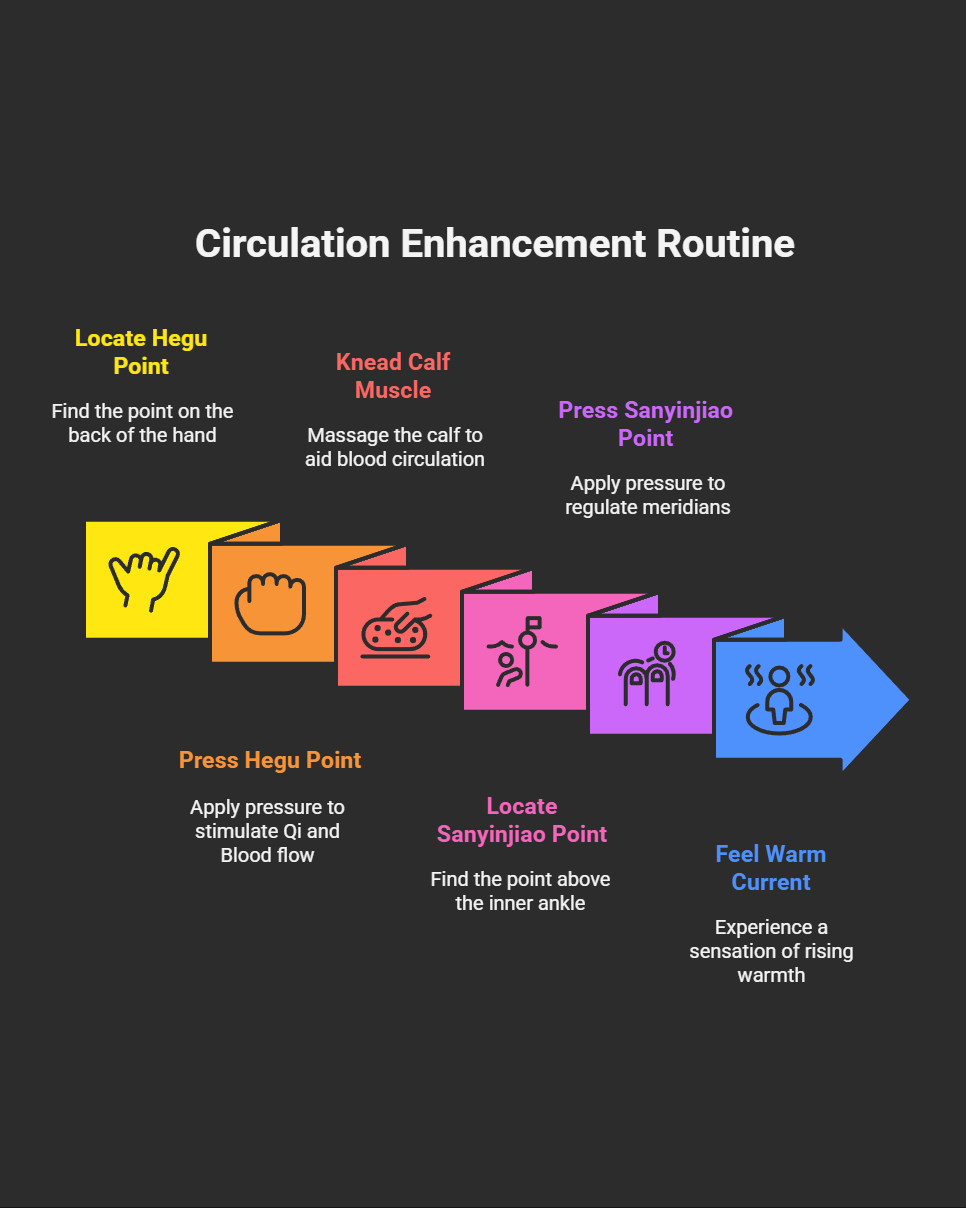
Next, be sure to give your calf muscle sufficient attention. Vigorously knead this muscle, because the calf muscle group is hailed as the body's "second heart." Each time it contracts, it helps to pump blood from the lowest extremities back towards the body's core.Finally, locate the Sanyinjiao point (SP6), about four finger-widths above the highest point of your inner ankle, and press it firmly. This is the meeting point of three important meridians—the Spleen, Liver, and Kidney—and is especially important for regulating the overall circulation and health of women.After completing this routine, you will feel a warm current slowly rising up from the soles of your feet.
Movement Prevents Stagnation: Infusing Your Body with Flowing Vitality
If massage is like "passively" adding fuel to your circulatory system, then exercise is like "actively" stepping on the accelerator to really get the warm blood flowing. When combined, they can produce an amazing effect where one plus one is greater than two.You can spend a few minutes massaging your feet before a walk to "awaken" the tissues, and then massage your calves after the exercise to aid in recovery. This will maximize the circulatory benefits. For my friends who sit in an office for long hours, I especially recommend a "Micro-Workout" Circulation Reset Routine, which can be completed in just five minutes every hour.
You can try this: forcefully make a fist and then open your hand ten times, as if you were playing "rock, paper, scissors," and feel the sensation of blood rushing into your palms. Next, extend your arms and rotate your wrists in both clockwise and counter-clockwise directions. Finally, press your palms together firmly in front of your chest to activate the muscles of your arms and chest. These simple movements can effectively combat the circulatory stagnation that comes from prolonged sitting.Of course, for a fundamental improvement, regular whole-body exercise is indispensable. Brisk walking, climbing stairs, yoga, or Tai Chi are all excellent choices. They not only train your muscles but also gently regulate your autonomic nervous system.
Warmth Enters Through the Mouth: Creating Your Warming Foods Pantry
Our "internal furnace" needs high-quality fuel to burn continuously. Your diet is the foundation for providing your body with energy and warmth, and for people who are prone to cold hands and feet, eating the right foods is crucial.First, you must ensure a healthy supply of red blood cells, which means consuming an adequate amount of iron. Spinach, beans, and black sesame seeds are all excellent sources. If you consume them together with foods rich in Vitamin C, such as bell peppers and citrus fruits, you can greatly improve the absorption rate of the iron.
Second, we can draw upon the wisdom of Traditional Chinese Medicine (TCM) by choosing more "warming" foods and spices, as they can bring warmth to the body and promote metabolism. Try adding spices like ginger, cinnamon, and black pepper to your cooking; they are natural thermogenic agents. During seasons when the body needs more nourishment, lamb is a particularly warming and tonifying choice.At the same time, ingredients like red dates (jujubes), goji berries, and longan fruit are not only delicious but are also excellent for nourishing Qi and Blood. Please remember to drink plenty of warm water and avoid iced water and cold drinks, because digesting cold foods consumes an extra amount of our precious "Yang Qi."
Conclusion: Take Your Warmth into Your Own Hands
We have now explored together a comprehensive method that covers massage, exercise, and diet. Cold hands and feet are not a fate you cannot change; on the contrary, it is your body inviting you to interact more deeply with your own health.The essence of this method can be summarized into three main pillars:Calm and Connection: Soothing the nervous system and connecting the mind and body through massage.Movement and Pumping: Allowing your muscles to become a powerful engine for your circulation.Nourishment and Protection: Adding fuel to your body's furnace with warm foods and wise habits.
Please view these methods as rituals in your daily life, not as items on a to-do list. In every touch, every breath, and every movement, feel the changes in your body. You are not just warming your hands and feet; you are playing an active and powerful role, personally creating a more balanced, more resilient, and more vibrant version of yourself.This is the true essence of a "Happy Healthy Life"—holding the power over your health and happiness, firmly in your own warm hands.
Disclaimer:This guide is for educational and informational purposes only. If your cold hands and feet are persistent, the symptoms are severe, or they are accompanied by other symptoms such as changes in skin color, numbness, or pain, this could be a sign of an underlying health problem. In this situation, please be sure to consult your primary care physician or a qualified healthcare professional to obtain a comprehensive diagnosis and treatment plan.

![[Happy Healthy Life Column] A Massage Therapist's Guide to Proper Heat Therapy for Deep Tissue Relief](https://happyhealthylife.cv/wp-content/uploads/2026/03/樂健生活專欄:推拿師教你正確溫熱敷,達到深層肌肉舒緩-540x360.jpg)
![[Happy Healthy Life] Unlocking Your Body’s Self-Healing Power: A Professional Massage Therapist’s Guide to Ending Chronic Fatigue Through Gua Sha and Fascial Release](https://happyhealthylife.cv/wp-content/uploads/2026/02/樂健生活】解鎖身體自癒力:專業按摩師帶你以刮痧與筋膜放鬆告別慢性疲勞抽象藝術圖像-540x360.jpg)
