
Hello, I am your personal massage therapist. In my professional career, I have countless times witnessed how an often-overlooked "unsung hero"—the calf muscle group—silently influences our entire body's posture and mobility.Many people walk into my therapy room with nagging heel pain, recurring knee discomfort, or even tightness in their lower back, only to be surprised to find that the root of the problem is hidden deep within the calves that support us every day.Today, I will guide you beyond the simplistic framework of "treating the site of the pain." From a professional therapist's perspective, we will delve into the mysteries of the calf muscles and I will provide a truly effective self-care program to help you rediscover a light, pain-free "Happy Healthy Life."
The Misunderstood Twins: Meet the Two Protagonists of Your Calf
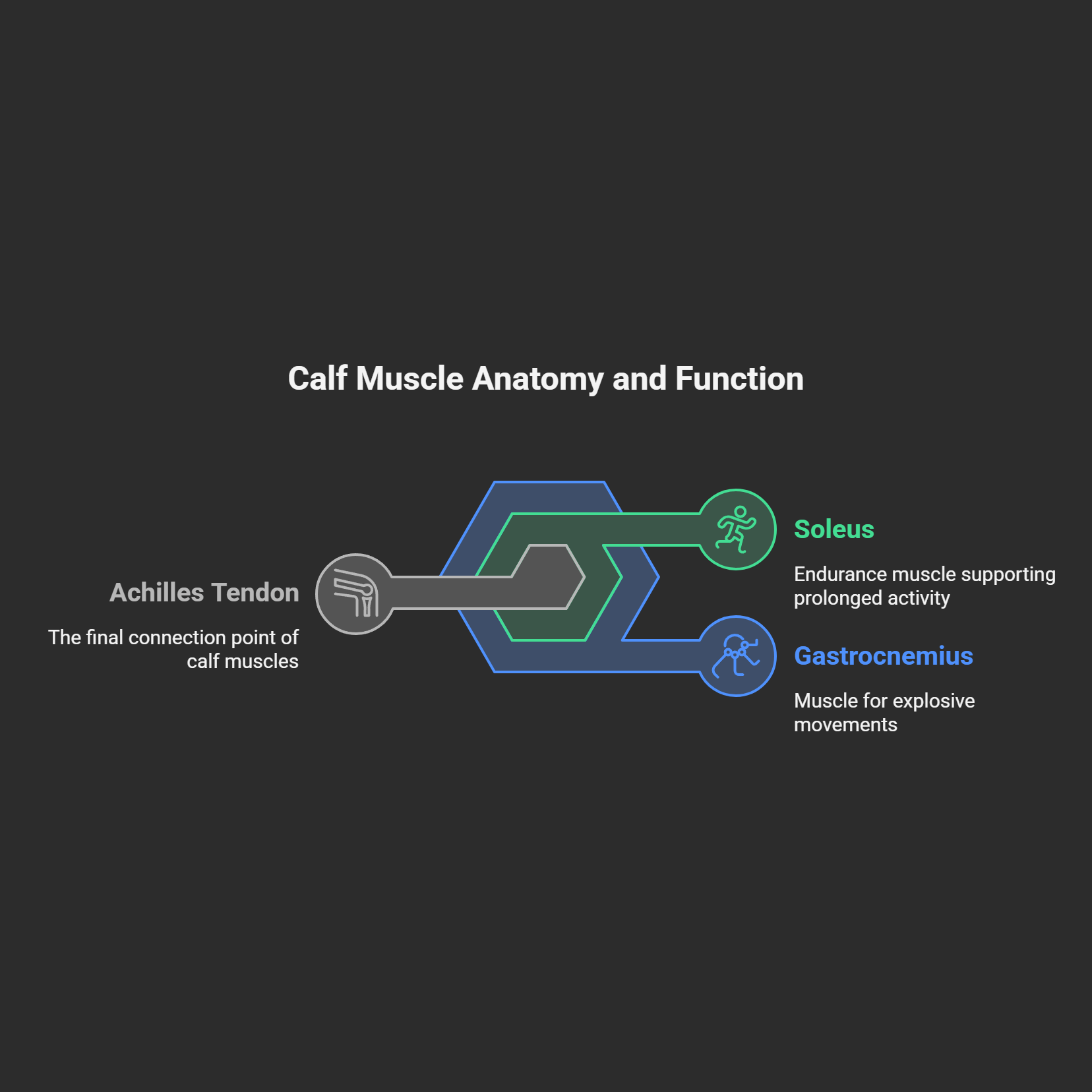
Let's first get to know the functionally unique "twin muscles" on the back of your calf: the gastrocnemius and the soleus.The superficial gastrocnemius is the muscle whose shape you can clearly see when you stand on your tiptoes. It crosses both the knee and ankle joints and is the primary muscle for explosive movements like sprinting and jumping. Deep beneath it lies the wider, flatter soleus muscle. It only crosses the ankle joint and acts like a silent endurance runner, responsible for supporting us during prolonged standing and walking.Although these two muscles have their own distinct roles, they ultimately merge to form the thickest and strongest tendon in the human body: the Achilles tendon. This means that if either muscle becomes too tight, it will, like a game of tug-of-war, directly transmit pressure to the heel, planting the seeds of pain.
The Invisible Kinetic Chain: Why Does Calf Tightness Affect Your Entire Body?
To understand the far-reaching impact of the calves, we must introduce the concept of "myofascial lines," particularly the Superficial Back Line.Imagine a continuous elastic bandage that starts from the plantar fascia on the sole of your foot, travels up the back of your calf, the back of your thigh, and along your back, extending all the way to your scalp. The calf muscle group is a crucial link in this kinetic chain. When it becomes tight and shortened due to prolonged sitting, excessive exercise, or frequently wearing high heels, this tension is transmitted along the entire line.This perfectly explains why, when you bend forward, the pulling sensation doesn't just come from your hamstrings; your calves and even the soles of your feet feel just as tight. This invisible connection is the fundamental reason why calf problems can trigger seemingly unrelated lower back pain or discomfort in the buttocks.
The Pain Chain Reaction: Warning Signs from the Sole to the Knee
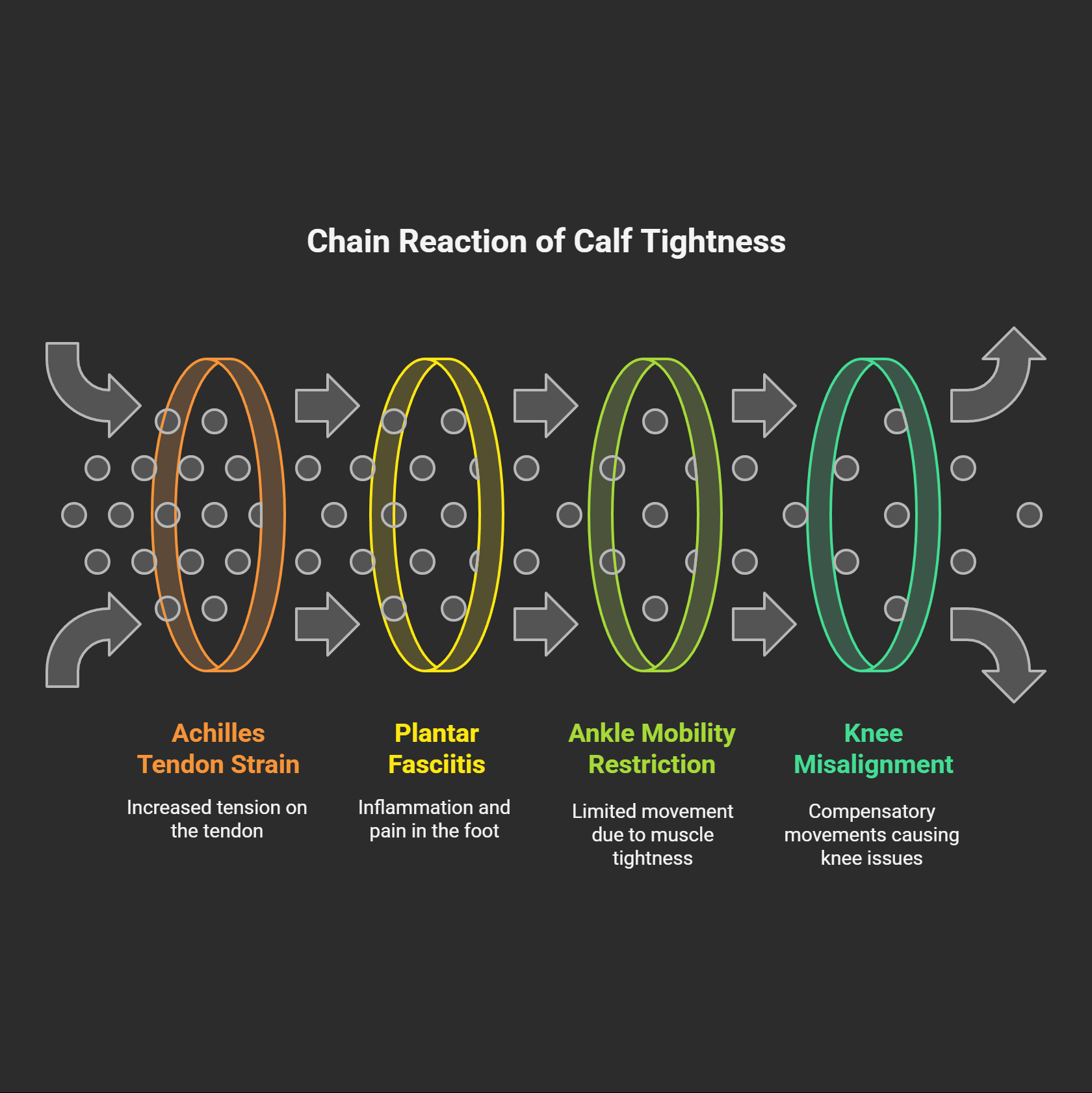
Chronic calf tightness is by no means a minor issue; it triggers a series of chain reactions.First is the much-dreaded plantar fasciitis. Overly tight calf muscles continuously pull on the Achilles tendon, which in turn increases the tension on the plantar fascia, leaving it on the verge of inflammation and tearing. This causes that piercing pain on the first step out of bed in the morning.Second, it silently damages your knees. When the deep soleus muscle is too tight, it restricts ankle mobility. To compensate and complete movements like squatting or going down stairs, your body will unconsciously collapse the arch of your foot and let your knee fall inward. This poor alignment is one of the main culprits behind medial and lateral knee pain, such as "Runner's Knee."
The Art of Stretching: The World of Difference Between Straight-Knee and Bent-Knee Stretches
Effective stretching is a precise science. For your calves, you must remember one golden rule: differentiate between "straight-knee" and "bent-knee" stretches.When you perform a stretch while keeping your knee straight, the focus of the stretch is on the superficial "explosive power muscle," the gastrocnemius. However, when you bend your knee, the gastrocnemius relaxes, allowing the stretching force to penetrate precisely to the deeper "endurance muscle," the soleus. Most people only perform the straight-knee stretch, neglecting the soleus, which is often more stubbornly tight.The classic "wall push" stretch should be done in two steps: first, hold the stretch for 30 seconds with your back leg straight. Then, slightly bend that knee and lower your center of gravity. You will immediately feel the sensation of the stretch shift to the deeper part of your calf. That is a complete stretch.
Creating Your Home Therapy Room: The Precise Application of Foam Rollers and Massage Balls
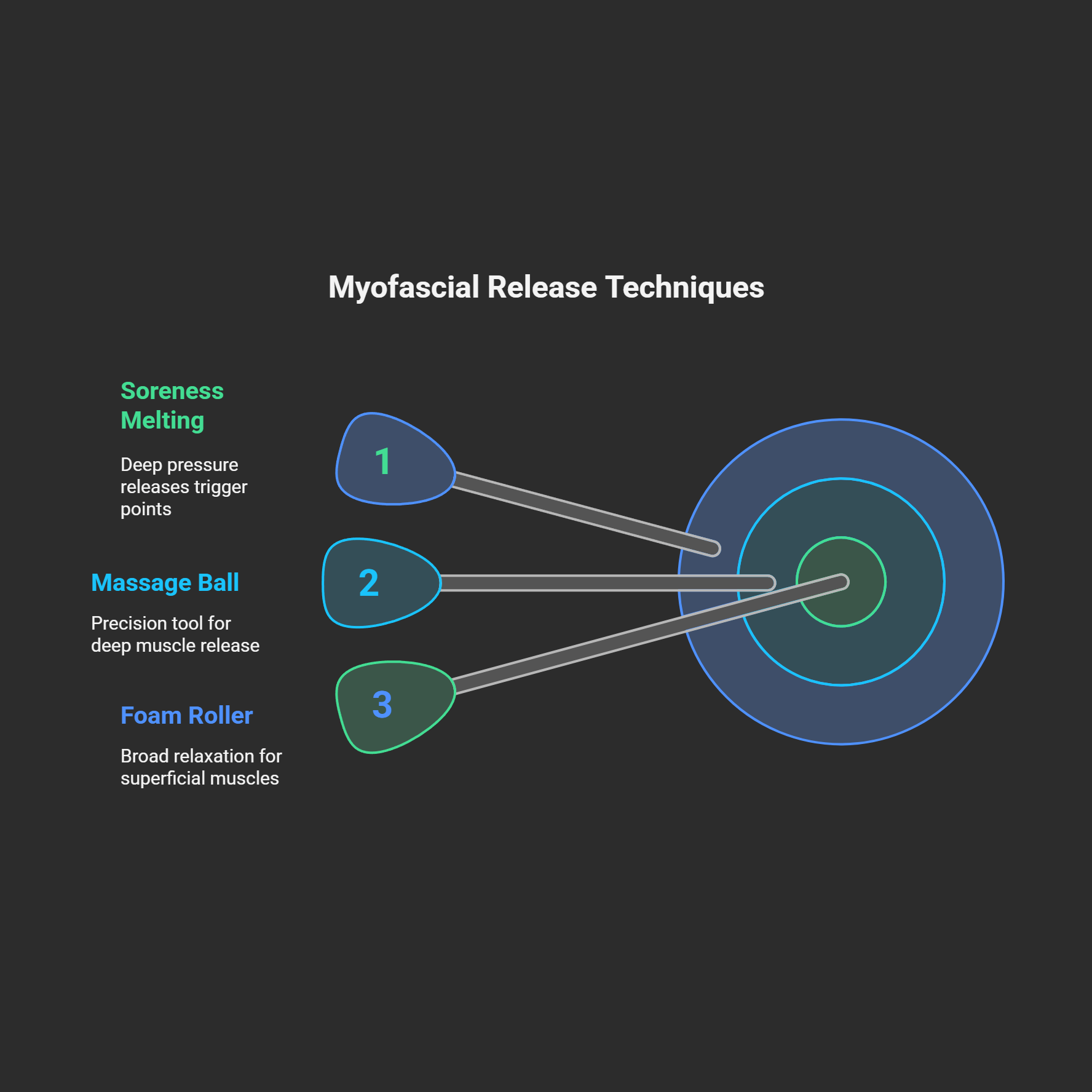
In addition to stretching, self-myofascial release is a powerful tool for loosening deep knots. Think of the foam roller as a tool for broad, large-area relaxation, making it ideal for treating the superficial gastrocnemius muscle. Sit on the floor, place the roller under your calf, and slowly roll back and forth. To increase the pressure, you can cross your other leg over the top.However, to address the deeper soleus muscle, you need a "precision weapon" like a massage ball. Sit on the floor in the same way, place the ball under your calf, and bend your knee to help bypass the superficial muscle. The key is that when you find a distinct point of soreness (a trigger point), do not roll back and forth. Instead, "hold" on that point, apply steady and deep pressure, and breathe deeply for 30-60 seconds, until you feel the soreness begin to "melt" away.
The Secret of the Soleus Muscle: The Hidden Link to Heel Pain and Lower Back Pain
In my clinical experience, the deep soleus muscle is the culprit behind many chronic pain issues. There are two key trigger point areas on this muscle that deserve your special attention.One is located deep, near the back of the knee (the popliteal fossa). Its referred pain pattern is quite peculiar; not only does it cause a deep ache in the calf, but it can sometimes project discomfort all the way to the sacroiliac (SI) joint at the back of the pelvis, creating what appears to be unrelated lower back pain.The other trigger point is located near the origin of the Achilles tendon. The referred pain it triggers precisely mimics typical plantar fasciitis, with pain concentrated directly under the heel. If you suffer from chronic heel pain, patiently working on this area with a massage ball can often bring unexpected relief.
Beyond the Localized Symptom: Seeking Professional Help and the Path to a Root-Cause Solution
Although self-care is very powerful, you must seek professional help when pain is persistent, becomes sharp, or is accompanied by a sensation of numbness. In the therapy room, we can utilize more advanced manual techniques to address deep fascial adhesions and stubborn trigger points.More importantly, a good therapist will view calf tightness as a "symptom" and, through a comprehensive assessment, search for the "root cause" of that symptom. We often find that weak gluteal muscles or an unstable core are the real culprits forcing the calves to overwork.Therefore, a complete rehabilitation plan, in addition to releasing your calves, must also include strengthening exercises targeted at these weak points to rebuild the body's balance from the source.
Conclusion: Integrating Knowledge and Moving Towards Lifelong Mobility
Dear friend, your body's wisdom is far greater than you can imagine, and pain is often its signal when asking for help. Understanding your calf muscles is the first step in decoding these signals.Please incorporate both "straight-knee and bent-knee stretches" into your daily routine, learn to have a dialogue with your body using foam rollers and massage balls, and understand that all parts are interconnected components of a whole. By integrating this knowledge and putting it into practice, you are not just solving your current discomfort; you are paving a path for yourself toward a healthy, pain-free, and sustainable lifelong mobility.This is the true essence of a "Happy Healthy Life."

![[Happy Healthy Life Column] A Massage Therapist's Guide to Proper Heat Therapy for Deep Tissue Relief](https://happyhealthylife.cv/wp-content/uploads/2026/03/樂健生活專欄:推拿師教你正確溫熱敷,達到深層肌肉舒緩-540x360.jpg)
![[Happy Healthy Life] Unlocking Your Body’s Self-Healing Power: A Professional Massage Therapist’s Guide to Ending Chronic Fatigue Through Gua Sha and Fascial Release](https://happyhealthylife.cv/wp-content/uploads/2026/02/樂健生活】解鎖身體自癒力:專業按摩師帶你以刮痧與筋膜放鬆告別慢性疲勞抽象藝術圖像-540x360.jpg)
