![[Happy Healthy Life] Healing Deeper Than a Massage? Unveiling the Secrets of “Daily Laughter” for Detox, Tension Release, and Mind-Body Balance](https://happyhealthylife.cv/wp-content/uploads/2026/01/【樂健生活】比按摩更深層的療癒?揭開「每日大笑」排毒、鬆筋與平衡身心的秘密.webp)
Every day in my massage studio, I welcome many friends who arrive with weary bodies. When my fingers encounter their shoulders and necks—tight as stone—or press into an aching lower back, I often ask one question: 'When was the last time you had a hearty laugh?'This is not just small talk. As a massage therapist, I know deeply that while my hands can work out muscle knots, there is a deeper type of tension—'emotional toxins' that have accumulated in the body over time, perhaps even penetrating the fascia layer—that external force alone cannot easily reach. Today, in the spirit of 'Happy Healthy Life,' I want to set aside essential oils and acupressure techniques to share a self-healing method that is free, always within reach, and backed by powerful scientific evidence: daily laughter.
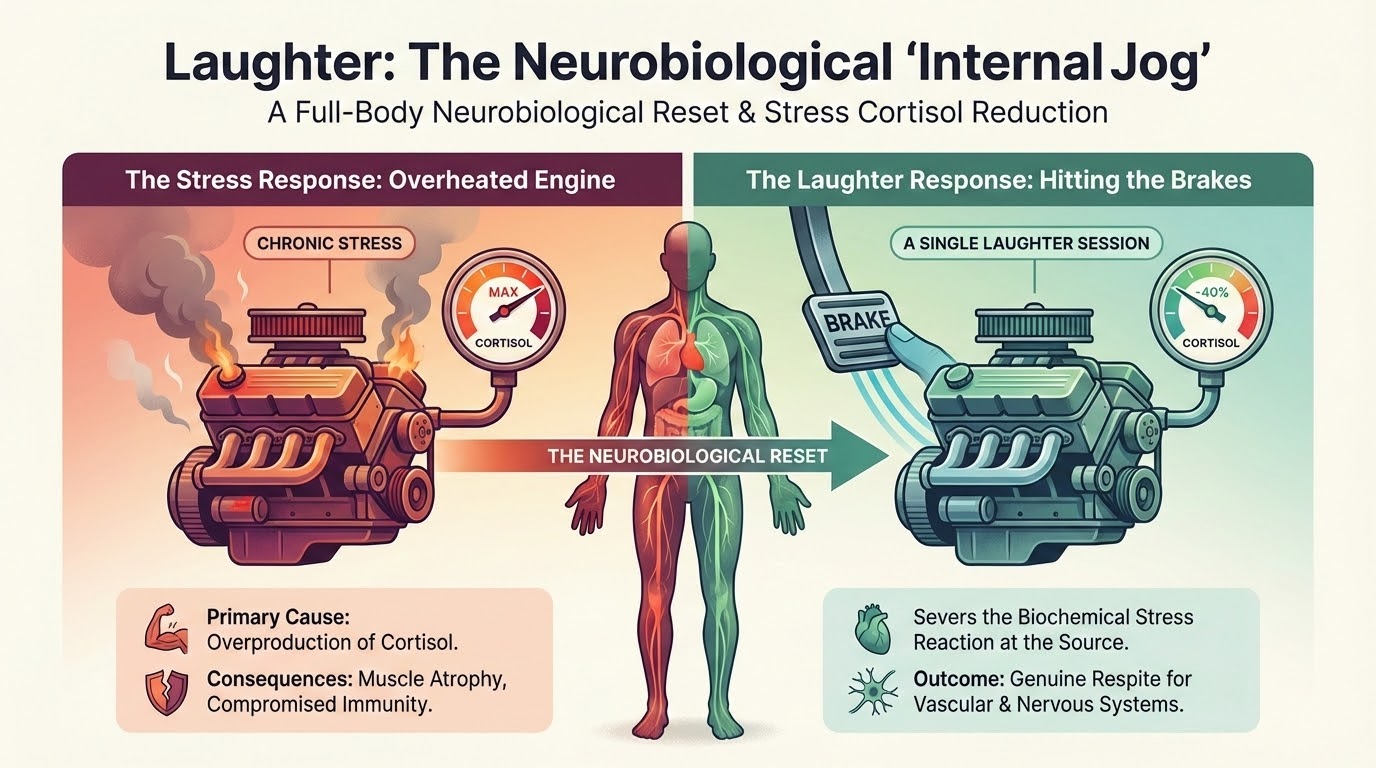
You might view laughter as merely an emotional response, but to those of us who specialize in body structure, a hearty laugh is actually a vigorous 'internal jog.' When you laugh, it involves far more than just facial muscles; it is a full-body neurobiological reset. Modern medical research has confirmed that chronic stress is a primary cause of muscle atrophy and compromised immunity, with the main culprit being the overproduction of the stress hormone, cortisol. Clinical studies indicate that even a single laughter session can reduce serum cortisol levels by nearly 40%. Laughter severs the biochemical reaction of stress right at the source—much like hitting the brakes on an overheated engine—giving your vascular and nervous systems a genuine respite.
Beyond reducing stress, laughter acts as a powerful natural painkiller—which is why I frequently recommend that my clients with chronic pain watch more comedies. When we laugh heartily, the brain releases neuropeptides known as "beta-endorphins." These bind to opioid receptors to block the transmission of pain signals in the spinal cord. This mechanism of pain relief is not merely psychological comfort; it is a genuine biochemical intervention.Studies have shown that incorporating laughter therapy can significantly reduce pain perception even in cancer patients, while improving sleep quality that has been fragmented by pain. For those plagued by long-term shoulder and neck pain or fibromyalgia, the neurochemical shifts induced by laughter can break the vicious cycle where "pain leads to insomnia, and insomnia aggravates pain," thereby buying the body valuable time for restoration.
As a massage therapist, I am most fascinated by the physical impact of laughter on the diaphragm and the lymphatic system. The diaphragm is the dome-shaped muscle separating the thoracic and abdominal cavities, acting as the primary engine of our breathing. While its movement is often restricted during daily shallow breathing, engaging in "deep belly laughter" causes the diaphragm to perform a vigorous, vertical piston-like motion. This action creates a powerful compression and release effect on the liver, stomach, and intestines below—a process we call "internal massage." This deep-level massage of the organs stimulates gastrointestinal peristalsis, alleviating the constipation and indigestion that plague so many today. It provides a level of deep therapeutic restoration that external manual massage finds difficult to fully replicate.
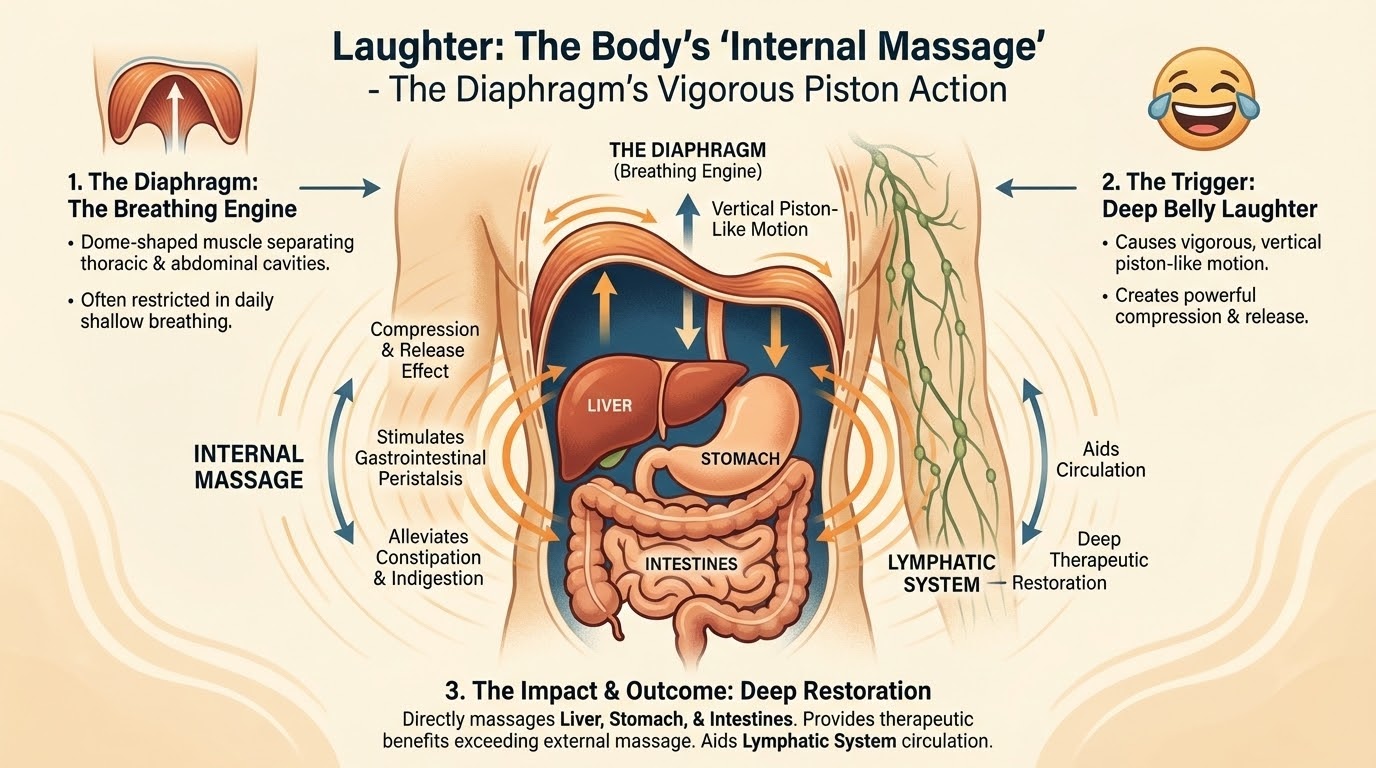
Even more astounding is the contribution of hearty laughter to lymphatic detoxification. Unlike the blood circulatory system, which utilizes the heart as a pump, the lymphatic system must rely on muscle contractions to drive fluid return. The human body’s largest lymphatic vessel, the "thoracic duct," passes directly through the diaphragm.When laughter triggers vigorous vibrations in the diaphragm, it creates powerful negative pressure within the thoracic duct. This acts like a heavy-duty suction pump, rapidly drawing the lymphatic fluid stagnant in the lower limbs and abdomen upwards. For those suffering from lower limb swelling due to sedentary office work, or for those who feel their metabolism is sluggish, laughter is an excellent form of "lymphatic drainage" exercise. It accelerates the elimination of metabolic waste, leaving the body with an unprecedented sense of lightness.
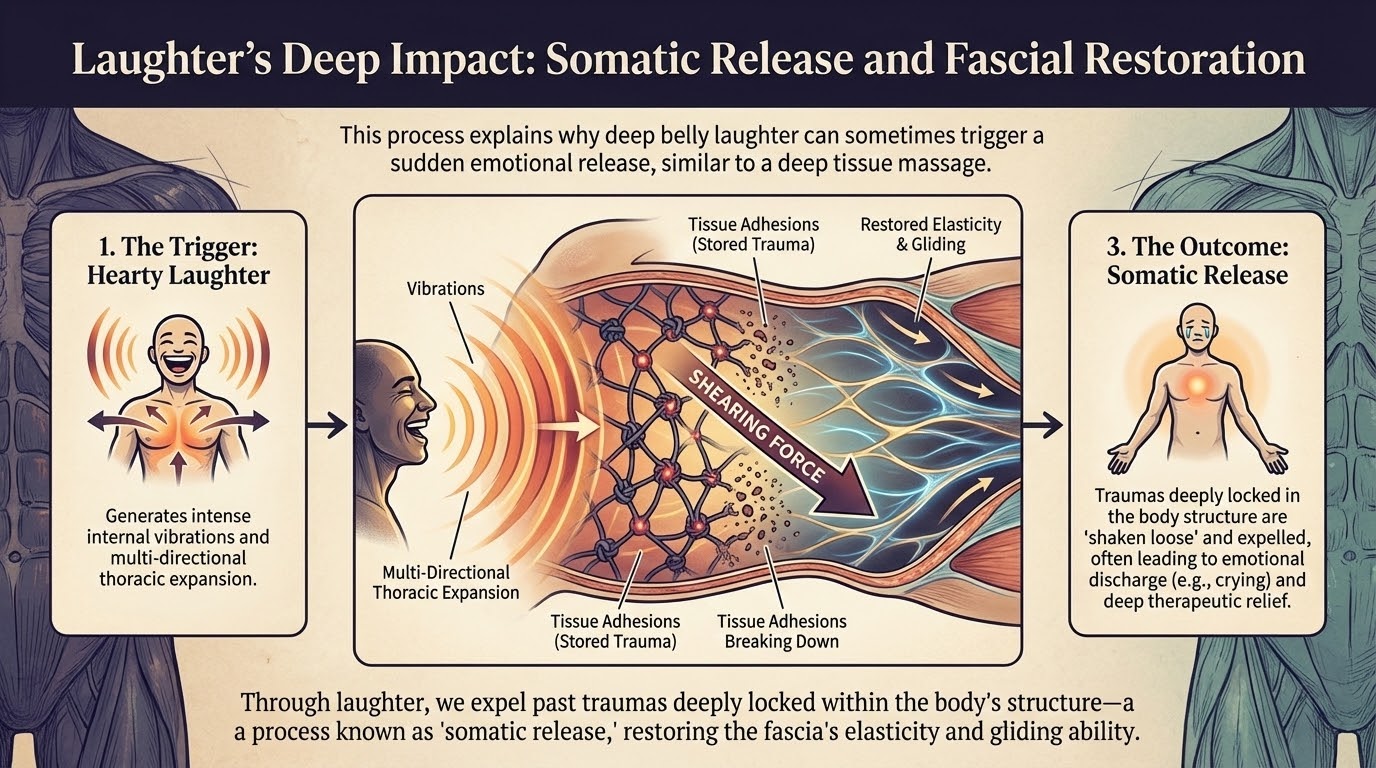
In the study of fascia, we have discovered that fascia possesses 'emotional memory.' Chronic anxiety, anger, or grief can lead to fascial dehydration and adhesions, forming what is known as 'emotional armor.' This tension tends to accumulate particularly deep within the diaphragm and the psoas major.
This may explain why some people experience a sudden urge to cry during a deep tissue massage. The vibrations generated by hearty laughter, combined with multi-directional thoracic expansion, create a 'shearing force' on the deep fascia. This force can physically break down tissue adhesions, restoring the fascia’s elasticity and gliding ability.Through laughter, we shake loose and expel past traumas that have been deeply locked within the body’s structure—a process known as 'somatic release.'
If we turn our gaze to the East, we find that the wisdom of Traditional Chinese Medicine (TCM) aligns remarkably well with modern science. In the Five Elements theory, laughter corresponds to "Fire" and is considered the voice of the "Heart."Here, the "Heart" is not merely a physical pump; it governs the ** Shen ** (spirit and mental consciousness). Moderate laughter helps circulate Heart Qi, warming the entire body like sunlight.More importantly, laughter has the ability to "break through Qi stagnation." Symptoms common among modern people—such as chest tightness, frequent sighing, and distension pain in the flanks—are often caused by "Liver Qi Stagnation."The explosive power of hearty laughter can directly break through stagnation in the diaphragm area (the "Middle Jiao"), allowing the suppressed Liver Qi to flow freely again. This explains why, after a good laugh, you feel as though a heavy burden has been instantly lifted from your chest. That sudden sense of clarity and relief is the ultimate proof that your Qi is flowing once more.
As the saying goes, 'excess is just as bad as deficiency.' Traditional Chinese Medicine (TCM) also reminds us that 'excessive joy injures the Heart.' Uncontrolled, manic laughter can dissipate Heart Qi, causing the spirit to become unsettled. Instead, what we aim for is a balanced, harmonious optimism that resonates from the Dantian.To help you incorporate this 'Happy Healthy Life' therapy into your daily routine, I recommend combining it with acupressure. Before starting your laughter exercises, try pressing the 'Laogong' point in the center of your palm (located where the tip of your middle finger rests when you make a fist). This point is known for clearing 'Heart Fire' and calming the spirit; it helps release anxiety and prepares your mind to enter a state of joy.Another key acupoint is 'Danzhong,' located in the exact center of the chest. Known as the 'Gathering Point of Qi,' gently massaging this area opens the chest and regulates the flow of Qi, creating the necessary space for the deep breathing and laughter that follow.
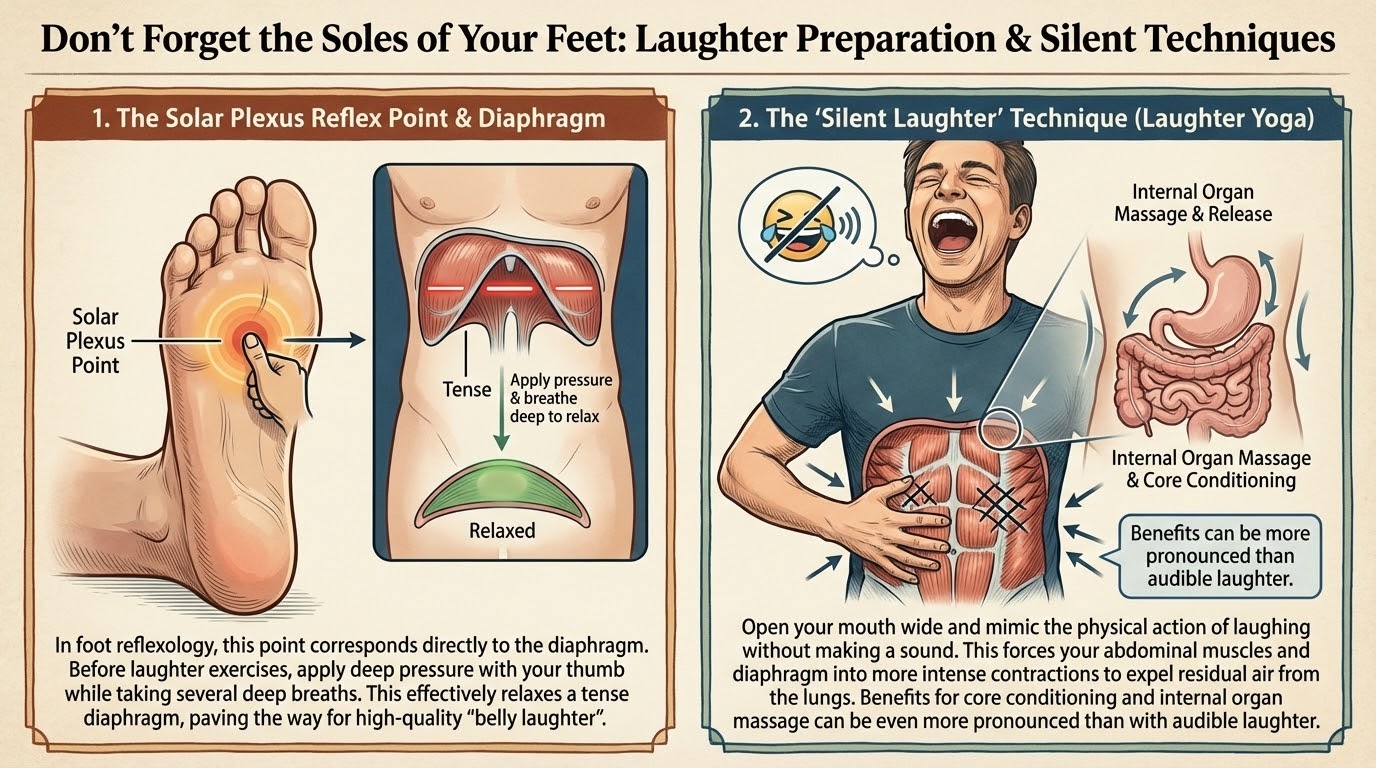
Don’t Forget the Soles of Your Feet In foot reflexology, the depression located just below the center of the ball of the foot is known as the "Solar Plexus" reflex point, which corresponds directly to the diaphragm. Before beginning your laughter exercises, apply deep pressure to this point with your thumb while taking several deep breaths. This effectively relaxes a tense diaphragm, paving the way for high-quality "belly laughter."You might even try the "Silent Laughter" technique from Laughter Yoga: open your mouth wide and mimic the physical action of laughing without making a sound. This forces your abdominal muscles and diaphragm into more intense contractions to expel residual air from the lungs. The benefits for core conditioning and internal organ massage can be even more pronounced than with audible laughter.
Finally, I would like to offer a small piece of advice to all 'Happy Healthy Life' readers: please treat 'daily laughter' as a hygiene habit just as essential as brushing your teeth or washing your face. You don’t need to wait for something humorous to happen, because the brain cannot distinguish between real and fake laughter—as long as you engage the muscles at the corners of your mouth and start making 'Ha, ha, ha' sounds, your body will activate all the healing mechanisms mentioned above.Starting today, try giving yourself one minute of laughter in front of the mirror before heading out in the morning; or, when you feel overwhelmed by stress, press the Laogong acupoint and practice a few rounds of abdominal laughter. This is not just for the sake of happiness; it is to activate the most powerful 'natural pharmacy' within your body, reshaping a version of yourself that is supple, free-flowing, and full of vitality.
Your Action Plan
Tonight after your shower, try the 'Tanzhong Acupoint Pressure + One Minute of Silent Laughter' exercise mentioned in the article. Feel the warmth surging through your chest and the refreshing release of a light sweat!If this article has benefited your health, please share it with friends who are under stress. Let’s work together to reclaim our bodies' self-healing power through laughter.Want to learn more wellness tips that combine the wisdom of Chinese and Western medicine? Stay tuned to the [Happy Healthy Life] blog.

![[Happy Healthy Life Column] A Massage Therapist's Guide to Proper Heat Therapy for Deep Tissue Relief](https://happyhealthylife.cv/wp-content/uploads/2026/03/樂健生活專欄:推拿師教你正確溫熱敷,達到深層肌肉舒緩-540x360.jpg)
![[Happy Healthy Life] Unlocking Your Body’s Self-Healing Power: A Professional Massage Therapist’s Guide to Ending Chronic Fatigue Through Gua Sha and Fascial Release](https://happyhealthylife.cv/wp-content/uploads/2026/02/樂健生活】解鎖身體自癒力:專業按摩師帶你以刮痧與筋膜放鬆告別慢性疲勞抽象藝術圖像-540x360.jpg)
