![[Happy Healthy Life] A Professional Massage Therapist's Therapeutic Secrets for the Rangu Acupoint: A Dual-Action Guide to Saying Goodbye to Plantar Fasciitis and Insomnia](https://happyhealthylife.cv/wp-content/uploads/2026/02/樂健生活:專業按摩師的然谷穴理療秘笈,告別足底筋膜炎與失眠的雙效指南.jpg)
Welcome to [Happy Healthy Life]! As a professional massage therapist, I frequently encounter clients struggling with suboptimal health. Chronic insomnia and plantar soreness are distress signals sent by your body. Today, we will explore the "Rangu" acupoint, a vital golden hub in the foot. It acts not only as a switch for Traditional Chinese Medicine (TCM) meridians but is also inextricably linked to modern neuroanatomy. Through this guide, we will combine scientific insights with practical massage techniques to help you effortlessly restore comprehensive mind-body-spirit balance and achieve long-term wellness amidst your busy life.
From the perspective of Traditional Chinese Medicine (TCM), the Rangu acupoint belongs to the Kidney Meridian of Foot-Shaoyin. It serves as the Ying-spring point of this meridian and corresponds to the Fire element within the Five Elements framework. Because the Kidney system is associated with the Water element, this endows the acupoint with the unique function of harmonizing water and fire.In clinical experience, precisely stimulating the Rangu point can effectively clear deficient heat in the Kidney meridian and deeply nourish Kidney Yin. It provides significant relief for conditions triggered by Yin deficiency with hyperactive fire. This mechanism of mutual generation and restriction within the Five Elements perfectly demonstrates the wisdom of traditional medicine in balancing the human body, serving as an indispensable foundation for maintaining our daily wellness.
Modern anatomy indicates that the Rangu acupoint (KI 2) is located on the medial border of the foot, in the depression inferior to the navicular tuberosity, at the junction of the red and white skin. This location suggests its close relationship with the biomechanics of the foot arch. As a massage therapist, I am well aware that the deep tissues in this area are adjacent to the abductor hallucis muscle, which is crucial for maintaining plantar fascia tension and arch stability. Therefore, precise physical acupressure applied to this point can directly improve structural fatigue in the lower extremities, rapidly relieving the tension accumulated from daily prolonged standing or walking, and restoring a lightness to your step.
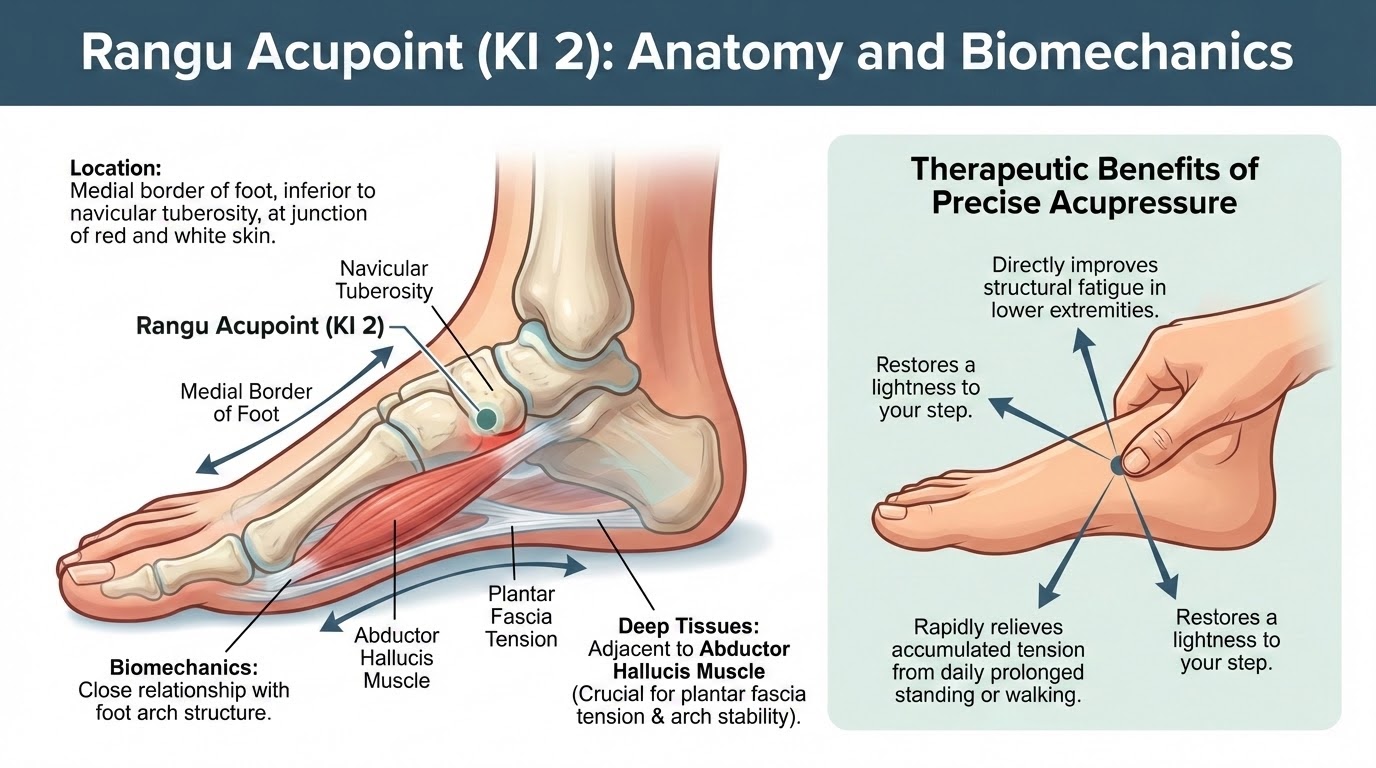
From the perspective of the neurovascular network, the Rangu acupoint (KI 2) is innervated by the medial cutaneous nerve of the calf and the medial plantar nerve. These nerve fibers are closely integrated with the central nervous system. When acupressure is applied, receptors transmit signals up the spinal cord, triggering distal physiological responses.Concurrently, the physical compression of microvessels stimulates the release of nitric oxide. This, in turn, dilates the blood vessels and significantly improves microcirculation disorders in the lower limbs. This process not only accelerates the clearance of metabolic waste associated with fatigue, but also facilitates a deeply relaxing experience, serving as a vital mechanism for restoring your energy.
Medical research reveals that stimulating the plantar nerves can effectively activate the parasympathetic nervous system. This system governs the resting response and can alleviate sympathetic nervous overactivity. Applying regular massage to the Rangu acupoint can lower blood cortisol levels, helping the body establish a healthy stress-regulation mechanism. Furthermore, activating this neural pathway can also improve overactive bladder syndrome. This perfectly echoes the Traditional Chinese Medicine (TCM) theory that the Rangu acupoint can clear and facilitate the Lower Jiao, fully demonstrating the marvel of how Eastern and Western medicine corroborate and complement each other.
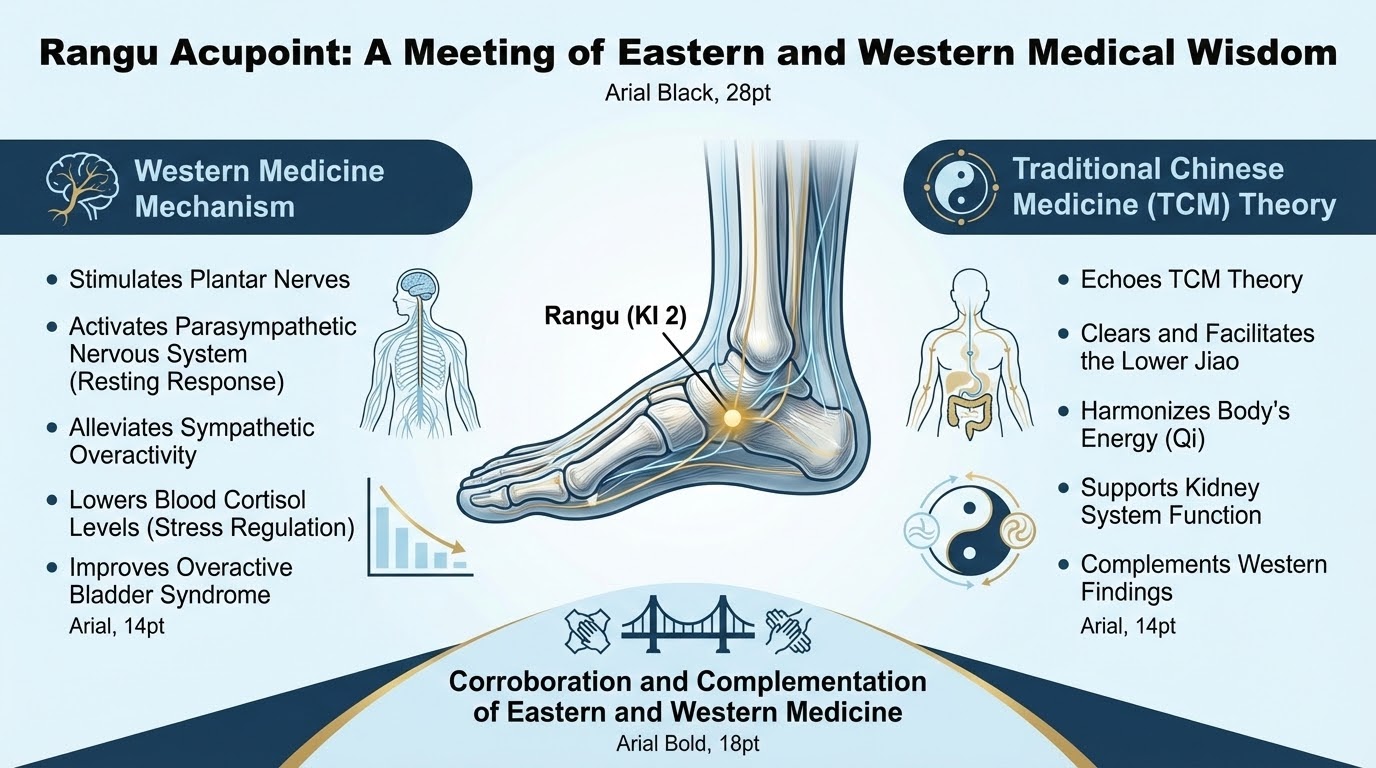
Accurate condition assessment is the prerequisite for developing an effective massage treatment plan. A common constitution is "Yin Deficiency with Hyperactive Fire" (Yin Xu Huo Wang), which is accompanied by symptoms such as a sore throat, night sweats, "five-palm heat" (a feverish sensation in the chest, palms, and soles), and insomnia.Upon palpation, the Rangu (KI 2) acupoint often exhibits acute sensitivity and a burning tenderness. In Traditional Chinese Medicine (TCM), this stems from insufficient Kidney Water failing to keep Heart Fire in check. Gently massaging the Rangu acupoint effectively nourishes the Kidney, replenishes Essence (Jing), and clears deficient heat. This precisely extinguishes the hyperactive "fire" burning within the body, helping the exhausted mind and body rediscover deep tranquility and significantly improving overall sleep quality.
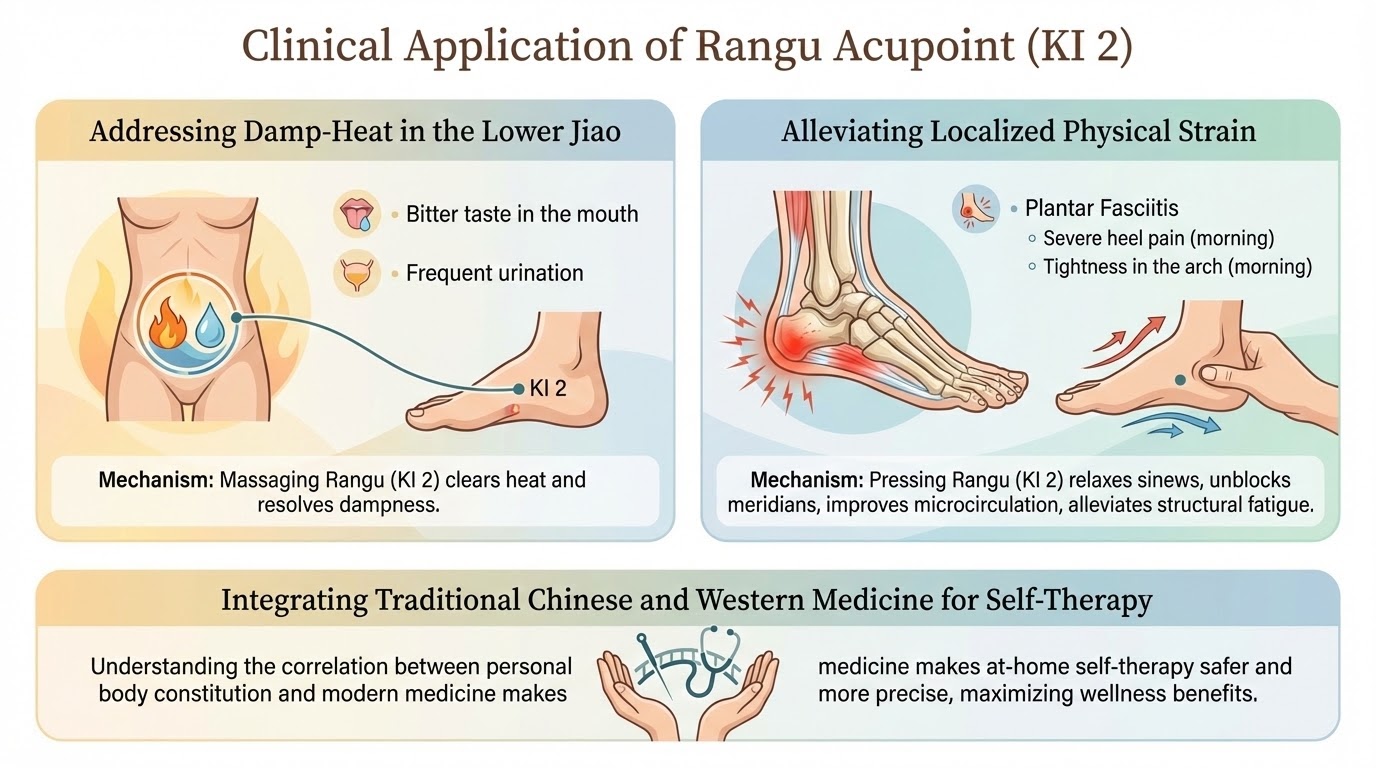
In clinical practice, we frequently encounter cases of damp-heat in the lower jiao and localized physical strain. Individuals with damp-heat in the lower jiao are prone to experiencing a bitter taste in the mouth or frequent urination; massaging the Rangu acupoint (KI 2) can clear heat and resolve dampness.Patients suffering from localized strain, such as plantar fasciitis, often experience severe heel pain and tightness in the arch of the foot upon waking in the morning.For those dealing with such strain, pressing this acupoint helps relax the sinews and unblock the meridians, rapidly improving microcirculation and alleviating structural fatigue. Fully understanding the correlation between your personal body constitution and modern medicine makes at-home self-therapy safer and more precise, allowing you to easily maximize the wellness benefits of integrating traditional Chinese and Western medicine.
Developing a personalized treatment plan based on a precise diagnosis is the key to successful physical therapy. Before your massage, we recommend soaking your feet in warm water for 15 minutes daily. This step not only washes away the day's fatigue, but more importantly, it dilates peripheral blood vessels in advance and deeply relaxes the tight plantar fascia. This serves as a perfect warm-up for acupressure, significantly enhancing the receptivity of both muscles and nerves. It allows the subsequent acupressure stimulation to transmit more smoothly and effectively deep into the meridians, awakening the body's natural self-healing capabilities.
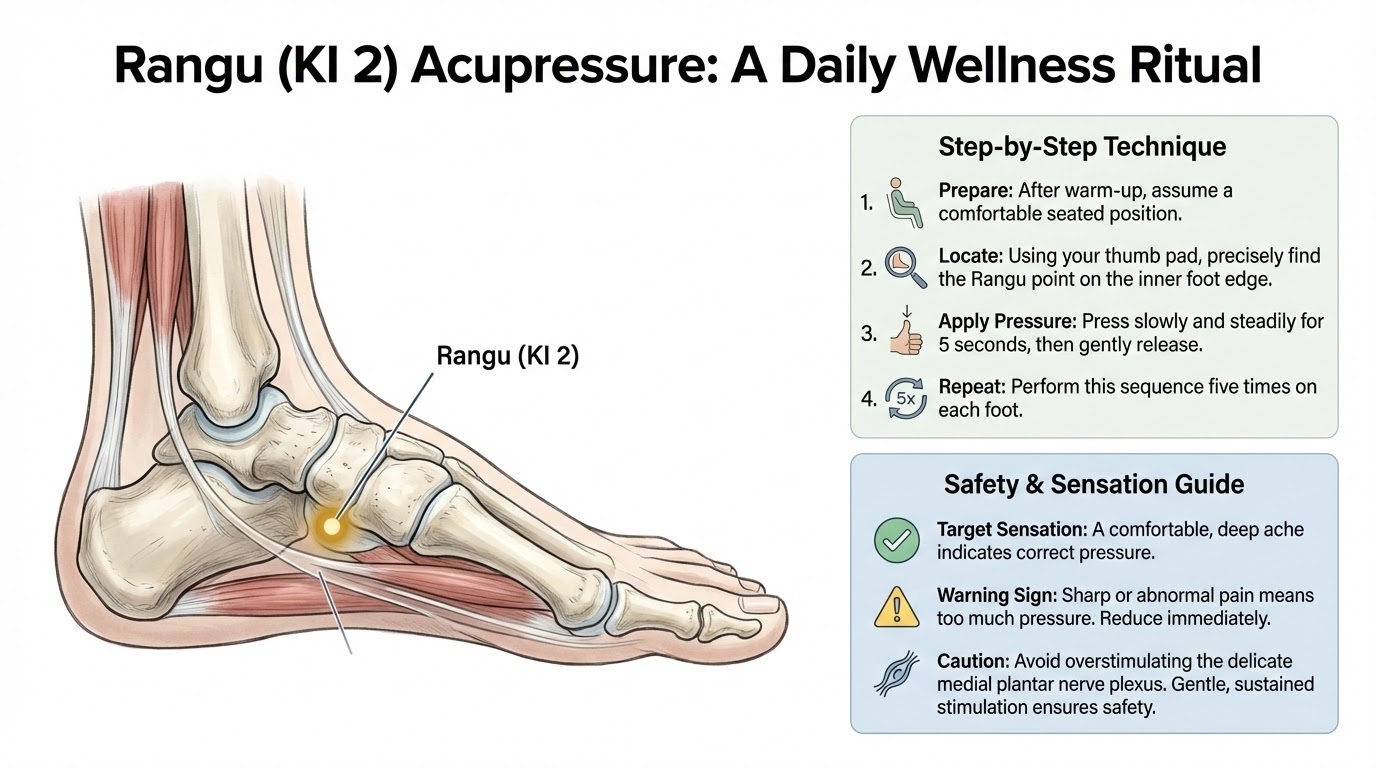
After completing your warm-up, assume a comfortable seated position. Using the pad of your thumb, precisely locate the Rangu acupoint on the inner edge of your foot. Press down slowly and steadily for five seconds, then gently release. Repeat this sequence five times on each foot.Please note that the massage pressure should be controlled so that you only feel a comfortable, deep ache. If you experience any sharp or abnormal pain, reduce the pressure immediately to avoid overstimulating the delicate medial plantar nerve plexus. Gentle, sustained stimulation ensures a safe and relaxing therapeutic process, yielding the best results for your daily wellness routine.
Traditional Chinese Medicine (TCM) therapy emphasizes synergistic treatment, and the Rangu (KI2) and Taixi (KI3) acupoints serve as a golden duo for regulating the endocrine system. While Taixi primarily tonifies kidney qi, the combination of the two—one tonifying and the other purging—can significantly multiply the effectiveness of your wellness regimen.Furthermore, daily dietary adjustments are equally crucial. It is recommended to incorporate more black beans and black sesame seeds into your meals, as their nutritional properties provide a material foundation to nourish kidney yin. However, individuals with spleen and stomach deficiency-cold must roast black beans prior to consumption and maintain a mild diet. Avoiding spicy, raw, and cold foods prevents damage to the yang energy, ensuring the acupoint therapy achieves its maximum potential.
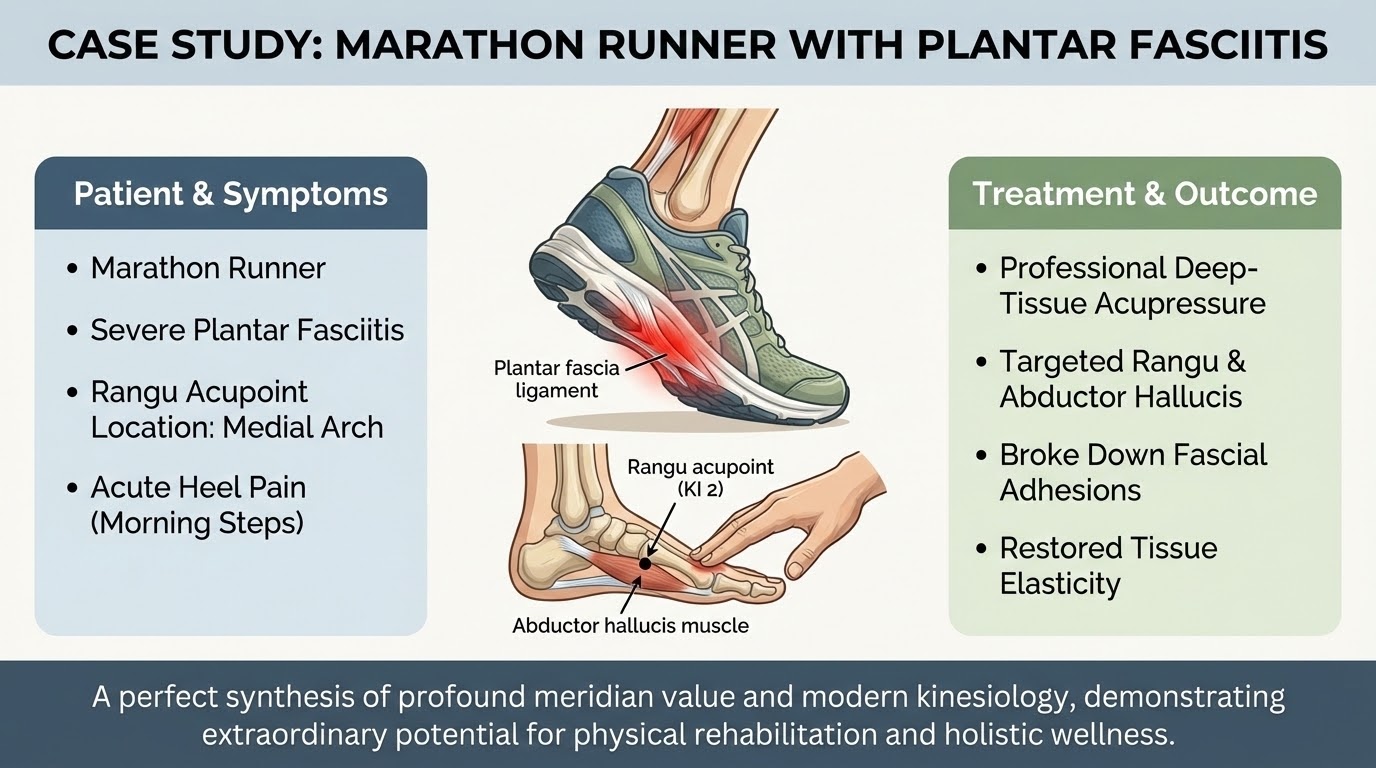
Finally, we have the case of a marathon runner suffering from severe plantar fasciitis. Because the Rangu acupoint is located precisely on the weight-bearing medial arch of the foot, this patient frequently experienced acute heel pain when first stepping onto the ground in the morning. By applying professional deep-tissue acupressure therapy to the Rangu point and the adjacent abductor hallucis muscle, we successfully broke down local fascial adhesions and rapidly restored tissue elasticity. This real-world case stands as a testament to the perfect synthesis of this acupoint's profound meridian value and the wisdom of modern kinesiology, demonstrating its extraordinary potential for physical rehabilitation and holistic wellness.
To summarize, the Rangu acupoint is not merely a key pressure point for relieving fatigue; it serves as a bridge connecting the wisdom of Traditional Chinese Medicine with modern medical evidence. As your dedicated massage therapist, I hope you can seamlessly integrate these simple yet highly effective therapeutic techniques into your daily routine. By dedicating just a few minutes each day to care for your feet, you can step toward a vibrant, healthy future together with "Happy Healthy Life." If you have any questions about these therapies or would like to explore customized massage plans, please feel free to reach out for a consultation at any time!

![[Happy Healthy Life] Column: Gentle Healing Through Zhaohai Acupoint Massage to Say Goodbye to Insomnia and Sore Throats](https://happyhealthylife.cv/wp-content/uploads/2026/03/樂健生活專欄:透過照海穴按摩,告別失眠與咽喉痛的溫柔療癒抽象藝術圖片-540x360.jpg)

