
Introduction: When the Seasons Turn, Your Body Is the First to Know
As a massage therapist, my hands serve as a barometer for the changing seasons. Whenever the first autumn breezes blow and the humidity drops, I notice a subtle shift in the texture of the muscles of the clients entering my treatment room. This is not merely muscle contraction triggered by cooler temperatures; it is, more significantly, a sense of "dryness" within the deep tissues.Many begin to complain of unusual stiffness in the neck and shoulders, dry and itchy skin, and even inexplicable chest tightness and low spirits. In fact, this is the tangible manifestation of the Traditional Chinese Medicine concept that "autumn dryness injures the lungs," reflected specifically at the fascial level.A true "wellness lifestyle" is not simply the absence of pain or illness; it involves maintaining the smooth flow of internal energy and fluids amidst the cycle of the four seasons. Today, from a professional perspective, I would like to share how we can reclaim physical and mental hydration and suppleness during this dry season through fascia care and small lifestyle adjustments.
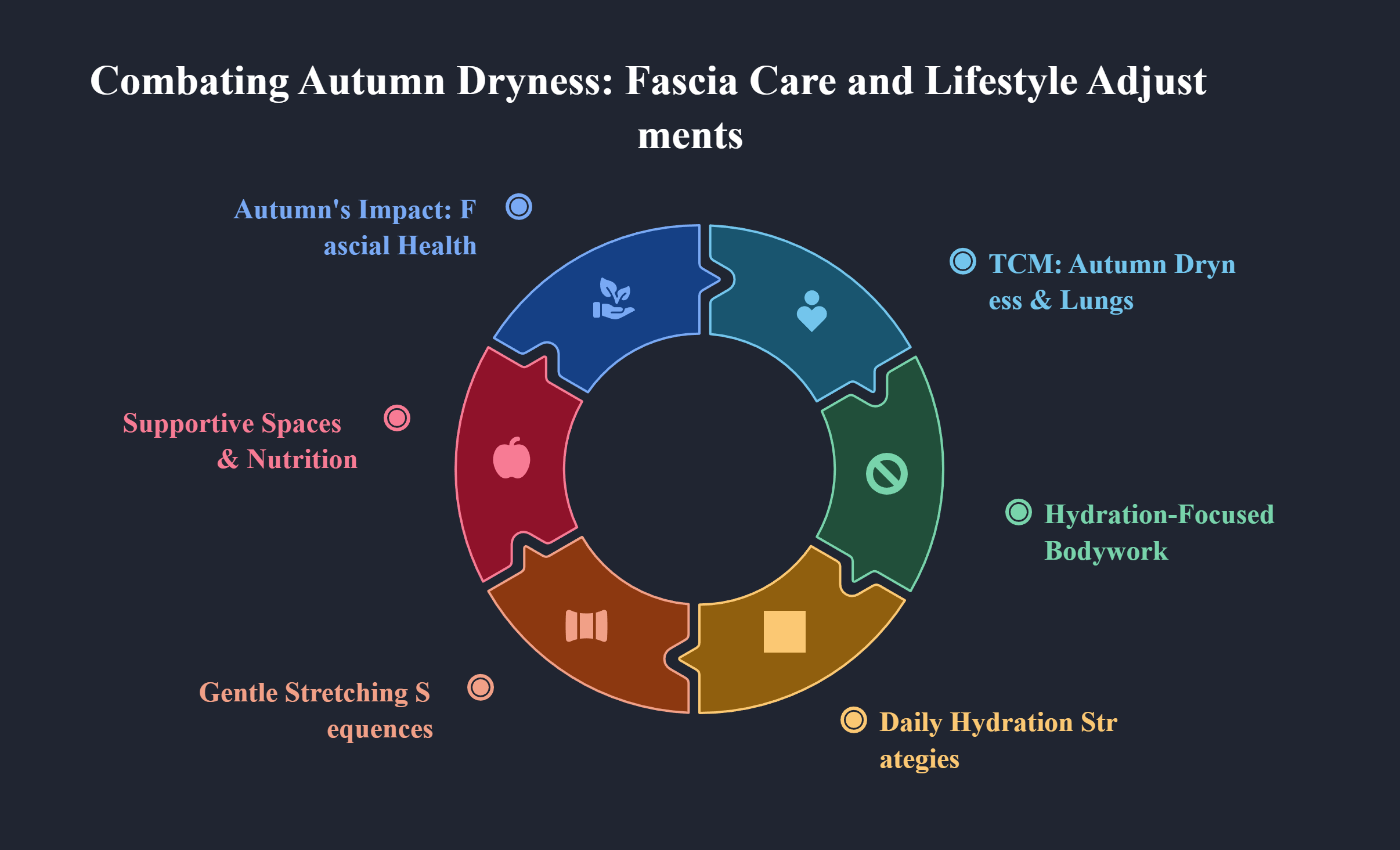
I. Decoding Body Stiffness: Not Just Fatigue, But "Fascial Dehydration"
Do you feel that, since the onset of autumn, your body has become like a dry, stiff sponge, unable to regain its suppleness no matter how much you rest?In modern anatomy, we focus on a network that permeates the entire body—the fascia. Layers of healthy fascia are filled with fluid rich in hyaluronic acid, which allows muscles to glide smoothly. However, the dryness of autumn accelerates the evaporation of body fluids, causing this natural lubricant to become viscous and leading to adhesions between the fascial layers. This is the fundamental reason why you tend to experience joint stiffness and restricted mobility during this season.From my perspective, this stiffness is not merely a tightness of muscle fibers, but a warning signal of dehydration within the connective tissues. Therefore, the key to combating autumn soreness cannot rely solely on external massage pressure; we must start by restoring the "hydration" of the tissues to recover the fascia's natural ability to glide.
II. The Art of Breathing: The Connection Between Clearing the Lung Meridian and Posture
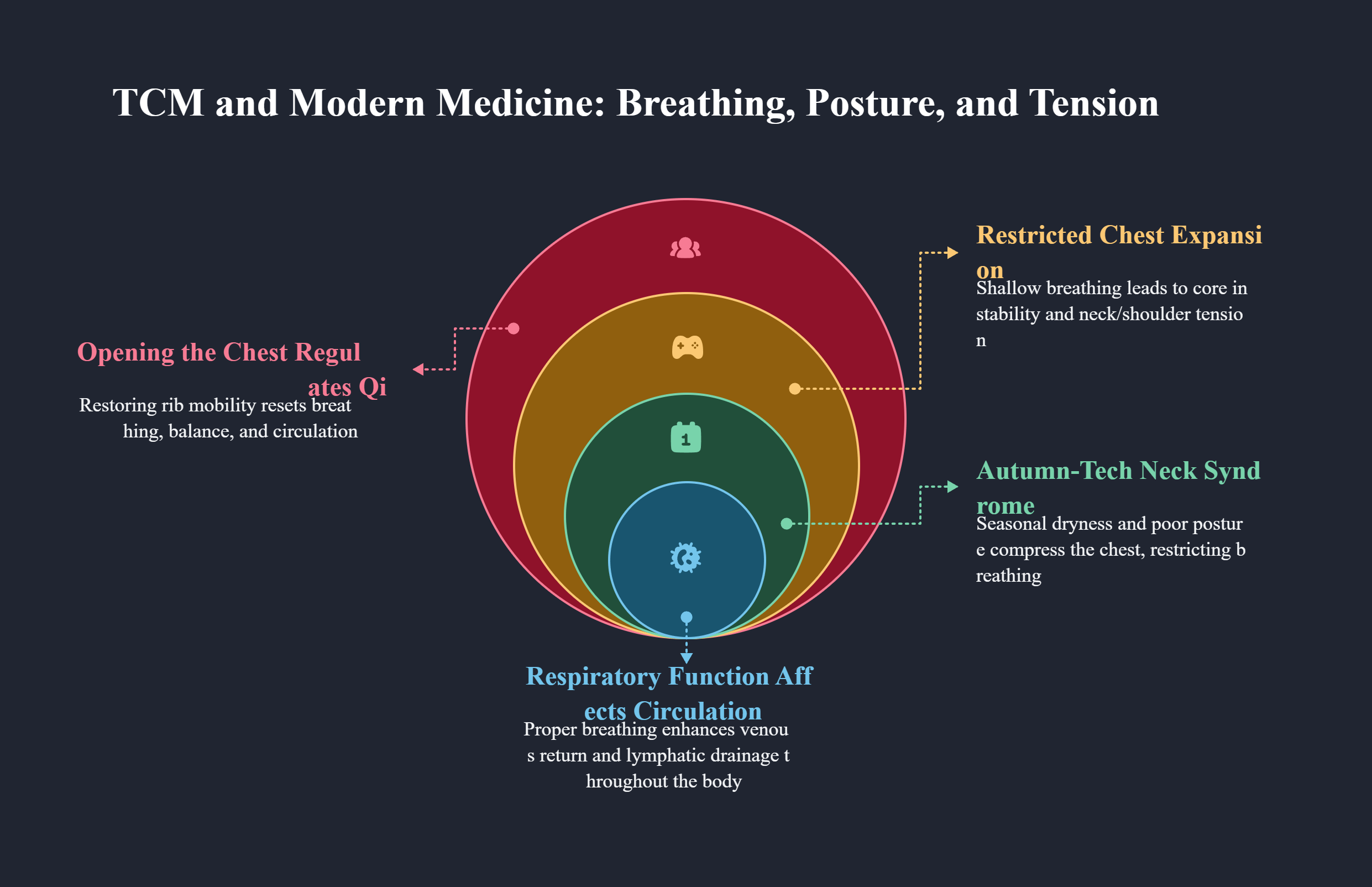
In Traditional Chinese Medicine theory, the sayings "the Lungs govern the skin and hair" and "the Lungs regulate the hundred vessels" align perfectly with the modern medical view that breathing patterns influence tension throughout the entire body. The dryness of autumn easily damages the lungs, while the modern "tech neck" posture—caused by constantly looking down at phones with rounded shoulders and a hunched back—further compresses the rib cage. This obstructs the flow of Qi and blood in the "Lung Meridian" located across the chest.When breathing becomes shallow and the diaphragm's range of motion decreases, core muscles lose stability. This forces the neck and shoulder muscles to overcompensate, creating a vicious cycle. In my practice, I often find that once I help clients open their chest and relax the pectoralis major muscles and the area beneath the collarbones, not only does their breathing instantly deepen, but the tension in their back also miraculously disappears. This demonstrates that "opening the chest to regulate Qi" is an indispensable part of a wellness lifestyle in autumn.
III. Home and Office Self-Care: Myofascial Release for Two Key Acupoints
While regular professional massage is the optimal way to maintain your health, you can also find self-relief in your daily life through simple acupressure.First, I recommend the "Zhongfu" point (LU1). It is located in the hollow about one inch below the outer end of your collarbone. This is where Lung Qi gathers. You can use your knuckles to massage this area in circular motions; when combined with deep, long breaths, this effectively alleviates chest tightness and the feelings of melancholy often associated with autumn.Next is the "Hegu" point (LI4) on your hand, located at the highest point of the muscle when you bring your thumb and index finger together. This is a powerful point for pain relief and immune regulation, making it particularly suitable for those moments in the office when you feel groggy or notice stiffness in your neck and shoulders.Pressing these points does more than just stimulate nerve endings; physically, it stretches and loosens the local superficial fascia and promotes microcirculation, allowing Qi and blood to flow freely to the extremities once again.
IV. Food Therapy as Internal Massage: The Power of White Foods to Nourish Your Mucous Membranes
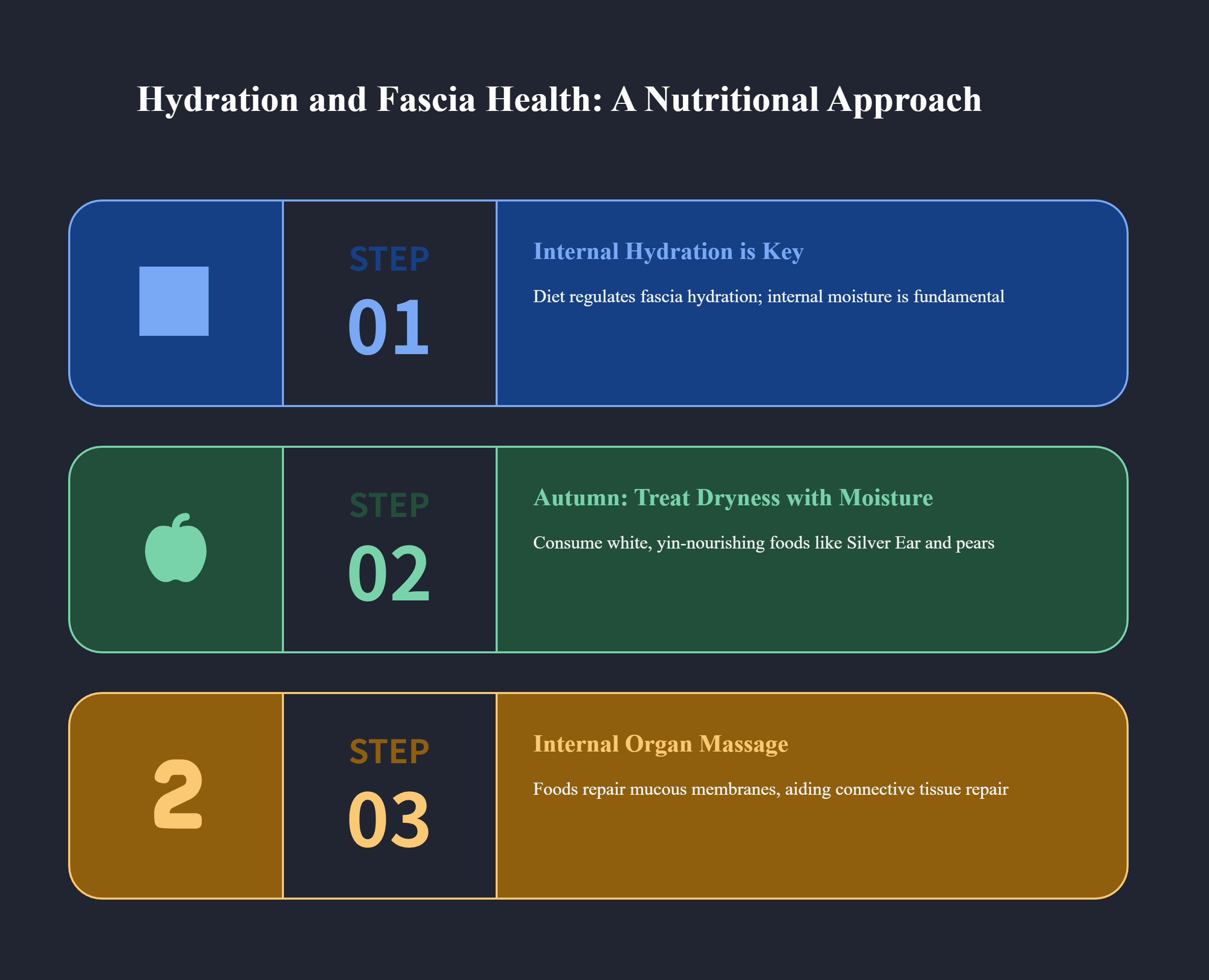
As a therapist, I often tell my clients: "If you don't hydrate from within, no amount of pushing from the outside can open up a dried-up riverbed." Diet is the foundation for regulating the hydration of your fascia.In autumn, we should follow the principle of "treating dryness with moisture" by consuming more white-colored, yin-nourishing ingredients. For example, Silver Ear (White Wood Ear mushrooms) is rich in plant-based gums and polysaccharides. Its moisturizing capability is even superior to hyaluronic acid, directly nourishing our fascia and skin. Pears, on the other hand, are hailed as "natural nectar." When eaten stewed, their properties transform from cooling to warming, helping to generate body fluids and moisten dryness.Once inside the body, these ingredients act like a gentle "internal organ massage," repairing dry mucous membranes and providing the essential raw materials needed for connective tissue repair. When the intestines and lungs are properly moisturized, the external result is glowing skin and supple muscle lines.
V. Emotional Detox: The Wisdom of Learning to "Let Go" in Autumn
The body and mind are one; muscle tension is often simply emotional armor. In the Five Elements, autumn corresponds to the "Metal" element. Its energetic nature is one of gathering and contraction, and its corresponding emotions are "grief" and "worry." During palpation, I often sense unspoken stress hidden between a client's shoulder blades, or heavy anxiety suppressed within the thoracic spine.Autumn can easily trigger feelings of melancholy. If left unresolved, these "emotional toxins" transform into physical pain points. Therefore, the highest level of a wellness lifestyle lies in the psychological practice of "decluttering." As you breathe deeply, try to visualize expelling the stale air and worries from your body with each exhale; or, use yoga stretches to release old emotions stored in the hips and shoulders. Only by learning to "let go" at the right moments can your body make space to accommodate new vitality and joy.
VI. Conclusion: Listen to Your Body, Embrace the Rhythm of the Seasons
A true "Wellness Lifestyle" is not about struggling against nature, but rather learning to align our own pace with the rhythms of the seasons. In this dry autumn season, please treat your body with a little more patience and tenderness.Whether it is nourishing your inner self with a warm bowl of Silver Ear and Snow Pear soup, awakening the vitality of your fascia through a deep meridian massage, or stabilizing your emotions with five minutes of focused breathing each day—these seemingly small actions are all accumulating your "health capital."As your health partner, I hope that starting today, you will try to listen to the subtle signals your body is sending, replacing tension and anxiety with nourishment and relaxation. When your Qi and blood flow freely and your body and mind are supple, you will discover that autumn is no longer a bleak season, but a beautiful time filled with tranquil strength and opportunities for restoration.

![[Happy Healthy Life Column] A Massage Therapist's Guide to Proper Heat Therapy for Deep Tissue Relief](https://happyhealthylife.cv/wp-content/uploads/2026/03/樂健生活專欄:推拿師教你正確溫熱敷,達到深層肌肉舒緩-540x360.jpg)
![[Happy Healthy Life] Unlocking Your Body’s Self-Healing Power: A Professional Massage Therapist’s Guide to Ending Chronic Fatigue Through Gua Sha and Fascial Release](https://happyhealthylife.cv/wp-content/uploads/2026/02/樂健生活】解鎖身體自癒力:專業按摩師帶你以刮痧與筋膜放鬆告別慢性疲勞抽象藝術圖像-540x360.jpg)
