如何成為您「樂健生活」的超級開關.jpg)
Introduction: Finding Your "Happy Healthy" Fulcrum in Modern Life
As a massage therapist dedicated to promoting a "Happy Healthy Life," I have witnessed too many bodies in my clinical practice that are "trapped" by the modern lifestyle. We spend long hours every day facing computers, sedentary and immobile. This not only causes heaviness and swelling in the lower limbs but also triggers many embarrassing, unspoken ailments, such as hemorrhoids and constipation.In truth, genuine health does not demand expensive equipment or complicated procedures; often, it requires only that we return to the body itself and seek out its internal keys to restoration. Within the vast meridian map of Traditional Chinese Medicine (TCM), there is one acupoint that serves as a stabilizing anchor for the lower body: the "Chengshan" point, located on the back of the calf. Today, I want to take you on a deep dive into this severely underrated acupoint. It is not merely a button for fatigue relief, but a crucial pivot point for activating the body’s entire circulation of Qi and blood, leading the way to mind-body balance.
Pinpoint Location: Finding the “Person” (人) Shaped Valley on Your Calf
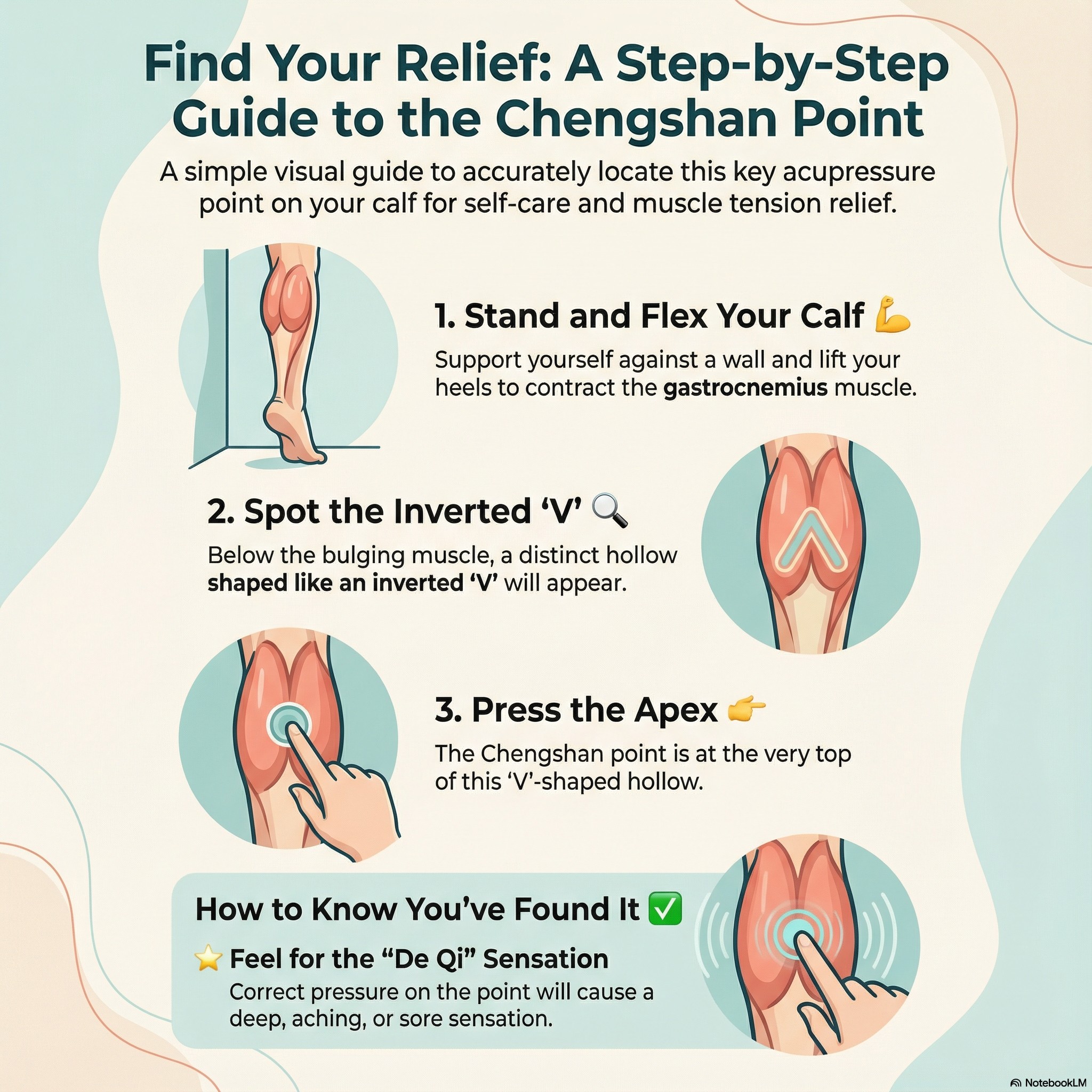
To fully unlock the potent benefits of the Chengshan point, the first step is precise localization. Many clients ask me, "How do I know if I’ve hit the right spot?" In truth, the process of finding the Chengshan point is an exploration of your own muscular contours.Please try standing up with your hands against a wall for support. Lift your heels firmly, or extend your leg to flex the calf. As you do this, your calf muscle (the gastrocnemius) will contract and bulge. Beneath it, a distinct depression shaped like an inverted "V" (resembling the Chinese character "人") will appear.The Chengshan point is located at the apex of this hollow—right in the "valley" where the muscle meets the tendon. From an anatomical perspective, this is where muscle force transmission is most concentrated, and it is an area rich in nerves and blood vessels. When pressed, you should feel a deep, aching soreness or distension. In Traditional Chinese Medicine, this sensation is known as De Qi (the arrival of Qi), signifying that you have located the point correctly.
The Human Body’s Second Heart: Activating the Powerful Muscle Pump Mechanism
Why do I always emphasize the importance of massaging the calves? Because, in biomechanics, the triceps surae (calf muscles) is hailed as the human body's "second heart."Our blood circulation relies not only on the pumping of the heart but also on the pressure generated by muscle contractions, which push venous blood from the lower limbs back up to the heart against gravity. The Chengshan acupoint is located precisely at the core of this "muscle pump."When we sit for prolonged periods, this pump becomes inactive, leading to blood pooling in the lower limbs, which can trigger varicose veins and edema. By stimulating the Chengshan acupoint with professional techniques, we are effectively "restarting" this pump on a physical level. This not only accelerates the elimination of metabolic waste like lactic acid and alleviates post-exercise soreness, but also significantly reduces venous pressure in the lower limbs. It gets the stagnant blood flowing again, bringing a fresh wave of vitality to the entire body.
The Nemesis of "Unspeakable Ailments": The Deep Connection Between the Chengshan Acupoint and Anorectal Health
In my massage studio, many clients are too embarrassed to mention their struggles with hemorrhoids or constipation, yet these issues severely impact their quality of life. The Chengshan acupoint (BL57) holds an indispensable role in treating such conditions.According to the Traditional Chinese Medicine (TCM) principle that "treatment extends to wherever the meridian passes," the Bladder Meridian of Foot-Taiyang—where Chengshan is located—channels deep energetic pathways directly to the anal region.This is not mysticism; modern research confirms that stimulating Chengshan can regulate the tension of the anal sphincter through neural reflexes. It relieves spasms caused by pain, effectively breaking the vicious cycle of "pain—spasm—ischemia."For those suffering from hemorrhoid pain or recovering from surgery, gently massaging Chengshan can provide unexpected relief from pain and swelling. It acts like opening a pressure release valve for the congested pelvic area, allowing stagnant Qi and blood to disperse freely.
Say Goodbye to Cramps and Pain: The Guardian of Your Sciatic Nerve and Muscles
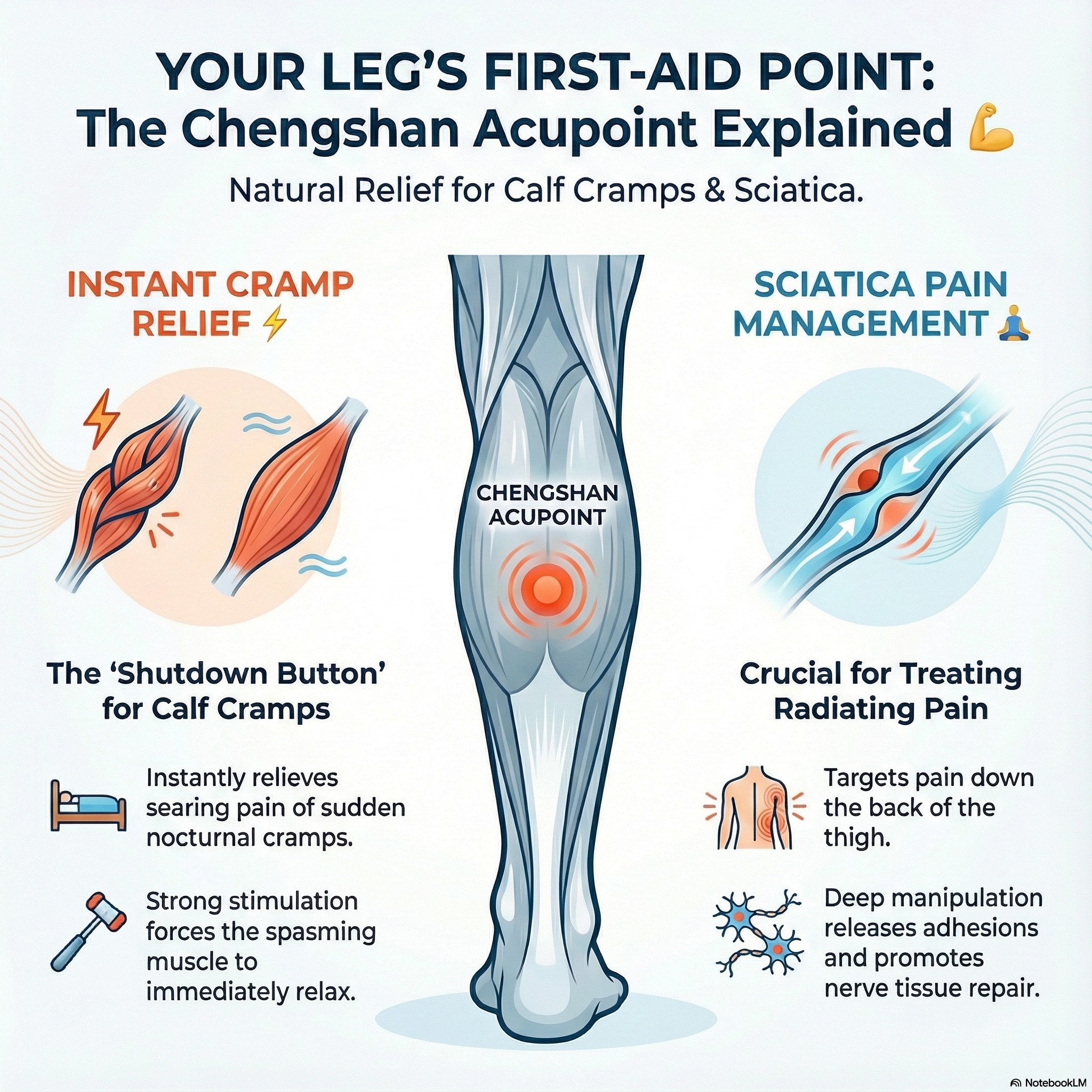
Here is the translation of the passage regarding the therapeutic benefits of the Chengshan acupoint.Translation Beyond regulating internal circulation, the Chengshan acupoint serves as a first-aid station for lower limb pain and spasms. Have you ever experienced sudden nocturnal calf cramps—the kind of searing pain that snaps you instantly awake? In those moments, Chengshan is your "forced shutdown button."Because this area is rich in Golgi tendon organs (which sense muscle tension), strong stimulation here triggers a reflex mechanism that compels the spasmodic muscle to relax immediately. Furthermore, for sciatica that radiates down the posterior thigh, Chengshan is a crucial focal point for treatment. Through deep plucking manipulation, we can release local myofascial adhesions, improve the microenvironment surrounding the nerves, and promote the repair of damaged nerve tissue. This is akin to dredging silt from a river; it restores the unobstructed flow of nerve signals, fundamentally alleviating that piercing pain.
Practical At-Home Guide: Technique Tutorials from a Professional Massage Therapist
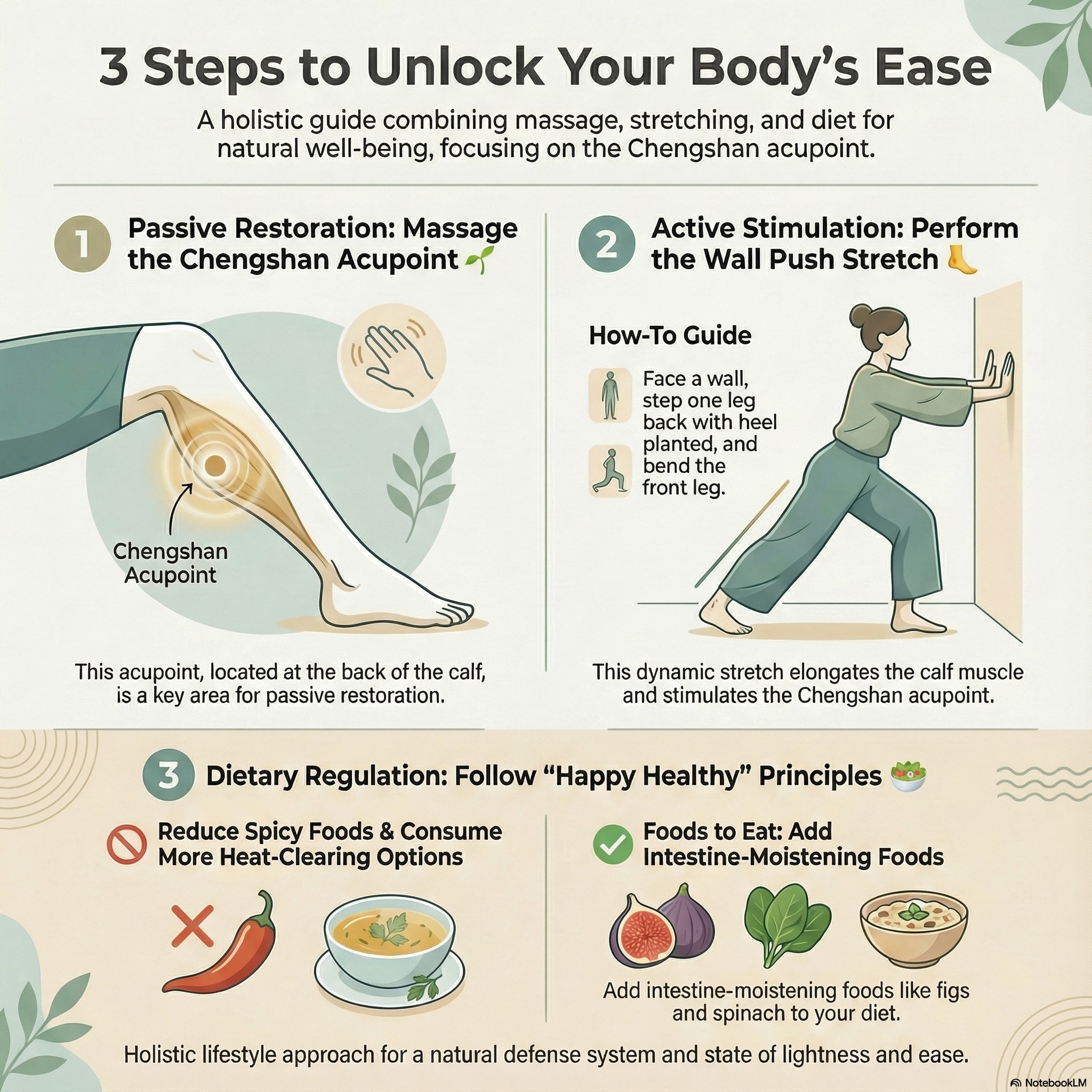
Now that you understand the principles, it is time for action. When self-massaging the Chengshan acupoint at home, I do not recommend using excessive force right away. You can adopt a "three-step approach":1. The Kneading Method (Warm-up) First, use the pad of your thumb to massage in circular motions around the acupoint. Warm up the area for 3 minutes to promote local blood flow.2. The Pressing Method (Deep Relief) Next, press vertically downward with your thumb, gradually increasing pressure from light to heavy until you feel a distinct sensation of soreness and distension. Hold for 10 seconds, then relax. Repeat this 5 times; this effectively relieves deep-seated fatigue.3. The Plucking Method (For Stiffness) Finally, if you have chronic muscle stiffness, you can try the "Plucking Method." This involves flicking the cord-like tissue deep within the acupoint laterally, much like plucking a guitar string.However, please note that the pressure should be within your tolerance limit; do not cause subcutaneous bruising. Spending 10 minutes conversing with your body before bed every day is a health investment with the lowest cost but the highest return.
Balancing Movement and Stillness: The Perfect Synergy of Stretching and Nutrition
Massage is a form of passive restoration, whereas active exercise and dietary regulation are the cornerstones of solidifying your health. To keep the Chengshan acupoint unblocked, I strongly recommend practicing the "Wall Push Stretch": face a wall, take a step back with the affected leg, keep your heel firmly planted on the ground, and bend your front leg to feel an intense stretch at the back of the calf. This not only elongates the gastrocnemius muscle but also provides dynamic stimulation to the Chengshan acupoint.At the same time, regarding diet, we must follow the "Happy Healthy" principles: reduce spicy and stimulating foods, and consume more heat-clearing and intestine-moistening foods—such as figs and spinach—to prevent the downward accumulation of damp-heat. Remember, health is not a temporary treatment, but a lifestyle. By massaging the Chengshan acupoint, performing regular stretches, and maintaining a clean diet, you are building a powerful defense system for your body, allowing your body and mind to return to a state of lightness and ease.
Conclusion: Take Responsibility for Your Physical Health
The two characters comprising "Chengshan" (承山) not only vividly depict its location—supporting the calf muscles like a mountain peak—but also serve as a metaphor for its ability to help us "bear" and dissolve the stagnation and stress accumulated within. In this fast-paced era, we often overlook the distress signals our bodies send out until the pain becomes unbearable.I hope this article serves as a starting point for your journey into self-healing. Starting today, why not take a moment during work breaks to bend down and give your Chengshan point some attention and care? This is not merely a method to relieve soreness; it is a concrete step toward practicing a "Happy Healthy Life." If you have any questions during the process, or if you are plagued by chronic pain, please feel free to book a consultation at any time. Let us work together to create a personalized rehabilitation plan just for you.


![[Happy Healthy Life] A Professional Massage Therapist's Therapeutic Secrets for the Rangu Acupoint: A Dual-Action Guide to Saying Goodbye to Plantar Fasciitis and Insomnia](https://happyhealthylife.cv/wp-content/uploads/2026/02/樂健生活:專業按摩師的然谷穴理療秘笈,告別足底筋膜炎與失眠的雙效指南-540x360.jpg)
